
Best Countries to Export Aluminium Products from India in 2025
January 10, 2026
Managing Price Volatility in Copper Scrap Exports
January 11, 2026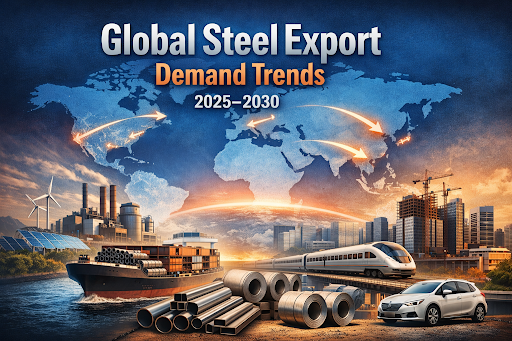
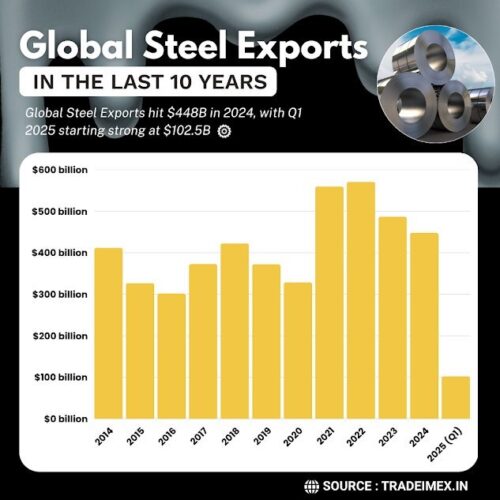
The world steel industry will move through a transformative stage between 2025 and 2030, which is influenced by infrastructure growth, energy transition, geopolitical and sustainability laws. Steel has been a mainstay in construction, transportation, manufacturing, and energy project materials, and this has guaranteed a consistent world demand. But the export trends are changing, and nations are re-evaluating their supply chains and are embracing more eco-friendly production techniques and spending big on both domestic and international infrastructures. These trends are critical to be known by exporters, manufacturers and other trade players who intend to make long-term strategies.
Overview of Global Steel Demand
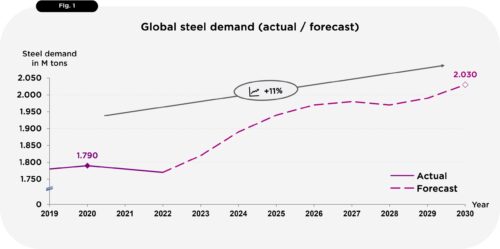
The world steel demand is projected to increase at a steady, although slow rate between 2025-30. Asian, African and Middle Eastern economies are emerging and will be the driving force, which is supported by the growth of urbanisation, population and industrialisation. Growing more slowly, developed economies will still require high-grade and specialised steel products in the advanced manufacturing process, renewable power, and infrastructure improvements.
The exports of steel will be important because not every country has enough domestic production companies or specialised steel manufacturing facilities.
Infrastructure and Construction as Primary Growth Drivers
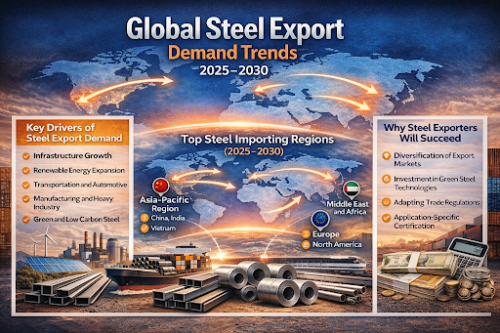
One of the strongest sources of steel demand in the world export will be the large-scale infrastructure projects. The governments across the world are investing in highways, railways, ports, airports and smart cities. Asia-Pacific and Africa are set to spearhead this expansion, with North America and Europe concentrating on the renovation of the older infrastructure.
These projects induce long steel products like beams, rebars, plates and structural sections to create a sustained export opportunity to steel-producing nations.
Energy Transition and Renewable Projects
The global shift toward renewable energy between 2025 and 2030 will significantly impact steel exports. Wind turbines, solar mounting structures, hydropower facilities, and energy storage infrastructure require large volumes of specialised steel.
Additionally, oil and gas projects, especially in the Middle East and Africa, will continue to demand pipes, tubes, and high-pressure steel products. Exporters capable of supplying certified and application-specific steel will benefit most from this trend.
Automotive and Transportation Sector Demand
Although electric vehicles (EVs) are gaining market share, steel remains a critical material due to its strength, recyclability, and cost efficiency. Automakers increasingly demand advanced high-strength steel (AHSS) to reduce vehicle weight while maintaining safety standards.
Railways, shipbuilding, and heavy transport manufacturing will also contribute to export demand, particularly for flat steel products, plates, and speciality alloys.
Regional Export Demand Trends
- Asia-Pacific will remain the largest steel-consuming and exporting region, driven by China, India, Vietnam, and Southeast Asia.
- Middle East and Africa will see rising imports due to infrastructure expansion and limited domestic steel capacity.
- Europe will import specialised and green steel while tightening environmental regulations.
- North America will continue importing value-added steel products despite protective trade policies.
Diversification of export destinations will be crucial to managing regional risks.
Sustainability and Green Steel Impact
Environmental regulations will play a major role in shaping steel exports from 2025 to 2030. Carbon emission norms, carbon border taxes, and sustainability certifications will influence buyer preferences. Demand for low-carbon and recycled steel will increase, especially in Europe and developed markets.
Exporters investing in cleaner production methods, energy efficiency, and traceability will gain a competitive advantage.
Trade Policies and Supply Chain Shifts
Global steel trade will continue to be affected by tariffs, anti-dumping duties, and geopolitical tensions. As a result, buyers are diversifying sourcing locations to reduce dependency on a single country. This shift creates opportunities for emerging steel-exporting nations that can offer quality, reliability, and compliance.
From 2025 to 2030, global steel export demand will be driven by infrastructure growth, renewable energy expansion, transportation needs, and sustainability initiatives. While challenges such as regulatory pressure and trade barriers remain, exporters who adapt to market trends, focus on value-added products, and invest in green steel technologies will be well-positioned for long-term success. Understanding these evolving demand patterns is key to capturing future opportunities in the global steel export market.
For updates and additional information, follow on social media platforms.