
Technical Overview of Stainless Steel 304 Electropolished Seamless Tubes and Weight Calculations
February 28, 2026
Monel 400/K500 Seamless Pipes Weight Chart In Kg, Mm, Pdf
March 2, 2026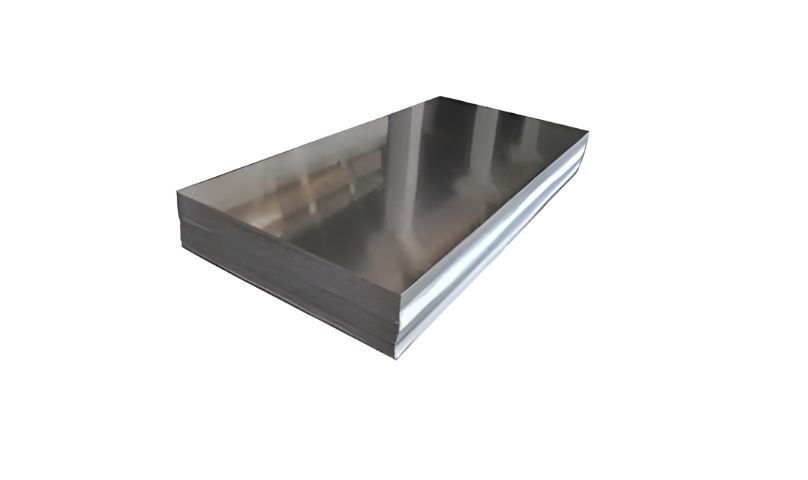
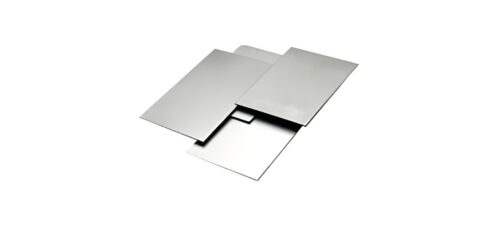
Looking for a reliable reference for Stainless Steel X2CrNi12 plates? This manual contains full details, such as Stainless Steel X2CrNi12 Plate Weight Chart, dimensional Data, chemical composition, mechanical properties, and ASTM A240 tolerances. It is made to be efficient in calculating material weight, cost, and logistics among engineers and fabricators and industrial buyers.
X2CrNi12 plates are extensively utilized in chemical processing, heat exchangers and structural fabrication where corrosion resistance is needed and high-temperature performance is needed. The weight chart in kg and mm is detailed and can be used to plan projects, estimate the material correctly, and plan logistics.
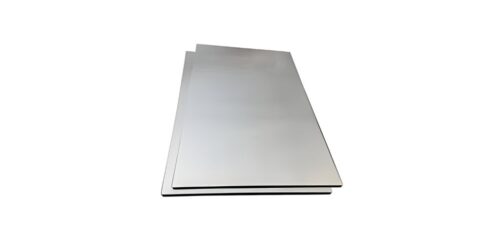
What is a Stainless Steel X2CrNi12 Plate Weight Chart?
A Stainless Steel X2CrNi12 Plate weight chart in Kg and mm is a reference table that determines the theoretical weight of plates based on:
- Thickness (mm)
- Width (mm)
- Length (mm)
- Density of X2CrNi12 (approximately 7.9 g/cm³)
This chart helps fabricators, procurement departments and engineers estimate shipping weight, fabrication load and project costing.
The general formula used for calculation is:
Weight (kg)=Length (m)×Width (m)×Thickness (mm)×7.9
Weight (kg)=Length (m)×Width (m)×Thickness (mm)×7.9
The Stainless Steel X2CrNi12 Plate weight chart in PDF format is also requested by many buyers of this product to have ready reference when undertaking procurement and site planning.
X2CrNi12 Plate Weight Chart (Kg)
The weight chart of X2CrNi12 plate gives the theoretical weights of a typical 1000mm x 2000mm stainless steel plate in kilograms, calculated using the known density of X2CrNi12 (approximately 7.8-7.9 g/cm3). As an example, a plate of 5 mm thickness has a weight of about 79.0 kg, whereas, a plate of 25 mm thickness has a weight of about 395.0 kg, as the thickness changes linearly. They are estimated and design values and can be somewhat different in practice, because of rolling tolerances, surface finish, and minor dimensional variations in the real manufactured plates.
| Thickness (mm) | Weight (kg per 1000×2000 mm plate) |
| 3 | 47.4 |
| 4 | 63.2 |
| 5 | 79.0 |
| 6 | 94.8 |
| 8 | 126.4 |
| 10 | 158.0 |
| 12 | 189.6 |
| 15 | 237.0 |
| 20 | 316.0 |
| 25 | 395.0 |
| 30 | 474.0 |
| 40 | 632.0 |
| 50 | 790.0 |
The weight values are hypothetical and can slightly be different in relation to manufacturing tolerance.
Stainless Steel X2CrNi12 Plates Specifications
Before reviewing the dimensional and weight data, it is important to understand the technical standards governing X2CrNi12 plates.
Grade Specifications for Stainless Steel X2CrNi12 Plates
Stainless Steel X2CrNi12 Plate (EN 1.4003) Plates are made of low-alloy ferritic stainless steel products that aim to provide good corrosion resistance, welding capability, and mechanical strength at the lower price than many austenitic grades, meeting key standards such as ASTM A240 / ASME SA240 and EN 1.4003 (X2CrNi12) that define their chemical composition, mechanical properties, dimensional tolerances and test requirements to be essential to quality, consistency and reliable performance
| Standard | Specification |
| ASTM | ASTM A240 |
| ASME | SA 240 |
| UNS | S40977 |
| EN | X2CrNi12 (1.4003) |
| Type | Ferritic Stainless Steel |
These are the standards that determine the requirements of manufacturing, chemical limits, mechanical performance and tolerances.
Chemical Properties of X2CrNi12 Plates
The chemical composition of the X2CrNi12 (EN 1.4003) plates is well-balanced in order to achieve a balance between corrosion resistance and structural integrity, where chromium is considered to be the main element of corrosion resistance as it relates to the ferritic matrix of the material, thereby, the low content of nickel, 0.30-1.10% is aimed at providing toughness without being overly expensive. Carbon is held to a maximum of 0.03 percent to minimize sensitization and retain weldability, and the elements that are maintained at relatively low levels to reduce embrittlement and enhance overall quality are manganese (up to 1.50 percent) and silicon (up to 1.00 percent). The rest of the composition is iron as the base material which makes X2CrNi12 an inexpensive, ferritic, stainless-steel plate with moderate corrosion resistance that gets used with moderate mechanical performance and weldability in structures and industry.
| Element | Composition (%) |
| Chromium (Cr) | 10.5 – 12.5 |
| Nickel (Ni) | 0.30 – 1.10 |
| Carbon (C) | 0.03 max |
| Manganese (Mn) | 1.50 max |
| Silicon (Si) | 1.00 max |
| Phosphorus (P) | 0.040 max |
| Sulfur (S) | 0.015 max |
| Iron (Fe) | Balance |
This is a low-carbon ferritic alloy that offers good corrosion resistance in relatively corrosive conditions.
Mechanical Properties of X2CrNi12 Plates
The mechanical characteristics of X2CrNi12 plates, tensile strength of 450-650 MPa, the lowest yield strength of 250 Mpa, and up to 18 percent elongation, and hardness of 200 HB, offer a balanced strength, ductility, and weldability package, which renders this grade worth application in moderate strength structural and high temperature.
| Property | Value |
| Tensile Strength | 450-650 MPa |
| Yield Strength | 250 MPa (min) |
| Elongation | 18% (min) |
| Hardness | 200 HB (max) |
These characteristics render X2CrNi12 an appropriate structural material of moderate strength and high temperature applications.
X2CrNi12 Plate Equivalent Grades
Although this page focuses on plates, equivalent grades are often referenced during global procurement.
| Standard | Equivalent Grade |
| UNS | S40977 |
| EN | 1.4003 |
| DIN | X2CrNi12 |
Equivalent grades ensure compatibility in international projects.
Stainless Steel X2CrNi12 Plate Dimensional Chart
The Stainless Steel X2CrNi12 Plate Dimensional Chart describes the most frequently held thicknesses and the standard widths and lengths of the materials, which are used in their applications in industries to handle, cut, and ship most efficiently. The size is very popular among manufacturers and suppliers and the mill edges or trimmed edges can be arranged as per the quantity of order. Thickers plate 5mm and more are used on structural or pressure vessels- always consult your supplier on the available stock or custom cut to suit your project.
| Thickness (mm) | Standard Width (mm) | Standard Length (mm) |
| 5 | 1000 | 2000 |
| 6 | 1250 | 2500 |
| 8 | 1250 | 2500 |
| 10 | 1500 | 3000 |
| 12 | 1500 | 3000 |
| 15 | 1500 | 3000 |
| 20 | 1500 | 3000 |
| 25 | 2000 | 4000 |
Custom dimensions are available based on project requirements.
ASTM A240 X2CrNi12 Plate Tolerances
According to ASTM A240, tolerances for stainless steel plates depend on thickness and width. Typical thickness tolerance ranges:
- Up to 10 mm: ±0.15 mm
- 10 mm to 20 mm: ±0.25 mm
- Above 20 mm: ±0.30 mm
Flatness and width tolerances are other standards outlined under the ASTM A240.
Stainless Steel X2CrNi12 Plate Weight Chart in PDF
Many engineers and procurement managers would like to download the Stainless Steel X2CrNi12 Plate weight chart in PDF because:
- On-site fabrication reference
- Cost estimation
- Shipping weight calculation
- Tender documentation
A printable PDF version typically includes:
- Dimensional chart
- Weight calculation formula
- ASTM A240 tolerances
- Chemical and mechanical properties
Conclusion
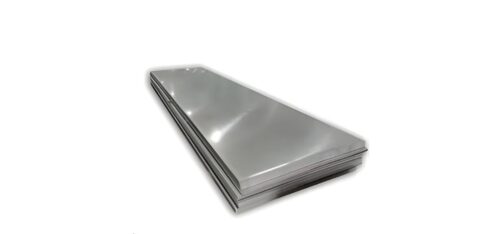
The Stainless Steel X2CrNi12 Plate Weight Chart, Specifications and Dimensional Guide is an all-inclusive technical resource, which bridges the gap between design, procurement and fabrication requirements of this ferritic stainless grade, which is highly used. It means that having the standardized information about chemical composition, mechanical properties, ranges of dimensions, weight calculations, and tolerances provided in ASTM A240 allows simplifying the process of material selection, enhancing cost and logistics planning, and achieving consistent quality across projects. X2CrNi12 is a dependable, cost-effective structural component, chemical-processing equipment, heat exchanger, and high-temperature material that is needed in moderately corrosive environments and moderately strong mechanical strengths with its low-carbon, chromium-rich structure and good weldability.