
How to Price Your Metal Exports: A Practical Guide to FOB, CIF, and Landed Costs
January 19, 2026
The Ultimate Guide to Metal Export Documentation (Free Template Included)
January 20, 2026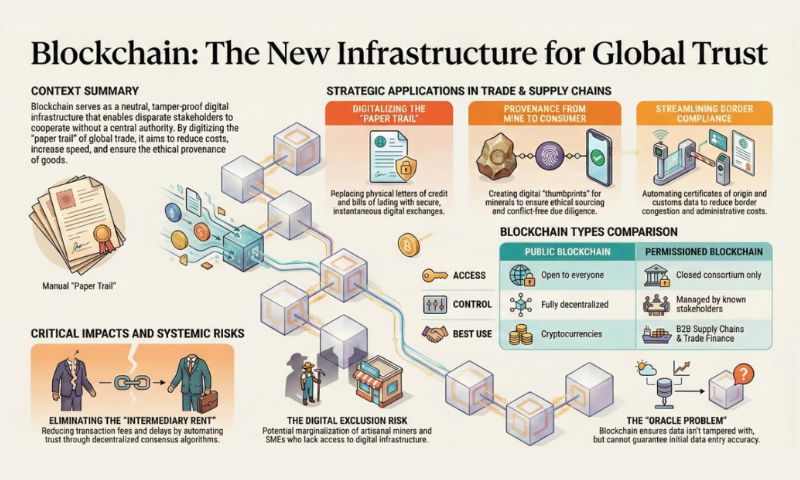
Mining and metal supply chain has faced extreme scrutiny in the recent years as a result of environmental sustainability, fair labor practices and transparency issues. Both world manufacturers and environmentally aware buyers are insisting on evidence that the metals that they buy are ethically obtained. This increasing demand is changing the situation in terms of small exporters as they have to keep up with the changes to be competitive. Blockchain technology is one of the promising tools that can transform the world. This is what it is, its importance and how it can be exploited by small exporters.
What Problem Does Blockchain Solve?
Old fashioned metal supply chains are multifaceted. A specific consignment of copper, cobalt, tungsten, gold or tin can go through various intermediaries such as miners, refiners, transporters, brokers and manufacturers before it ultimately gets to its destination. Every step brings about a mystery: Who was in charge of the metal? In what working conditions has it been mined? Does it not have a connection with warring areas?
In the past, it has been challenging and expensive to validate these aspects. Blockchain is a movement capable of dealing with this issue by establishing non-centralized, unalterable digital documents. The stakeholders will be able to monitor and ensure sourcing information in real time, instead of using paperwork and manual audits.
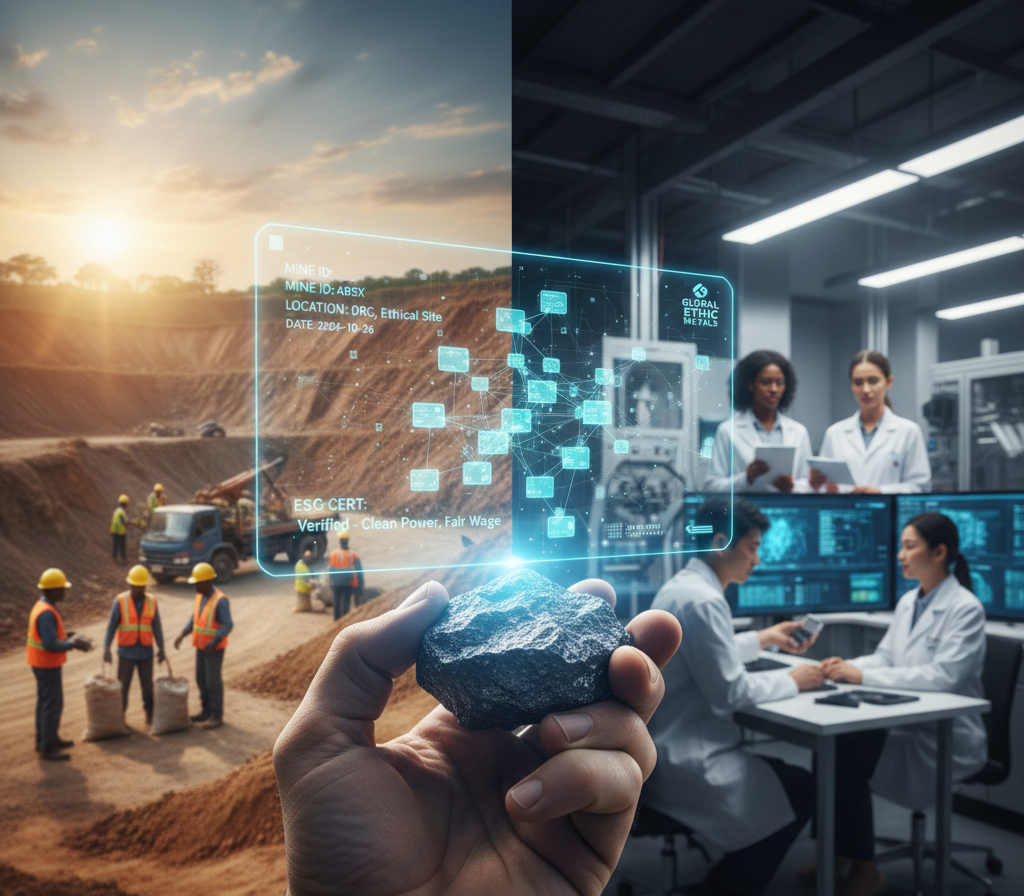
How Blockchain Enables Ethical Metal Sourcing
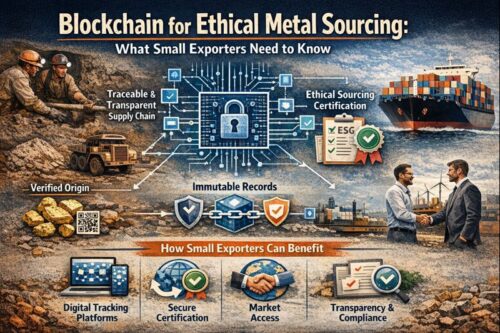
The usefulness of blockchain is in its transparency and immutability. Information once documented like the source of a mineral and third party certifications cannot be changed. This is why it is a perfect system in ethical sourcing initiatives. Key benefits include:
- Supply Chain Traceability
Origin data in the mines can be recorded and shipments monitored by refining and logistics by the exporters. Buyers are able to check chain of custody, and they no longer have to worry about conflict mineral or illegal mining.
- Certifications Checking.
ESG (Environmental, Social and Governance) certifications are frequently needed in ethical sourcing. Blockchain keeps such certificates safely, minimizing the fraud threat and accelerating the compliance verification process.
- Increased Buyer Confidence
Automotive, electronic and renewable energy manufacturers are increasingly demanding ethical sourcing documentation. The data secured by blockchains will assure these buyers and may provide new market opportunities.
- Less Controversy over transactions.
Records that cannot be tampered with help to eliminate the possibility of manipulation of data and reduce any disputes, delays, and insurances.
Why This Matters for Small Exporters
Big mining firms already invest in digital monitoring and eco-social responsibility, but small exporters have little equipment, knowledge, or funds to address the growing demands of transparency. Blockchain can make the playing field even by providing:
- Online authentication rather than manual auditing that is expensive.
- Less difficult access to international customers with high sourcing standards.
- Better brand credibility within the competitive markets.
- Verified ethical material could have higher margins.
With the increasing regulatory and market pressure particularly in the EU and U.S. on conflict minerals, exporters who are unable to confirm their sourcing can find themselves locked out of the high-value markets. Early adoption enables small exporters to hedge their business.
Small Exporter Practical Steps of Starting.
The implementation of blockchain does not need technical knowledge. The following are operations points:
Collaborate with the Traceability Blockchains.
Numerous supply-chain solutions (e.g. Circulor, MineHub, RCS Global) are metals and minerals-specific. They offer software solutions, mobile applications and dashboards to monitor shipments.
Digitization of Existing Documentation.
Begin with the paper-based records (invoices, mine origin forms, certificates), moving them to the digital format. This makes it simple to verify and integrate in future.
Co-operate with Upstream and Downstream Partners.
The most appropriate way to use blockchain is the involvement of miners, transporters, and refiners. The exporters can promote the alignment by providing transparency benefits.
Embark on Integration of Certification Processes.
Partnership with established ESG or fair-mining certification organizations. Their certificates are directly fed into blockchain records, which enhances credibility.
Educate the Value to Buyers.
Ethical sourcing which is supported by blockchain is used as a marketing differentiator. Emphasize it in submissions, trading negotiations and online catalogs.
Challenges to Consider
Although there are these benefits, blockchain implementation is associated with challenges:
- Initial set up and training expenses.
- Demand of rural mining areas to have digital infrastructure.
- Problem with data quality in case upstream miners are not compliant.
- Poor knowledge among the older supply-chain players.
Nevertheless, these are becoming smaller with governments, non-governmental organizations and large manufacturers demanding to see the ethical sourcing.
Conclusion
Blockchain is not a buzzword anymore; it is quickly developing into a supportive technology in ethical sourcing of metal. As a challenge and an opportunity, it is both a challenge and an opportunity to small exporters. First movers in adopting digital traceability systems are able to fulfill the changing demands of the market, increase their connections with buyers across the world, and become the leaders in sustainable trade. Blockchain provides small exporters with an opportunity to compete and survive in the world when transparency leads to value creation.
For updates and additional information, follow on social media platforms.