
The Complete Elevator Bolts Weight Chart Guide: Sizes, Weights, and Applications
April 7, 2026
Hex Flange Bolt Weight Chart: Detailed Size, Dimension & Weight Guide (MM & KG)
April 8, 2026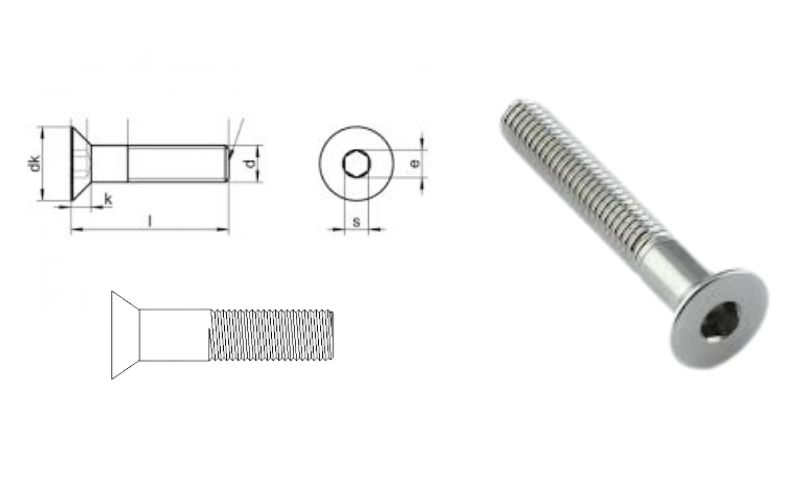
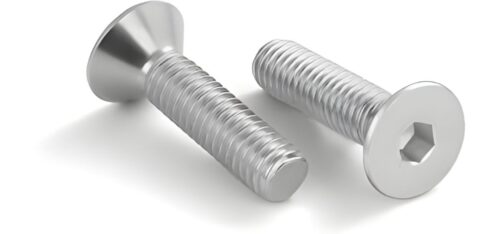
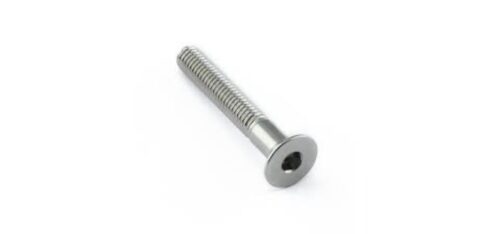
The Countersunk Bolt fasteners are used specifically to use in the situations where the smooth and flat finish is needed without any bulge above the material. The Countersunk Bolt has a flat head that fits perfectly in a pre-machined countersunk hole providing practical effectiveness, as well as a clean appearance. The design is very popular in automotive and heavy fabrication, structural engineering and equipment manufacturing industries where surface uniformity plays a direct role directly on safety, performance and the overall efficiency of the system.
Precision forging, threading and machining is done in the manufacturing process and heat treatment is done to increase strength and durability. Alloy steel and stainless steel materials are mostly employed to make sure these bolts can be very effective in working under stress and vibration with different environmental conditions. They are an essential fastener solution in that because of their strength and the capacity to provide a flush finish, they are used in light-duty and heavy-duty industries.
Mechanical Strength, Surface Integration, and Industrial Performance
Countersunk bolts are designed to provide good tension fastening with tensile strength of about 600 to 1000 Mpa depending on the grade and material make up. The design of a flat head will make sure that after fitting the part, the bolt will not have any contact with the moving components or external surfaces and thus this design is good to use in assemblies where alignment and clearance are required. The latter is particularly significant when it comes to applications that imply rotating components or sliding mechanisms, in which case any slight protrusions can lead to the problems in the functionalities.
The density of the material, typically 7.85 g/cm 3, is very important in defining the weight of every fastener. Where a system has several bolts, the weight of the bolts will add to the overall structural load. This is the point when a Countersunk Bolt Weight Chart will become a necessary engineering tool, as it is able to correctly calculate the weight of the load in order to distribute the weight properly, install it safely, and design the structure as optimized. It further helps the engineers in making sure that the chosen fasteners are not overloaded but can satisfy mechanical and structural needs.
Engineering Importance of Weight Calculations in Fastener Selection
The weight of a Countersunk Bolt is not only a physical parameter in its industrial application, but an essential design parameter. It has a direct impact on the installation effort, structural balance and transportation planning. The bigger the diameter and the length of the bolts, the higher the mass, and this aspect should be put into consideration when designing the system. Poor estimation of weight may result in the imbalance of the weight, the stress may be high on the support structures and efficiency of the system may be low.
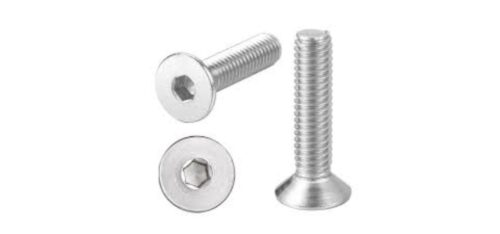
This is made easier by a comprehensive Countersunk Bolt Weight Chart that gives the correct reference data which are used when different sizes and lengths are needed. It allows the engineers and procurement teams to compute the total fastener weight in a very short time hence effective planning and cost management. It is especially significant when large scale projects are at stake where thousands of fasteners are involved and any little fluctuation of weight can have a great effect on the entire system.
Countersunk Bolt Weight Chart – Small Size Range (M3 to M10)
Approximate weight in kg per 1000 pieces
| Size | 10 mm | 15 mm | 20 mm | 25 mm | 30 mm | 35 mm | 40 mm | 50 mm | 60 mm | 80 mm | 100 mm |
| M3 | 0.25 | 0.32 | 0.40 | 0.48 | 0.56 | 0.64 | 0.72 | 0.90 | 1.08 | 1.40 | 1.75 |
| M4 | 0.50 | 0.65 | 0.80 | 0.95 | 1.10 | 1.25 | 1.40 | 1.75 | 2.10 | 2.70 | 3.30 |
| M5 | 0.85 | 1.10 | 1.35 | 1.60 | 1.85 | 2.10 | 2.35 | 2.95 | 3.55 | 4.55 | 5.60 |
| M6 | 1.30 | 1.70 | 2.10 | 2.50 | 2.90 | 3.30 | 3.70 | 4.60 | 5.50 | 7.10 | 8.70 |
| M8 | 2.60 | 3.30 | 4.00 | 4.70 | 5.40 | 6.10 | 6.80 | 8.50 | 10.20 | 13.20 | 16.20 |
| M10 | 4.80 | 6.10 | 7.40 | 8.70 | 10.00 | 11.30 | 12.60 | 15.80 | 19.00 | 24.80 | 30.60 |
Small size countersunk bolts are widely applied in high precision assemblies, electronic cases and panel fittings where the need is to maintain the surface smooth. A Countersunk Bolt Weight Chart is used in such applications to make sure that even the lightweight fasteners are chosen correctly to stabilize the balance and to avoid the additional stress on the fragile parts. Also, due to the installation of flushes, they cause less damage or interference to small systems, and this enhances safety and effective operation.
Application Behavior and Load Distribution in Medium Size Countersunk Bolts
Medium sized countersunk bolts are extensively applied in industrial fabrication, automotive buildings and machinery assembly where durability and superficial coordination are demanded. Such bolts are known to offer a good balance between mechanical performance and design efficiency so that the joint is held in place and yet the external surface is always smooth. They have an enhanced diameter that enhances the ability to carry loads hence can be used during moderate to high-load operations.
Weight in such systems has a much greater role to play since several fasteners add to the total structural load. Engineers should also take special calculations of the weight of individual bolts and combined weight of bolts to bring the proper distribution of the loads and not overload certain parts of the structure. Proper weight data can be used to plan the support systems better, installations can be done better and its long-term durability can be improved.
Countersunk Bolt Weight Chart – Medium Size Range (M12 to M20)
Approximate weight in kg per 100 pieces
| Size | 30 mm | 40 mm | 50 mm | 60 mm | 70 mm | 80 mm | 100 mm | 120 mm | 150 mm | 200 mm |
| M12 | 3.80 | 4.90 | 6.00 | 7.10 | 8.20 | 9.30 | 11.60 | 13.90 | 17.40 | 23.20 |
| M14 | 5.40 | 6.80 | 8.20 | 9.60 | 11.00 | 12.40 | 15.50 | 18.60 | 23.30 | 31.00 |
| M16 | 7.40 | 9.30 | 11.20 | 13.10 | 15.00 | 16.90 | 21.10 | 25.30 | 31.60 | 42.20 |
| M18 | 9.80 | 12.30 | 14.80 | 17.30 | 19.80 | 22.30 | 27.80 | 33.30 | 41.60 | 55.40 |
| M20 | 12.70 | 15.90 | 19.10 | 22.30 | 25.50 | 28.70 | 35.80 | 42.90 | 53.60 | 71.40 |
The medium size countersunk bolts are normally applied in load bearing assemblies in which smoothness of the surface is as much important as a good fastening. These comprise artificial buildings, machinery and transportation facilities. Effective courtesy to a weight chart can assist engineers in making sure that the bolts chosen offer the necessary strength, yet without adding undue weight to the system and enhancing efficiency in the system and minimizing the maintenance needs in the long term.
Heavy-Duty Structural Integration and Performance Stability
Large countersunk bolts have large load and heavy-duty applications in which structural strength and surface precision are needed. These bolts find extensive application in construction works, heavy machines, bridge structures and industrial structures. Their design enables them to sustain excessive stress with a smooth finish that is very essential in use where the surface alignment and clearance is required.
The overall mass of fasteners is a significant issue in the context of a structural stability issue in these applications. The engineers should consider both the dynamic and the static loads, whereby the weight of bolts should not result in an adverse effect on the system. Correct data provided by a weight chart can be used to make more decisions regarding material selection, support design and installation methods.
Countersunk Bolt Weight Chart – Large Size Range (M24 to M36)
Approximate weight in kg per piece
| Size | 50 mm | 75 mm | 100 mm | 125 mm | 150 mm | 175 mm | 200 mm | 225 mm | 250 mm | 300 mm |
| M24 | 0.40 | 0.60 | 0.80 | 1.00 | 1.20 | 1.40 | 1.60 | 1.80 | 2.00 | 2.40 |
| M27 | 0.58 | 0.87 | 1.16 | 1.45 | 1.74 | 2.03 | 2.32 | 2.61 | 2.90 | 3.48 |
| M30 | 0.80 | 1.20 | 1.60 | 2.00 | 2.40 | 2.80 | 3.20 | 3.60 | 4.00 | 4.80 |
| M33 | 1.05 | 1.58 | 2.10 | 2.63 | 3.15 | 3.68 | 4.20 | 4.73 | 5.25 | 6.30 |
| M36 | 1.40 | 2.10 | 2.80 | 3.50 | 4.20 | 4.90 | 5.60 | 6.30 | 7.00 | 8.40 |
Large countersunk bolts are needed in the case of high load capacity and durability. The fact that they are implemented in heavy industrial systems guarantees them structural integrity, low maintenance, and enhanced safety of operation.
Conclusion
The choice of the appropriate Countersunk Bolt is made under the consideration of load conditions, exposure to the environment, and structure. The Countersunk Bolt Weight Chart is a clear chart that offers the required data to calculate the weight correctly and obtain the required load distribution, safe installation, and economic purchases by the engineers. These bolts, whether of precision assemblies or massive industrial structures, offer a blend of strength, easy integration of surfaces, and reliable operation, and are an important element of contemporary engineering.