
Buttweld 45 Degree Elbow Weight Chart Complete Guide
February 4, 2026
Stainless Steel Slip-On Flanges Weight Chart: Sizes, Standards, and Industrial Significance
February 5, 2026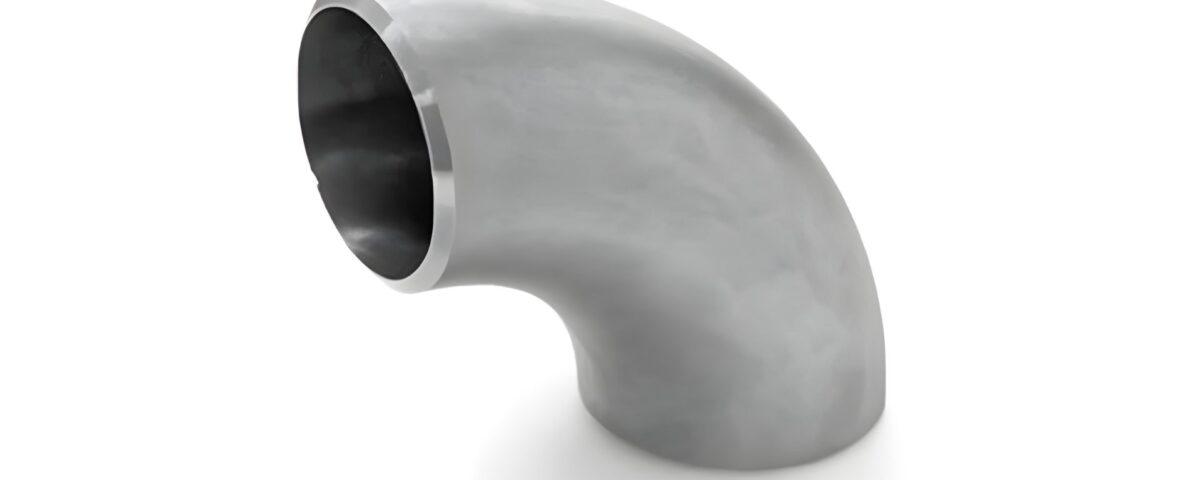
One of the most frequently used pipe fittings in industrial piping systems is Buttweld 90 degree elbows. They are constructed so as to change the direction of flow by 90 degrees without causing discontinuous fluid movement. The application of these elbows is widespread in oil and gas, petrochemical, power plants, water treatment and fabrication industries. Engineers and buyers use a Buttweld 90 Degree Elbow Weight Chart to determine estimates of the material to be required, load calculations, and transport expenses to plan piping layouts correctly.
The accurate weight of a fitting is known to prevent problems during the process of installation, and the safety of the systems is also guaranteed. It is also significant in cost management and project planning.
What Is a Buttweld 90 Degree Elbow?
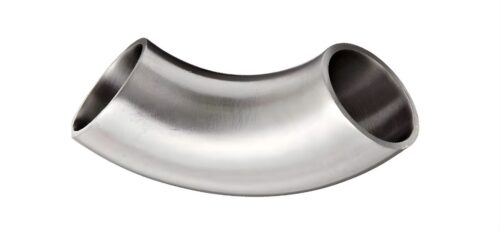
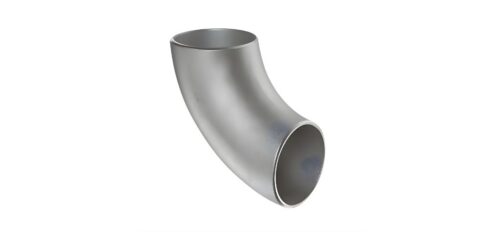
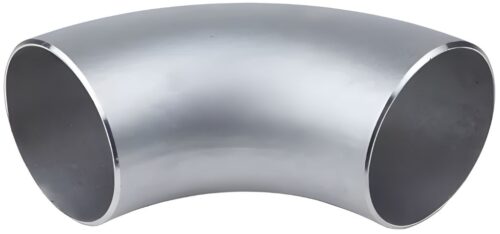
A Buttweld 90 degree elbow is a pipe fitting that is welded directly to pipes in a butt welding procedure. The joint is very strong and leak-proof and is therefore suitable in high-pressure and high-temperature conditions. These elbows are produced to the international standards and come in different sizes, schedules and materials.
Since the wall thickness and diameter are different in one specification as compared to another, the weight of each elbow also varies. This is the reason why weight charts are normally consulted at the design and procurement levels.
Importance of Buttweld 90 Degree Elbow Weight Chart in Kg
The Buttweld 90 Degree Elbow Weight Chart in Kg especially useful for practical site work and logistics. In the majority of projects, most calculations are made, bills are done and goods shipped in kilograms. The determination of the actual or approximate weight aids the engineers to get the correct value of the loads and support spacing in pipe racks.
To the suppliers and buyers, kilograms of weight are used to estimate transportation costs and manage needs. It also facilitates bulk order planning particularly in the large scale industrial projects where any slight weight variance will alter the overall price considerably.
Buttweld 90 Degree Elbow Weight Chart (Approx.)
| NPS (Inches) | OD (mm) | OD (Inches) | Center to Face (Inches) | Radius (Inches) | Approx Weight (Kg) |
| 1/2 | 21.3 | 0.840 | 3/4 | 3/4 | 0.10 |
| 3/4 | 26.7 | 1.050 | 1 | 1 | 0.18 |
| 1 | 33.4 | 1.315 | 1 1/4 | 1 1/2 | 0.28 |
| 1 1/4 | 42.2 | 1.660 | 1 1/2 | 1 3/4 | 0.45 |
| 1 1/2 | 48.3 | 1.900 | 1 3/4 | 2 1/4 | 0.62 |
| 2 | 60.3 | 2.375 | 2 1/4 | 3 | 1.05 |
| 2 1/2 | 73.0 | 2.875 | 2 1/2 | 3 3/4 | 1.60 |
| 3 | 88.9 | 3.500 | 3 | 4 1/2 | 2.40 |
| 3 1/2 | 101.6 | 4.000 | 3 1/2 | 5 1/4 | 3.10 |
| 4 | 114.3 | 4.500 | 4 | 6 | 4.20 |
| 5 | 141.3 | 5.563 | 5 | 7 1/2 | 6.80 |
| 6 | 168.3 | 6.625 | 6 | 9 | 9.50 |
| 8 | 219.1 | 8.625 | 8 | 12 | 19.50 |
| 10 | 273.1 | 10.750 | 10 | 15 | 32.00 |
| 12 | 323.9 | 12.750 | 12 | 18 | 48.00 |
Role of Buttweld 90 Degree Elbow Weight Chart in MM
The Buttweld 90 Degree Elbow Weight Chart in MM is aimed at such dimensions as the outer diameter, the wall thickness, and the center to the end measures. Sizing in millimeters is used in technical drawings and fabrication shops. The correct dimensional data will guarantee accurate alignment in the welding process and eliminate any chances of misfit situations in the site.
Once the dimensions are clearly known in terms of millimeters, then it becomes more convenient to choose the right elbow to fit given piping requirements and schedules. This is also useful in quality control teams to ensure that engineering specifications.
Buttweld 90 Degree Elbow Weight Chart
| DN | NPS | OD (mm) | Center to Face (A) mm | Radius (R) mm | Approx Weight (Kg) |
| 15 | 1/2 | 21.3 | 38 | 19 | 0.10 |
| 20 | 3/4 | 26.7 | 38 | 25 | 0.18 |
| 25 | 1 | 33.4 | 38 | 38 | 0.28 |
| 32 | 1 1/4 | 42.2 | 48 | 48 | 0.45 |
| 40 | 1 1/2 | 48.3 | 57 | 57 | 0.62 |
| 50 | 2 | 60.3 | 76 | 76 | 1.05 |
| 65 | 2 1/2 | 73.0 | 95 | 95 | 1.60 |
| 80 | 3 | 88.9 | 114 | 114 | 2.40 |
| 90 | 3 1/2 | 101.6 | 133 | 133 | 3.10 |
| 100 | 4 | 114.3 | 152 | 152 | 4.20 |
| 125 | 5 | 141.3 | 190 | 190 | 6.80 |
| 150 | 6 | 168.3 | 229 | 229 | 9.50 |
| 200 | 8 | 219.1 | 305 | 305 | 19.50 |
| 250 | 10 | 273.0 | 381 | 381 | 32.00 |
| 300 | 12 | 323.8 | 457 | 457 | 48.00 |
| 350 | 14 | 355.6 | 533 | 533 | 65.00 |
| 400 | 16 | 406.4 | 610 | 610 | 85.00 |
| 450 | 18 | 457.0 | 686 | 686 | 110.00 |
| 500 | 20 | 508.0 | 762 | 762 | 145.00 |
| 550 | 22 | 559.0 | 838 | 838 | 180.00 |
| 600 | 24 | 610.0 | 914 | 914 | 220.00 |
How the Buttweld 90 Degree Elbow Weight Chart Helps Buyers
A trusted Buttweld 90 Degree Elbow Weight Chart is a tool used by buyers, engineers as well as project managers as a reference material. It assists them in deciding on the comparisons of various sizes and schedules without necessarily having to use guess work. Through the weight charts, the buyers will also be able to cross match the suppliers information and bring about transparency on the material supply.
Weight charts can also be useful at tendering stages and quotation as at this stage, proper estimation of the material is needed. They minimise possibilities of over or under ordering of fittings which saves time and money.
Buttweld 90 Degree Elbow Weight Chart
| Pipe Size (Inches) | Wall Thickness – Sch 40 (Inches) | Approx Weight (Kg) | Wall Thickness – Sch 80 (Inches) | Approx Weight (Kg) | Wall Thickness – Sch 160 (Inches) | Approx Weight (Kg) |
| 1/2″ | 0.109″ | 0.10 | 0.147″ | 0.14 | 0.218″ | 0.22 |
| 3/4″ | 0.113″ | 0.18 | 0.154″ | 0.24 | 0.250″ | 0.38 |
| 1″ | 0.140″ | 0.28 | 0.179″ | 0.35 | 0.300″ | 0.55 |
| 1-1/4″ | 0.140″ | 0.45 | 0.191″ | 0.60 | 0.337″ | 0.95 |
| 1-1/2″ | 0.145″ | 0.62 | 0.200″ | 0.80 | 0.350″ | 1.20 |
| 2″ | 0.154″ | 1.05 | 0.218″ | 1.40 | 0.375″ | 2.10 |
| 2-1/2″ | 0.203″ | 1.60 | 0.276″ | 2.20 | 0.400″ | 3.40 |
| 3″ | 0.216″ | 2.40 | 0.300″ | 3.20 | 0.450″ | 5.10 |
| 4″ | 0.237″ | 4.20 | 0.337″ | 5.80 | 0.500″ | 9.00 |
| 5″ | 0.258″ | 6.80 | 0.375″ | 9.50 | 0.562″ | 14.50 |
| 6″ | 0.280″ | 9.50 | 0.432″ | 13.50 | 0.625″ | 21.00 |
| 8″ | 0.322″ | 19.50 | 0.500″ | 28.00 | 0.750″ | 45.00 |
| 10″ | 0.365″ | 32.00 | 0.500″ | 42.00 | 0.875″ | 70.00 |
| 12″ | 0.406″ | 48.00 | 0.562″ | 65.00 | 1.000″ | 105.00 |
| 14″ | 0.437″ | 65.00 | 0.625″ | 90.00 | 1.125″ | 145.00 |
| 16″ | 0.500″ | 85.00 | 0.750″ | 120.00 | 1.250″ | 195.00 |
| 18″ | 0.562″ | 110.00 | 0.812″ | 155.00 | 1.375″ | 250.00 |
| 20″ | 0.593″ | 145.00 | 0.875″ | 210.00 | 1.500″ | 340.00 |
| 24″ | 0.687″ | 220.00 | 1.000″ | 320.00 | 1.750″ | 520.00 |
Factors That Affect Elbow Weight
Several factors influence the weight of a buttweld 90 degree elbow. These are pipe size, wall thickness, the type of radius (long radius and short radius), and grade of material. The thicker the walls of the schedule, the more it weighs, but the bigger the diameter, the greater the mass.
Tolerances and standards of manufacturing also have a role to play so real weights can deviate a little bit when compared to chart values. Nevertheless, regular weight graphs will give reliable average values to use in planning.
Conclusion
Buttweld 90 Degree Elbow Weight Chart can be considered a necessary guide to people, associated with the development of piping systems, their purchasing, or installation. Be it the weight in kilograms or the dimensions in millimeters, these charts help to make the decisions easier and enhance the project efficiency. Knowledge of properly using weight charts assists in the provision of safety, accuracy and cost management of industrial practices.