
Understanding Gasket Weight: Size & Thickness Chart in Kg and Mm with Examples
February 2, 2026
Pipe Fittings Weight Chart in Kg & MM – Complete Size-Wise Reference Guide
February 3, 2026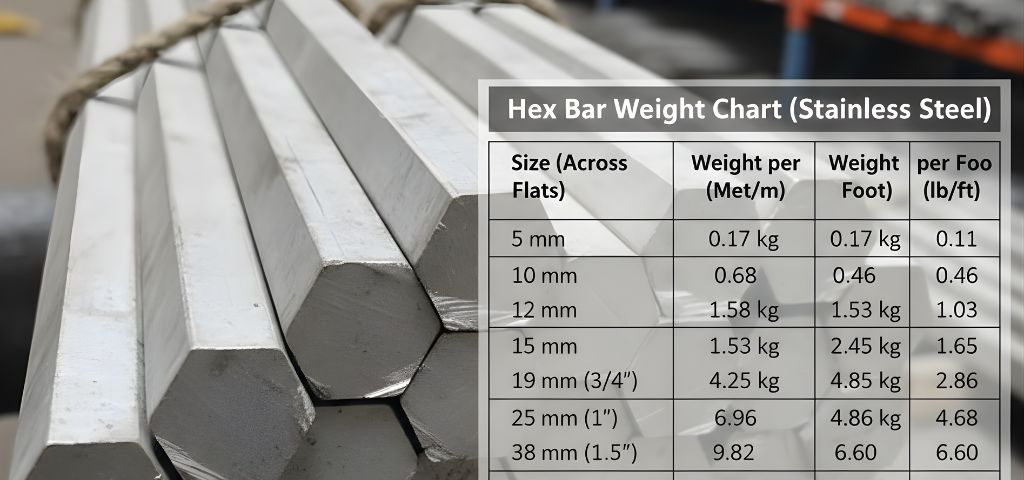
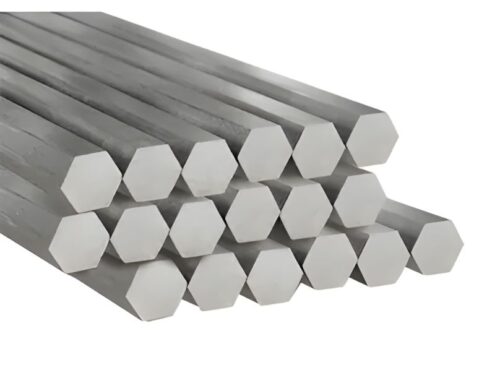
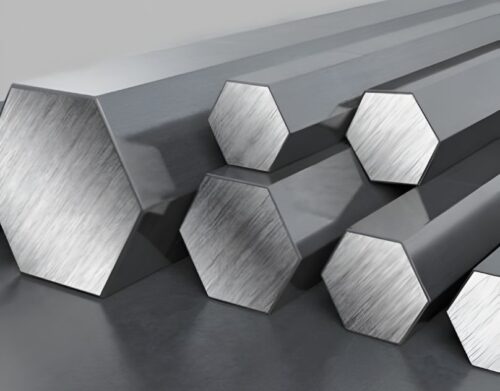
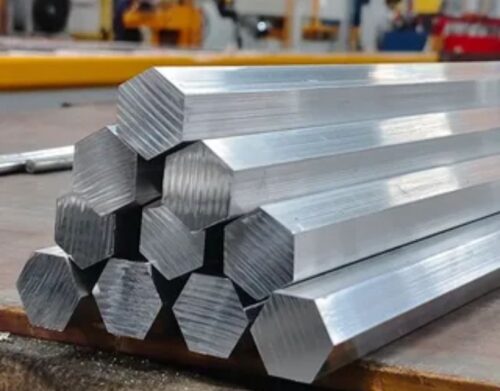
A hex bar, also referred to as a hexagonal bars, is a common form of metal bar that is used in industrial manufacturing and construction industries. They are hexagonal in shape unlike ordinary round or square bars, and this feature offers convenience of handling, machining and fastening. Hex bars are made with a combination of such materials as carbon steel, stainless steel, alloy steel, and in some cases titanium, which is why they have a great mechanical strength, durability, and wear and corrosion resistance.
The automotive, heavy engineering, oil and gas, and construction industries are the most active sectors that use hex bars in the construction of structures, fasteners, and precision components. Their easy availability of flat surfaces and symmetrical geometry has also made hex bars popular in manufacturing processes that need turning, milling, threading or forging.
Hex Bar Standard Grade
| SS Hex Bar | ||
| Size(mm) | WT PER FEET IN KGS | WT PER MTR IN KGS |
| 16 | 0.62 | 2.05 |
| 18 | 0.79 | 2.59 |
| 20 | 0.76 | 2.49 |
| 22 | 1.18 | 3.87 |
| 25 | 1.52 | 5.00 |
| 28 | 1.91 | 6.27 |
| 30 | 2.19 | 7.20 |
| 32 | 2.50 | 8.19 |
| 36 | 3.16 | 10.37 |
| 38 | 3.52 | 11.55 |
| 40 | 3.90 | 12.80 |
| 45 | 4.94 | 16.20 |
| 50 | 6.10 | 20.00 |
| 56 | 7.65 | 25.08 |
| 60 | – | – |
| 65 | – | – |
| 70 | – | – |
| 75 | – | – |
| 80 | – | – |
| 90 | – | – |
| 100 | – | – |
Key Features of Hex Bars
- Hexagonal Shape:
The six-sided geometry allows easy gripping with wrenches, making them ideal for bolts, nuts, and fasteners. - Material Versatility:
The hex bars can be made of carbon steel, stainless steel, alloy steel, and titanium and each can be used in particular application depending on the strength, corrosion resistance and heat resistance. - High Mechanical Strength:
The use of hex bars is also suitable in the construction of machinery used in structure and industry due to its strength and durability, as well as high levels of pressure and load. - Ease of Machining:
For threading, cutting, and shaping, hex bars are difficult to handle and time-consuming; however, the flat surfaces offer ease of operation through reduced time and expenses. - Corrosion Resistance:
Stainless steel and alloy hex bars resist rust and chemical wear, ideal for outdoor and industrial environments.
Hex Bar Chemical Composition
| Element | C | Cr | Mn | Ni | P | S | Si |
| SS 304 | 8.0 – 11.0 | 18.0 – 20.0 | 2.0 max | 8.0 – 11.0 | 0.045 max | 0.03 max | 1.0 max |
| SS 304L | 8.0 – 11.0 | 18.0 – 20.0 | 2.0 max | 8.0 – 12.0 | 0.045 max | 0.03 max | 1.0 max |
| SS 316 | 0.08 | 18.0 | 2.00 | 14.0 | 0.045 max | 0.03 max | 0.75 max |
| SS 316L | 0.08 | 18.0 | 2.00 | 14.0 | 0.045 max | 3.00 max | 0.10 max |
Common Sizes and Grades
Hex bars come in a variety of sizes and grades to meet industry standards:
- Sizes: Usually range from 10mm to 100mm across flats, with varying lengths based on customer requirements.
- Grades: Popular grades include SS 304, SS 316, ASTM A193, ASTM A194, and alloy steel grades suitable for high-pressure applications.
Choosing the right size and grade is critical for ensuring safety, durability, and cost efficiency in projects ranging from heavy machinery to fastener manufacturing.
Applications of Hex Bars
Hex bars are widely utilized in industrial and engineering projects. Some common applications include:
- Fasteners and Bolts: Hex bars are turned into bolts, nuts, studs, and threaded rods due to their easy wrench compatibility.
- Automotive Components: Used in manufacturing shafts, gears, and engine parts requiring strength and precision.
- Construction: Ideal for scaffolding, structural supports, and heavy-duty framework.
- Machinery Parts: Hex bars are machined into industrial components for pumps, valves, and heavy equipment.
Oil & Gas Industry: Corrosion-resistant hex bars are used for high-pressure pipelines, fasteners, and structural parts in offshore and onshore installations.
Weight Of Hex Bar
| Hex Bar | ||
| Size(mm) | WT PER FEET IN KGS | WT PER MTR IN KGS |
| 16 | 0.62 | 2.05 |
| 18 | 0.79 | 2.59 |
| 20 | 0.76 | 2.49 |
| 22 | 1.18 | 3.87 |
| 25 | 1.52 | 5.00 |
| 28 | 1.91 | 6.27 |
| 30 | 2.19 | 7.20 |
| 32 | 2.50 | 8.19 |
| 36 | 3.16 | 10.37 |
| 38 | 3.52 | 11.55 |
| 40 | 3.90 | 12.80 |
| 45 | 4.94 | 16.20 |
| 50 | 6.10 | 20.00 |
| 56 | 7.65 | 25.08 |
| 60 | – | – |
| 65 | – | – |
| 70 | – | – |
| 75 | – | – |
| 80 | – | – |
| 90 | – | – |
| 100 | – | – |
The weight of hex bars is also important to get the right estimation of materials, plan transportation, and cost coverage of a project in the industry. The data in the Hex Bar Weight Chart includes necessary information like sizes in flats, type of material, length, and the weight per meter, which is approximately. With this chart, engineers and the procurement teams are able to find the amount of material needed within the required time, minimize wastage, and ensure that structural components are not compromised when it comes to the requirements of the structure without jeopardizing safety or performance.
The Hex Bar Weight Chart is also used to guide manufacturers and fabricators on the appropriate grade and size to use in certain applications. The densities of different materials such as carbon steel, stainless steel and alloy steel differ and as a result the weight will be affected. Planning in machining, handling and installation can be conducted in a precise way, using the chart, and also guaranteeing adherence to international standards. This not only simplifies the working process but makes work of industries more efficient, dependable and economical.
Advantages of Using Hex Bars
- Easy Handling and Installation: Hexagonal shape allows for secure grip and torque application.
- Cost-Effective Machining: Flat surfaces reduce material wastage and machining effort.
- Versatility Across Industries: Suitable for automotive, construction, machinery, and heavy engineering projects.
Enhanced Strength and Safety: High-quality materials and grades provide reliability under extreme conditions.
| Across Flats (mm) | Length (mm) | Material | Weight per Meter (kg/m) | Notes |
| 10 | 1000 | Carbon Steel | 0.62 | Standard hex bar for small fasteners |
| 12 | 1000 | Stainless Steel | 0.89 | Corrosion-resistant, precision machining |
| 16 | 1000 | Alloy Steel | 1.58 | Heavy-duty industrial applications |
| 20 | 1000 | Carbon Steel | 2.47 | Medium industrial components |
| 25 | 1000 | Stainless Steel | 3.85 | Suitable for nuts, bolts, and studs |
| 30 | 1000 | Alloy Steel | 5.57 | Used in machinery and structural parts |
| 40 | 1000 | Carbon Steel | 9.85 | High-strength construction and engineering |
| 50 | 1000 | Stainless Steel | 15.30 | Ideal for corrosive environments and heavy-duty applications |
| 60 | 1000 | Alloy Steel | 22.00 | For heavy industrial and offshore projects |
| 80 | 1000 | Stainless Steel | 39.20 | Large structural components and machinery |
Conclusion
The use of hex bars in manufacturing, engineering and industrial processes is essential since these products are very strong, durable and flexible. Their distinctive hexagonal design makes machining, installation and fixing easy and at the same time they can perform very well in harsh conditions. The choice of material grade, size and finish will guarantee the best construction, automotive and industrial projects.
In the construction sector, automotive, or industrial manufacturing of machinery, quality hex bars will ensure efficiency, durability and reliability in the long term. To engineers and procurement teams, the applications, sizes and benefits of hex bars are important in improving the project performance and operational success.