
Step-by-Step Pre-Shipment Inspection (PSIC) for Exports
January 13, 2026
Exporting ‘Green’ Aluminium to Europe: Documentation and Benefits
January 14, 2026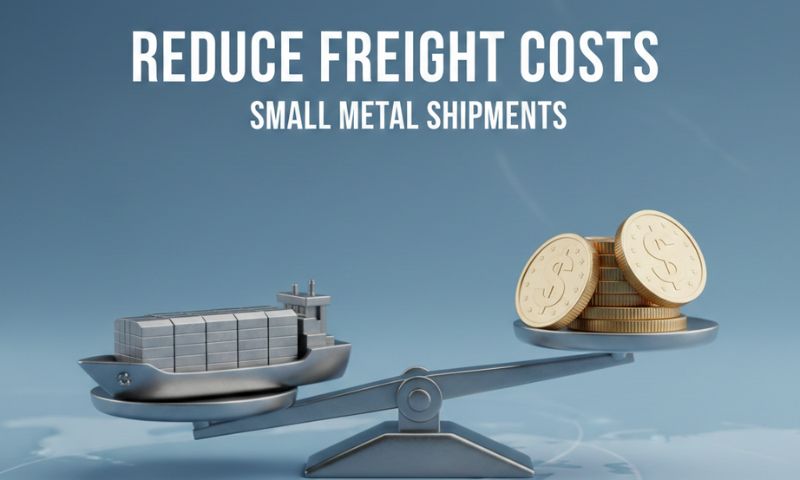
One of the greatest problems while doing small metal shipments that face the business that transports small metal consignments is the high freight costs. Whether you deal with pipes, sheets, bars, or fittings, logistics costs can easily lower the profit margins. Freight control is not a choice among the small and medium exporters, it is a survival and development requirement. This blog describes real-life and tested methods of minimizing the cost of freight on small shipments of metal without the need to undermine the reliability of delivery.
Understand Why Small Shipments Cost More
Freight companies are charged on a weight, volume, handling, and distance basis. There are also high per-unit freight costs on small metal shipments since they do not necessarily occupy container or truck capacity. Metals are also heavy in nature and therefore add weight expenses even in cases where volume of shipment is minimal. Knowing these cost aspects the business can make more intelligent shipping decisions and can also negotiate better terms.
Consolidate Shipments Whenever Possible
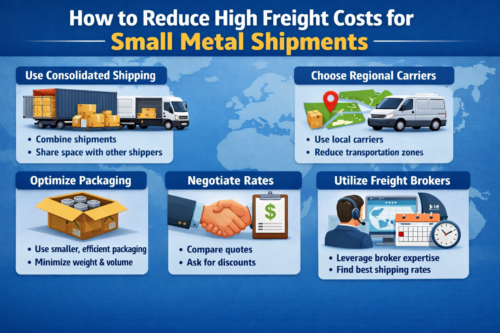
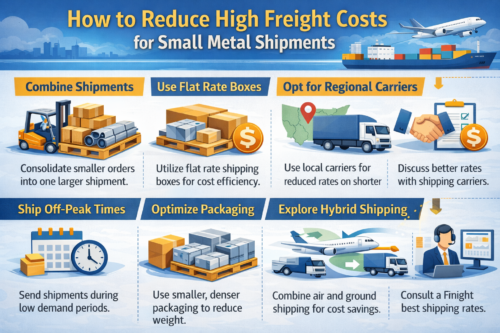
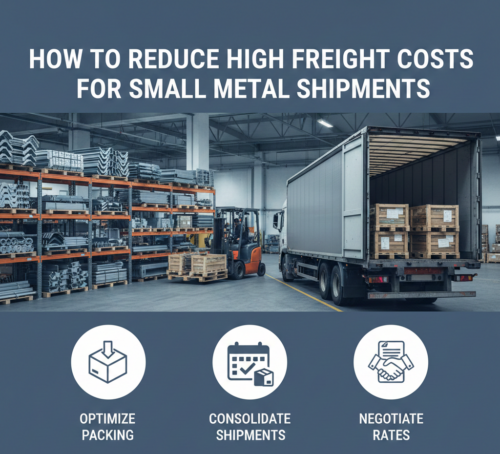
Shipment consolidation is one of the most efficient methods of minimizing freight costs. Some of these small orders could be combined into one big order instead of placing them separately. This saves on handling charges and cost per kilogram or cost per ton. Most of the freight forwarders have consolidation services which means that your cargo is merged with that of other compatible shipments and it becomes cheaper to small exporters.
Choose the Right Freight Mode
The choice of the appropriate mode of transport can have a great effect on the cost of freight. Airfreight is quick yet very costly and not most of the time suitable in transporting metal products unless there is a necessity to deliver the products urgently. Even when transporting small volumes, sea freight is cost-effective when it comes to heavy metals and LCL (Less than Container Load) services. Domestic or nearby international shipment can be cost effective by road or rail transport. It is best to compare freight options before booking.
Optimize Packaging to Reduce Volume Weight
Lack of proper packaging would lead to high freight costs due to elevated volumetric weight. Shipments of metals are to be packed in a tight manner and safely. Standard pallet sizes are to be used, excess wooden packing should be avoided and stacking should be tight. The space consumption can be minimized by flat packing sheets and wrapping pipes. Optimized packaging reduces the freight cost and risk handling.
Work with Reliable Freight Forwarders
A reliable freight forwarder is aware of metal logistics and can propose cost-efficient proposals. Experienced forwarders will negotiate better rates with carriers, will choose the best routes and can recommend consolidation opportunities. They also assist in avoiding the occurrence of hidden costs like port storage, demurrage and documentation penalties which tend to augment the overall freight expenses.
Use Nearby Ports and Strategic Locations
The inland transportation costs are lower because shipping is done by the nearest port or logistics hub. To exporters, selecting the appropriate port where there is a regular supply of vessels would prevent delays and the peak season surcharges. Handling and trucking costs can also be minimised by strategic warehouse places that are located near manufacturing facilities or ports.
Plan Shipments in Advance
Shipments done at the last moment usually command high prices. By pre-planning your freight, you are able to secure a better price of your freight and escape the premium prices of peak season. The freight rates are subject to demand, fuel prices and other trade conditions in the world. Companies that prepare production and shipping plans in advance are able to secure lower prices and cut down on the total cost of logistics.
Negotiate Long-Term Freight Contracts
In case you ship out metals periodically, a long-term freight contract can be very economical to negotiate. Annual or quarterly agreements can be beneficial to even the small exporters. Such contracts are stable-priced, priority space, and enhanced levels of service. Regular shipping quantities render you a more esteemed client to freight providers.
Leverage Digital B2B Platforms
Based on online B2B, buyers and sellers are connected with trusted logistics partners and exporters. These platforms enhance the shipment planning, minimize communication voids, and in most cases, offer access to competitive freight quotes. Pricing and supplier coordination contribute to preventing unwarranted costs on logistics in businesses.
Track, Review, and Improve Logistics Performance
Frequent audit of freight invoices, transit time and performance of delivery assists in detection of leak costs. Monitoring logistics information enables companies to optimize shipping operations and get rid of inefficiencies. Minor changes in packaging, routing, or scheduling may lead to long term freight savings.
Conclusion
To lower elevated freight expenses on small metals deliveries, a clever mix of planning and consolidation, packaging optimization, and strategic logistics relationships is necessary. With the help of the appropriate freight mode, the collaboration with the forwarders who are also experienced, and the digital tools, the small exporters will be able to regulate the transportation costs and remain competitive within the global marketplace. Effective freight management can help in saving funds, but also in developing the trust of the buyers in the company due to timely and economical deliveries.
For updates and additional information, follow on social media platforms.