
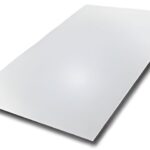
Complete Industrial Guide to Stainless Steel 3CR12 Plate with Detailed Weight Chart and Thickness Reference
February 27, 2026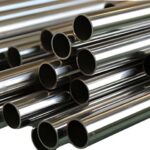
Technical Overview of Stainless Steel 304 Electropolished Seamless Tubes and Weight Calculations
February 28, 2026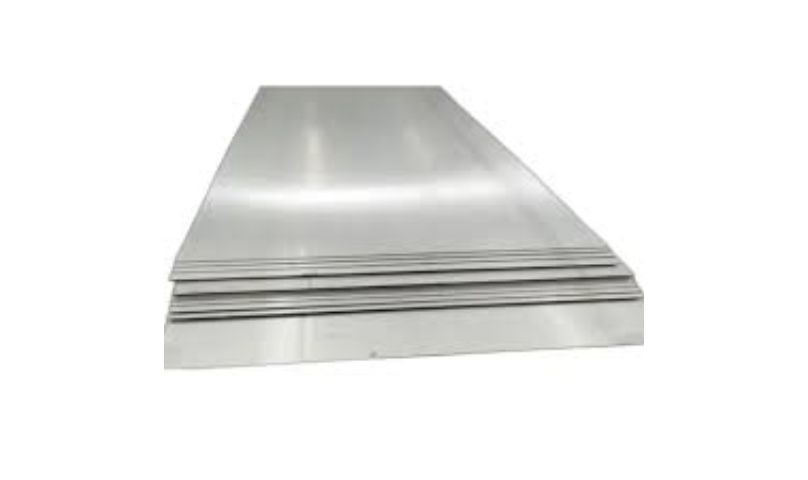
This guide includes all the information, such as the SS 409L Sheet Weight Chart, dimensional requirements, chemical compositions, mechanical properties, and tolerances of A240 ASTM. It is made to be used by engineers and fabricators and also industrial buyers to ensure they can determine the weight of materials, cost, and logistics.
The SS 409L sheet finds extensive use in automotive exhaust systems, heat exchanger and structural applications where low carbon is needed. The reduced amount of carbon in 409L decreases the carbide formation during welding leading to improved corrosion resistance. The weight chart in kg and mm will be detailed to make sure the material is planned accurately.
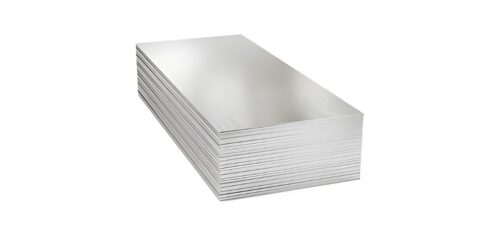
What is a Stainless Steel 409L Sheet Weight Chart
Stainless Steel 409L Sheet Weight Chart in Kg and mm is a reference table that is used to calculate the theoretical weight of sheets depending on:
- Thickness (mm)
- Width (mm)
- Length (mm)
- Density of SS 409L (approximately 7.7 g/cm³)
This chart is used to estimate the shipping weight, fabrication load, and project costing by fabricators, procurement teams, and engineers.
The general formula used for calculation is:
Weight (kg)=Length (m)×Width (m)×Thickness (mm)×7.7
Weight (kg)=Length (m)×Width (m)×Thickness (mm)×7.7
Another demand of many buyers is the Stainless Steel 409L Sheet weight chart in PDF form to be carried with them during procurement and site planning.
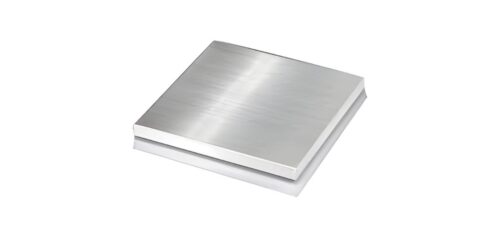
Stainless Steel 409L Sheets Specifications
It is essential to mention that before considering dimensional and weight data, one needs to comprehend technical standards of SS 409L sheets.
Grade Specifications for Stainless Steel 409L Sheets
Stainless Steel 409L Sheet sheets are low-carbon ferritic stainless steel sheets produced in compliance with the international standards, including ASTM A240 / A240M and ASME SA-240. They have better weldability, good corrosion resistance, and oxidation resistance to temperatures of 800degC and have stabilizing elements such as titanium and niobium to prevent sensitisation and durability. The SS 409L sheets have excellent formability, average strength, and affordability, which have made them favorable in automotive exhaust systems, furnace parts, and other structures that require heat resistance.
| Parameter | Details | Description / Scope |
| Material Grade | Stainless Steel 409L | Low-carbon ferritic stainless steel with improved weldability and corrosion resistance |
| ASTM Standard | ASTM A240 / A240M | Standard specification for chromium and chromium-nickel stainless steel plate, sheet, and strip |
| ASME Standard | ASME SA-240 | Boiler and pressure vessel code material specification |
| UNS Designation | S40900 / S40910 | Unified Numbering System identification |
| EN Number | 1.4512 (X2CrTiNb12) | European standard equivalent grade |
| DIN Equivalent | X2CrTiNb12 | German DIN material designation |
| JIS Equivalent | SUS409L | Japanese Industrial Standard equivalent |
| AFNOR Equivalent | X2CrTi12 | French AFNOR designation |
| Material Type | Ferritic Stainless Steel | Magnetic, cost-effective with good heat resistance |
| Chemical Composition | Cr: 10.5-11.75%, Ti: 6xC-0.75%, C: 0.03% max | Low carbon for better weldability and formability |
| Stabilizing Elements | Titanium (Ti), Niobium (Nb) | Prevents sensitization and intergranular corrosion |
| Density | 7.75-7.85 g/cm³ | Standard density for ferritic stainless steels |
| Product Forms | Sheet, Plate, Coil, Strip | Hot rolled, cold rolled, annealed conditions |
| Thickness Range | 0.3 mm – 8.0 mm | Standard stock; custom thicknesses available |
| Width Range | 914 mm – 1500 mm | Slit widths from 25 mm available |
| Length Range | 2000 mm – 6000 mm | Cut-to-length options |
| Surface Finishes | No.1, 2B, 2D, BA, No.4, HL, 6K, 8K | Mill, polished, brushed finishes |
| Edge Condition | Mill Edge, Slit Edge, Round Edge | Production method dependent |
| Tensile Strength | 380-450 MPa (min) | Annealed condition |
| Yield Strength | 170-205 MPa (min) | 0.2% offset |
| Elongation | 20-25% min | Excellent formability |
| Hardness | 160-190 HB max | Annealed condition |
| Applications | Automotive exhaust, mufflers, catalytic converters | Heat-resistant structural components |
| Corrosion Resistance | Good atmospheric, moderate marine | Excellent oxidation resistance up to 800°C |
| Weldability | Excellent | Low carbon minimizes carbide precipitation |
| Formability | Good | Suitable for bending, drawing operations |
| Compliance | ASTM, ASME, EN, ISO standards | Automotive, industrial, architectural specs |
| Typical Uses | Exhaust systems, furnace parts, tubing | Cost-effective alternative to 304/430 |
These standards specify manufacturing standards, chemical requirements, mechanical performance and tolerances.
Chemical Properties of SS 409L Sheets
The chemical content of SS 409L is well managed to offer quality corrosion, improved weldability and stability of structure. This is because of its low carbon content, which reduces precipitation of carbide during the welding process and chromium, which improves the oxidation and corrosion resistance in moderate environments.
| Element | Composition (%) |
| Chromium (Cr) | 10.5 – 11.75 |
| Carbon (C) | 0.03 max |
| Manganese (Mn) | 1.00 max |
| Silicon (Si) | 1.00 max |
| Phosphorus (P) | 0.045 max |
| Sulfur (S) | 0.03 max |
| Iron (Fe) | Balance |
The low carbon is such that it does not form as carbide during the welding process and enhances resistance to corrosion.
Mechanical Properties of SS 409L Sheets
The mechanical properties are important in the performance of SS 409L sheets in natural structural and high-temperature use. This grade has a balanced strength and good ductility thus providing reliable load-bearing capacity and good formability and weldability.
| Property | Value |
| Tensile Strength | 450 MPa (min) |
| Yield Strength | 205 MPa (min) |
| Elongation | 22% (min) |
| Hardness | 183 HB (max) |
These are the qualities that render SS 409L to moderate strength structural and high-temperature applications.
SS 409L Sheet Equivalent Grades
The equivalent grades of SS 409L sheet are widely used in international procurement to maintain uniform conformity in terms of material compatibility and standardization of different regions. This grade fits UNS S40930, EN 1.4510, and DIN X2CrTi12 enabling those who buy, design, and produce them globally to procure similar materials without jeopardizing performance or specifications.
| Standard | Equivalent Grade |
| UNS | S40930 |
| EN | 1.4510 |
| DIN | X2CrTi12 |
Equivalent grades ensure compatibility in international projects.
Stainless Steel 409L Sheet Dimensional Chart
Stainless Steel 409L Sheet Dimensional Chart defines most popular thicknesses, which are stocked and their widths and lengths are the common ones that are convenient to handle, cut, and ship in the industry. These sizes are commonly offered by manufacturers and suppliers and there is an option of mill edges or trimmed edges depending on the quantity of orders. Lighter components are best served by finer gauges such as 0.5 mm with heavier structural components by heavier gauges to a maximum of 5.0 mm, make sure with your supplier to know their actual stock it has or what they can cut to in that thickness to suit your project requirements.
| Thickness (mm) | Standard Width (mm) | Standard Length (mm) |
| 0.5 | 1000 | 2000 |
| 0.8 | 1000 | 2000 |
| 1.0 | 1250 | 2500 |
| 1.5 | 1250 | 2500 |
| 2.0 | 1500 | 3000 |
| 3.0 | 1500 | 3000 |
| 4.0 | 1500 | 3000 |
| 5.0 | 1500 | 3000 |
There are custom dimensions depending on the requirements of the project.
SS 409L Sheet Weight Chart (Kg)
The Stainless Steel 409L Sheet Weight Chart in Kg is shown below and has been calculated using the 1000 mm x 2000 mm standard sheet.
| Thickness (mm) | Weight (kg per sheet) | Weight (kg/m²) |
| 0.3 | 4.7 | 2.35 |
| 0.5 | 7.8 | 3.93 |
| 0.8 | 12.5 | 6.25 |
| 1.0 | 15.7 | 7.85 |
| 1.2 | 18.8 | 9.42 |
| 1.5 | 23.5 | 11.78 |
| 2.0 | 31.4 | 15.70 |
| 2.5 | 39.2 | 19.63 |
| 3.0 | 47.1 | 23.55 |
| 4.0 | 62.8 | 31.40 |
| 5.0 | 78.5 | 39.25 |
| 6.0 | 94.2 | 47.10 |
| 8.0 | 125.6 | 62.80 |
Weight values are theoretical and may slightly vary depending on manufacturing tolerance.
ASTM A240 SS 409L Sheet Tolerances
According to ASTM A240, tolerances for stainless steel sheets depend on thickness and width. Typical thickness tolerance ranges:
- Up to 1.0 mm: ±0.10 mm
- 1.0 mm to 2.0 mm: ±0.15 mm
- Above 2.0 mm: ±0.25 mm
- Flatness and width tolerances are also defined under ASTM A240 standards.
Stainless Steel 409L Sheet Weight Chart in PDF
Many engineers and procurement managers prefer downloading the Stainless Steel 409L Sheet weight chart in PDF for:
- On-site fabrication reference
- Cost estimation
- Shipping weight calculation
- Tender documentation
A printable PDF version typically includes:
- Dimensional chart
- Weight calculation formula
- ASTM A240 tolerances
- Chemical and mechanical properties
Conclusion
These stainless steel 409L sheets are terrific because of its low-carbon ferritic alloy that provides high weldability, oxidation up to 800degC, and low cost characteristics in the automotive exhaust system, furnace components and structural. This is an all inclusive manual that offers accurate weight data (1000×2000 mm sheets of 4.7 kg to 0.3 mm to 125.6 kg to 8.0 mm), dimensional data (0.3-8.0 mm thickness, 914-1500 mm widths), chemical / mechanical data (ASTM A240 standards), and equivalent grades (UNS S40900 / S40930, EN 1.4512, DIN X2CrTiNb1
SS 409L sheets are highly suitable in planning the material and the weight formula which is given [Weight (kg) = L(m) x W(m) x T(mm) x 7.85] can be used by engineers and fabricators to ensure the correct cost, shipping and load calculations with the standard sizes and custom requirements. Whether it is tolerance, surface finishes (2B, No.4, HL), or mechanical strengths (450 MPa tensile min) this resource simplifies compliance and project implementation and points out the reliability SS 409L has demonstrated as a 304/430 substitute where extreme high temperatures are needed.