

Sheets and Plates Weight Chart: Complete Guide for Accurate Metal Weight Calculation
February 3, 2026
Buttweld 45 Degree Elbow Weight Chart Complete Guide
February 4, 2026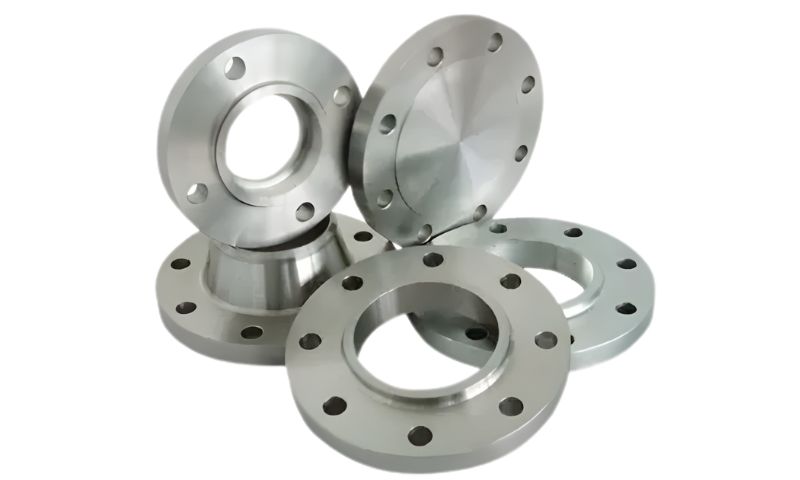
Flanges are important parts of industrial piping systems that are used to bind the pipes, valves, and pumps among other equipment. With small utility pipelines through to large scale oil and gas plants, proper choice of flanges will make them safe, perform well and offer long services to the user. The Flanges Weight Chart is one of the most significant technical documents that are used in selections of flanges and it is a document that contains standardized details of weights of various flange sizes, pressure classes and types.
An industrial flange weight chart is a popular tool with industrial flange manufacturers, bulk flange suppliers, EPC contractors, and providers to make sure that they plan materials correctly, estimate costs and manage logistics. Accurate weight information will enable purchasers and engineers to compare items, procurement specification and prevent expensive mistakes in procurement and installation.
What Is a Flange Weight Chart?
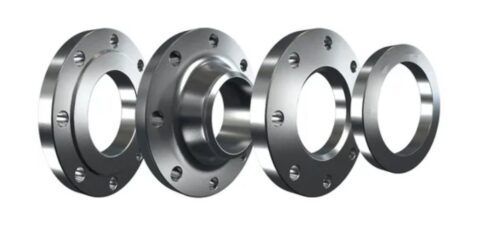
A flange weight chart is a technical table that indicates the approximate/standard weight of flanges with regard to such parameters as the nominal pipe size (NPS), pressure rating (Class 150, 300, 600, etc.), and flange type. Such charts are typically made in the international standards such as ASME B16.5, ASME B16.47, DIN, EN, and JIS.
The chart enables the engineers and the procurement departments to quickly know the weight of a particular flange before it is produced, ordered or installed. This fact is essential in designing the structural support, transportation and on-site handling.
Check Weight and Dimension Chart Class 150 Flange, Class 300 Flange, Class 600 Flange, Class 900 Flange, Class 1500 Flange, Class 2500 Flange
| NOMINAL SIZE | DIMENSIONS | WEIGHT (KG) | ||||
|---|---|---|---|---|---|---|
| NPS (Inches) | DN (mm) | FLANGE MM | FLANGE THICKNESS | SOW SW | WN | BLIND |
| 1/2 | 15 | 88.9 | 11.2 | 0.4 | 0.5 | 0.4 |
| 3/4 | 20 | 98.6 | 12.7 | 0.6 | 0.7 | 0.6 |
| 1 | 25 | 108 | 14.2 | 0.8 | 1 | 0.9 |
| 1 1/4 | 32 | 117.3 | 15.7 | 1 | 1.3 | 1.2 |
| 1 1/2 | 40 | 127 | 17.5 | 1.3 | 1.7 | 1.5 |
| 2 | 50 | 152.4 | 19.1 | 2.1 | 2.6 | 2.4 |
| 2 1/2 | 65 | 177.8 | 22.4 | 3.3 | 4.1 | 3.9 |
| 3 | 80 | 190.5 | 23.9 | 3.9 | 4.9 | 4.9 |
| 3 1/2 | 90 | 215.9 | 23.9 | 4.8 | 6.1 | 6.2 |
| 4 | 100 | 228.6 | 23.9 | 5.3 | 6.8 | 7.0 |
| 5 | 125 | 254 | 23.9 | 6.1 | 8.6 | 8.6 |
| 6 | 150 | 279.4 | 25.4 | 7.5 | 10.6 | 11.3 |
| 8 | 200 | 342.9 | 28.4 | 12.1 | 17.6 | 19.6 |
| 10 | 250 | 406.4 | 30.2 | 16.5 | 24 | 28.6 |
| 12 | 300 | 482.6 | 31.8 | 26.2 | 36.5 | 43.2 |
| 14 | 350 | 533.4 | 35.1 | 34.6 | 48.4 | 58.1 |
| 16 | 400 | 596.9 | 36.6 | 44.8 | 60.6 | 76.1 |
| 18 | 450 | 635 | 39.6 | 48.9 | 68.3 | 93.7 |
| 20 | 500 | 698.5 | 42.9 | 61.9 | 84.5 | 122.0 |
| 24 | 600 | 812.8 | 47.8 | 86.9 | 115 | 185.0 |
The use of Flanges Weight Chart in Piping Systems is important.
There is more than numbers to flange weight: it is the matter with direct impact on the system safety and efficiency of the project. The wrong assumption regarding the weight of the flange may result in the wrong pipe supports, unacceptable lifting methods, and hidden cost increases.
Importance of flanges weight charts:
- Helps engineers compute loads and stresses in pipeline.
- Helps in the choice of correct pipe supports and brackets.
- Enhances safety in the lifting, handling, and installation.
- Facilitates accurate estimation of costs on materials and transportation.
- Minimizes chances of placing wrong flange orders.
Flange variations and types of the flanges.
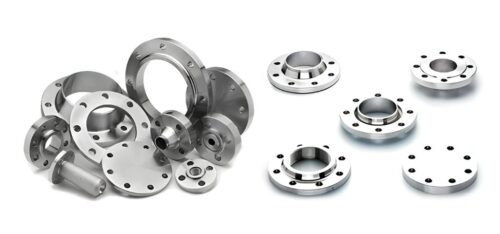
The various types of flanges possess various designs and this directly affects the weight. The flange weight may not be very close even in the same size and pressure category.
Flange Weights by Pressure Class and Size in mm kg
| Pipe Size (inch) | 150 # | 300 # | 600 # | 900 # | 1500 # | 2500 # | ||||||||||||
|---|---|---|---|---|---|---|---|---|---|---|---|---|---|---|---|---|---|---|
| WN | SO | BLD | WN | SO | BLD | WN | SO | BLD | WN | SO | BLD | WN | SO | BLD | WN | SO | BLD | |
| 1/2″ | 2 | 1 | 1 | 2 | 1 | 1 | 2 | 2 | 2 | SEE 1500 # WEIGHTS | 5 | 4 | 4 | 7 | 7 | 7 | ||
| 3/4″ | 2 | 2 | 2 | 3 | 3 | 3 | 4 | 3 | 3 | SEE 1500 # WEIGHTS | 6 | 5 | 6 | 8 | 8 | 8 | ||
| 1″ | 3 | 2 | 2 | 4 | 3 | 3 | 4 | 4 | 4 | SEE 1500 # WEIGHTS | 9 | 8 | 8 | 12 | 11 | 11 | ||
| 1 1/2″ | 4 | 3 | 3 | 7 | 6 | 6 | 8 | 7 | 8 | SEE 1500 # WEIGHTS | 13 | 12 | 13 | 25 | 22 | 23 | ||
| 2″ | 6 | 5 | 5 | 9 | 7 | 8 | 12 | 9 | 10 | SEE 1500 # WEIGHTS | 25 | 25 | 25 | 42 | 37 | 39 | ||
| 2 1/2″ | 8 | 7 | 7 | 12 | 10 | 12 | 18 | 13 | 15 | SEE 1500 # WEIGHTS | 36 | 36 | 35 | 52 | 55 | 56 | ||
| 3″ | 10 | 8 | 9 | 15 | 13 | 16 | 23 | 16 | 20 | 31 | 26 | 29 | 48 | 48 | 48 | 94 | 83 | 86 |
| 4″ | 15 | 13 | 17 | 25 | 22 | 27 | 42 | 37 | 41 | 53 | 53 | 54 | 73 | 73 | 73 | 145 | 125 | 130 |
| 5″ | 19 | 15 | 20 | 32 | 28 | 35 | 68 | 63 | 68 | 86 | 83 | 87 | 130 | 130 | 140 | 245 | 210 | 225 |
| 6″ | 24 | 19 | 26 | 42 | 39 | 50 | 81 | 80 | 86 | 110 | 110 | 115 | 165 | 165 | 160 | 380 | 325 | 345 |
| 8″ | 39 | 30 | 45 | 67 | 58 | 81 | 120 | 115 | 140 | 175 | 170 | 200 | 275 | 260 | 300 | 580 | 485 | 530 |
| 10″ | 52 | 43 | 70 | 91 | 81 | 124 | 190 | 170 | 230 | 260 | 245 | 290 | 455 | 435 | 510 | 1075 | 930 | 1025 |
| 12″ | 80 | 64 | 110 | 140 | 115 | 185 | 225 | 200 | 295 | 325 | 325 | 415 | 690 | 580 | 690 | 1525 | 1100 | 1300 |
| 14″ | 110 | 90 | 140 | 180 | 165 | 250 | 280 | 230 | 355 | 400 | 400 | 520 | 940 | NA | 975 | NA | NA | NA |
| 16″ | 140 | 98 | 180 | 250 | 190 | 295 | 390 | 330 | 495 | 495 | 425 | 600 | 1250 | NA | 1300 | NA | NA | NA |
| 18″ | 150 | 130 | 220 | 320 | 250 | 395 | 475 | 400 | 630 | 680 | 600 | 850 | 1625 | NA | 1750 | NA | NA | NA |
| 20″ | 180 | 165 | 285 | 400 | 315 | 505 | 590 | 510 | 810 | 830 | 730 | 1075 | 2050 | NA | 2225 | NA | NA | NA |
| 22″ | 225 | 185 | 355 | 465 | 370 | 640 | 720 | 590 | 1000 | NA | NA | NA | NA | NA | NA | NA | NA | NA |
| 24″ | 260 | 220 | 430 | 580 | 475 | 790 | 830 | 730 | 1250 | 1500 | 1400 | 2025 | 3325 | NA | 3625 | |||
Usually used types of flanges listed in weight charts:
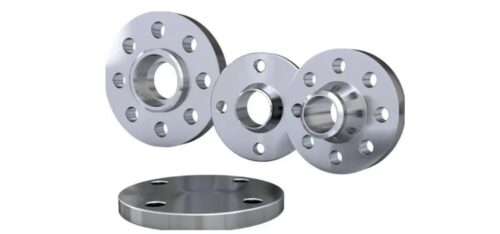
Weld Neck Flanges
The long tapered hub of these flanges gives them high strength and stress distribution making them heavy. They are usually applied in high pressure and high temperature applications.
Slip-On Flanges
Slip-on flanges are relatively lighter than the weld neck flanges and they take less time to install. They tend to be employed in the situations that do not demand a high level of pressure.
Blind Flanges
Blind flanges are discs of solid material that are employed to seal the ends of the pipelines. They weigh more typically, as they lack a bore and they need the additional material.
Socket weld and threaded flanges.
These flanges are applied in pipelines with a small diameter and tend to be less weighty as compared to the weld neck flanges of similar size.
Influencing Factors Flange weight.
The weight of a flange is affected by several technical reasons, and all these are expressed in a typical flange’s weight chart.
Flanges Specification
Specifications for Flanges are mentioned below. If any of the specifications are not mentioned here, please get in touch with us.
| Flanges | Specifications |
|---|---|
| Flanges Types | Slip-On, Weld Neck, Long Weld Neck, Threaded, Blind, Companion, Lap Joint |
| Class | 150 LBS, 300 LBS, 600 LBS, 900 LBS, 1500 LBS, 2500 LBS ASA 150, ASA 300, PN 6,10,16,25, 40,64,100,160 ETC. available with NACE MR 01-75 |
| Size | 1/2″ (15 NB) to 48″ (1200NB) DN10~DN5000 |
| Type | Raised Face (RF), Flat Face (FF), Ring Type Joint (RTJ), Lap-Joint Face (LJF), Large Male-Female (LMF), Small Male-Female (SMF), Large Tongue & Groove, Small Tongue, Groove |
| Grades | |
| Stainless Steel | ASTM / ASME 201, 202, 301, 304, 304L, 310, 310S, 316L, 316TI, 317, 317L, 321, 347, 409, 409M, 409L, 410, 410S, 420, 430, 431, 441, 444, 446, 17.4PH, 904L |
| Super Duplex Steel | S32750 |
| Duplex Steel | ASTM / ASME SA 790 UNS NO S 31803 , S 32205 , S 32550 , S 32750 , S 32760. |
| Carbon Steel | ASTM / ASME A 335 GRP 1 , P 5 , P 9 , P 11 , P 12 , P 22 , P 23 , P 91 |
| Alloys Steel | ASTM / ASME A 691 GRP1 CR , 1 1/4 CR , 2 1/4 CR , 5 CR , 9CR , 91. |
| Nickel Alloys | Nickel Alloys 200, Nickel Alloys 201 |
| Titanium | Grade 1, Grade 4, Grade 5(Ti 6Al-4V), Grade 6(Ti 5Al-2.5Sn), Grade 7, Grade 11, Grade 12, 8Ai-1Mo-1V, Grade 9(3Al-2.5V), 6Al-6V-25n, 6Al-2Sn-4Zr-2Mo, 6Al-7Nb, Grade 23(Ti 6AL-4V ELI), Grade 5 ELI |
| Inconel | Inconel 600, Inconel 601, Inconel 625, Inconel 625LCF, Inconel 686, Inconel 718, Inconel 800, Inconel 825, Inconel X-750 , Inconel 690, Inconel 602, Inconel 617, Inconel 925, Inconel A-289, Inconel AL-6XN, AL-904L |
| Hastelloy | Hastelloy C-22, Hastelloy C-276, Hastelloy C-2000, Hastelloy C-4, Hastelloy X, Hastelloy B, Hastelloy N, Hastelloy G |
| Molybdenum | ASTM / ASME A 182 GR F 5, F 9 , F 11 , F 12 , F 22 , F 91, ASTM B387, Ferro Molybdenum |
| Cobalt | Cobalt HS-6, Cobalt HS-4, Cobalt HS-25, Sterlite Grade 1, Sterlite Grade 6, Sterlite Grade 12, Sterlite Grade 21 |
| Niobium | ASTM B394, R04200 R04210 |
| Nimonic | Nimonic75, Nimonic80, Nimonic85, Nimonic90, Nimonic263, etc |
| Tungsten | W1 WAl1, W61, etc, Carbonite Tungsten, Copper Tungsten, Nickel Tungsten |
| Nichrome | Nichrome90, Nichrome80, Nichrome80A, Nichrome RW80, Nichrome75, etc |
| Magnesium | Magnesium AL017100, AL017140, AL017150, AL017160, AL017200, AL017210, AL017250, etc. |
| Tantalum | Tantalum – Grade 1. |
| Monel | Monel 400, Monel k500 |
| MU-METAL | MU-METAL |
| Zirconium | Zirconium 702, Zirconium 705, Zirconium 705, Zirconium-2, Zirconium-4 |
| Beryllium Copper | Alloy 25 UNSC17200 |
| Aluminium | 1050,1100, 2017, 7150, 7178, 7575, 2050, 7085, 2011 A92011, 2014A A92014, 2024 A92024, 2219, 5052 A95052, 5083 A95083, 5754, 6061 A96061 A86061, 6063, 6082 A96082, 7071 7020, 7050 A97050, 7075 A97075 A87075, 7175 |
| Copper Alloys | C 11000, C 10200, C 12200, C 51100, C 51000, C 51900, C 52000, C 52100, C 74500, C 75700, C 75400, C 76400, C 77000, C 21000, C 22000, C 23000, C 24000, C 26000, C 26800, C 27000, C 27200, C 28000 |
Major factors include:
- Nominal pipe size (NPS)
- Pressure class or rating
- Flange type and design
- Facing type (RF, FF, RTJ)
- Grade of materials (carbon steel, stainless steel, alloy steel, duplex)
- The increased pressure ratings and the denser the material, the heavier is the flange.
Flanges – Chemical Composition
Chemical Structure for Flanges is mentioned below. If any of the Chemical Structure is not mentioned here, please contact us
| Grade | C | Mn | Si | P | S | Cr | Mo |
|---|---|---|---|---|---|---|---|
| F1 | 0.15 max | 0.3-0.6 | 0.5 | 0.03 | 0.03 | 4-6 | 0.44-0.65 |
| F5 | 0.15 max | 0.3-0.6 | 0.5-1.0 | 0.03 | 0.03 | 4-6 | 0.44-0.65 |
| F9 | 0.15 max | 0.3-0.6 | 0.5-1.0 | 0.03 | 0.03 | 8-10 | 0.9-1.1 |
| F11 | 0.5-0.15 | 0.3-0.6 | 0.5-1.0 | 0.03 | 0.03 | 1.0-1.5 | 0.44-0.65 |
| F12 | 0.15 max | 0.3-0.6 | 0.5 | 0.03 | 0.03 | 4-6 | 0.44-0.65 |
| F22 | 0.50.15 max | 0.3-0.6 | 0.5 | 0.03 | 0.03 | 4-6 | 0.44-0.65 |
| F91 | 0.15 max | 0.3-0.6 | 0.5-1.0 | 0.03 | 0.03 | 8-10 | 0.9-1.1 |
Industrial uses of Flanges Weight Chart.
Flange weight charts are employed in many industries and they include, oil and gas, petrochemicals, power plants, water treatment, shipbuilding, and heavy engineering. They are relied upon by design engineers when planning a system, and by the team who conducts procurement to make sure that the quotations received by suppliers are correct. These charts are also used by site engineers to plan on how to lift and install the equipment.
Conclusion
Flanges weight chart is an essential reference tool to persons who have to deal with the piping design, manufacturing, purchasing, or installing. It can assist in proper calculations of engineering, enhance safety, and control the project costs. Through insight into the changing flange weight under size, type, material, and pressure class, the professionals can be able to make the correct decisions and take care of long-term reliability of the system. A properly designed flanges weight chart manual enables the value addition of both technical and SEO power to the content of a WordPress blog that can be written in accordance with the industrial.