
Complete Buttweld Barrel Nipple Weight Chart Guide: Dimensions, Weight in KG & MM
February 11, 2026
Buttweld Long Stub End Weight Chart: A Complete Product Guide
February 12, 2026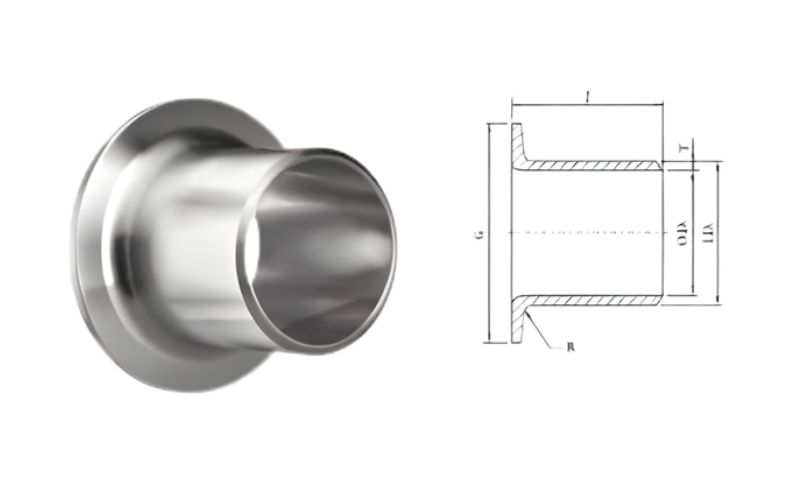
In the piping system installed in industries all over the world, accuracy concerning the selection of fittings is of utmost importance. While the lap joint flange is used with a specific fitting, the Buttweld Short Stub End is one such fitting that is commonly used. For the purpose of engineering the installation of the Buttweld Short Stub End, the professionals seek the help of the Buttweld Short Stub End Weight Chart. The main information that is required is the accurate weight.
What Is a Buttweld Short Stub End?
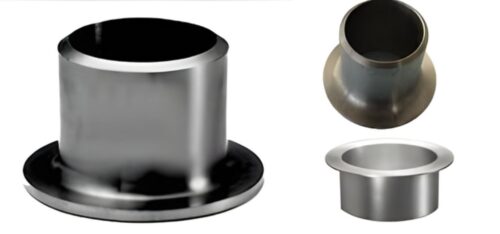
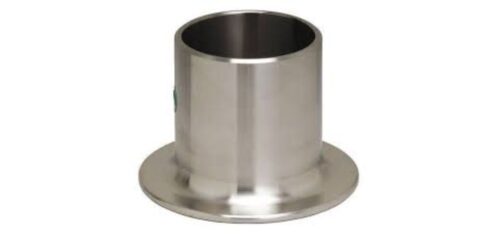
A Buttweld Short Stub End is a pipe fitting that can be welded to a pipe and used with a lap joint flange. A Buttweld Short Stub End differs from a long stub end in that it has a shorter neck. This pipe end component is used where space is limited.
The pipe and the stub end are welded, and the lap joint flange is loose and free to rotate. By doing this, it allows for the simple alignment of the bolts during the assembly of the piping system and for its dismantling. Buttweld short stub ends normally meet the ASME B16.9 standards, and they may be used for low and medium-pressure services where frequent alignment of the flange is needed.
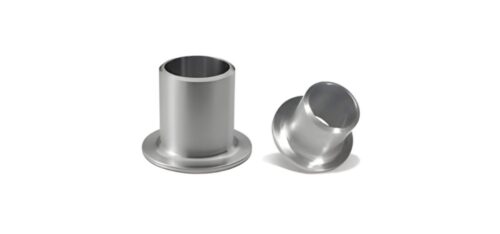
Key Features:
- Short neck design for compact installations
- Used with lap joint flanges
- Smooth bore for improved flow characteristics
- Cost-effective compared to long stub ends.
- Available in multiple materials and standards
Why Is a Buttweld Short Stub End Weight Chart Important?
The Buttweld Short Stub End Weight Chart has another important function other than referring to the weight of the material used. The chart will help engineers compute the dead weight of the pipe, especially when the system has multiple flanged connections.
From the procurement side, the weight chart will guide us in accurately planning the exact requirement of the material to be ordered without over-ordering or under-ordering the item. Also, from the installation point of view, the exact weight of the item can be utilized in selecting the appropriate equipment for lifting the item, thus facilitating safety on site. It can also be utilized for large export projects, where the exact weight of the item needs to be accounted for.
A weight chart provides exact weights based on nominal pipe size, schedule, and material, which is essential for:
- Accurate load and stress analysis
- Proper pipe support and structural design
- Estimating handling and transportation costs
- Project budgeting and cost control
- Selecting suitable fittings for specific pressure and service conditions
Without a reliable weight chart, miscalculations can result in design errors, safety risks, and increased project costs.
Standard Buttweld Short Stub End Weight Chart
| Nominal Pipe Size (NPS) | Outside Diameter (mm) | Length (mm) | Approx. Weight (kg) |
| 1/2″ | 21.34 | 38 | 0.3 |
| 1″ | 33.40 | 38 | 0.6 |
| 2″ | 60.33 | 51 | 1.4 |
| 3″ | 88.90 | 64 | 3.0 |
| 4″ | 114.30 | 64 | 4.8 |
| 6″ | 168.28 | 76 | 9.5 |
| 8″ | 219.08 | 89 | 18.0 |
| 10″ | 273.05 | 89 | 28.0 |
| 12″ | 323.85 | 102 | 40.0 |
Note: Actual weight may vary depending on material grade, wall thickness (schedule), and manufacturing tolerances.
Materials Available
Besides regular grades, buttweld short stub ends can be made from special materials to enable these components to function effectively under severe conditions like corrosion, temperature, and pressure. Various heat treatment techniques and finishes, like solution annealing, normalizing, pickling, and passivating, can be employed for improved component endurance.
Selecting the correct material influences not only the weight but also the strength, corrosion resistance, weldability, and service life of the fitting.
Common materials include:
- Carbon Steel (ASTM A234 WPB)
- Stainless Steel (304, 304L, 316, 316L)
- Alloy Steel (WP11, WP22, WP91)
- Duplex & Super Duplex Steel
- Nickel Alloys (Inconel, Monel, Hastelloy)
Applications of Buttweld Short Stub Ends
In fact, buttweld short stub ends are commonly used for piping systems because they are important for cost-effectiveness. The shorter length allows for more compact installation locations, which is handy for use on a skid system and cost savings. Furthermore, short stub ends are used for systems that are exposed to corrosive conditions because the lap flange can be replaced without cutting or interfering with the pipeline.
Due to their flexibility and ease of installation, they are frequently used in both onshore and offshore projects.
Typical applications include:
- Oil & Gas pipelines
- Chemical and petrochemical plants
- Power plants and utilities
- Water treatment and desalination systems
- Food, beverage, and pharmaceutical industries
| Nominal Size (DN) | Nominal Size (NPS) | OD Max (mm) | OD Min (mm) | Long Type Length (F) | Short Type Length (F) | Radius A (R) | Radius B max (R) | Diameter of Lap (C) |
| 15 | 1/2 | 22.8 | 20.5 | 76 | 51 | 3 | 0.8 | 35 |
| 20 | 3/4 | 28.1 | 25.9 | 76 | 51 | 3 | 0.8 | 43 |
| 25 | 1 | 35.0 | 32.6 | 102 | 51 | 3 | 0.8 | 51 |
| 32 | 1 1/4 | 43.6 | 41.4 | 102 | 51 | 5 | 0.8 | 64 |
| 40 | 1 1/2 | 49.9 | 47.5 | 102 | 51 | 6 | 0.8 | 73 |
| 50 | 2 | 62.4 | 59.5 | 152 | 64 | 8 | 0.8 | 92 |
| 65 | 2 1/2 | 75.3 | 72.2 | 152 | 64 | 8 | 0.8 | 105 |
| 80 | 3 | 91.3 | 88.1 | 152 | 64 | 10 | 0.8 | 127 |
| 90 | 3 1/2 | 104.0 | 100.8 | 152 | 76 | 10 | 0.8 | 140 |
| 100 | 4 | 116.7 | 113.5 | 152 | 76 | 11 | 0.8 | 157 |
| 125 | 5 | 144.3 | 140.5 | 203 | 76 | 11 | 1.6 | 186 |
| 150 | 6 | 171.3 | 167.5 | 203 | 89 | 13 | 1.6 | 216 |
| 200 | 8 | 222.1 | 218.3 | 203 | 102 | 13 | 1.6 | 270 |
| 250 | 10 | 277.2 | 272.3 | 254 | 127 | 13 | 1.6 | 324 |
| 300 | 12 | 328.0 | 323.1 | 254 | 152 | 13 | 1.6 | 381 |
| 350 | 14 | 359.9 | 354.8 | 305 | 152 | 13 | 1.6 | 413 |
| 400 | 16 | 411.0 | 405.6 | 305 | 152 | 13 | 1.6 | 470 |
| 450 | 18 | 462.0 | 456.0 | 305 | 152 | 13 | 1.6 | 533 |
| 500 | 20 | 514.0 | 507.0 | 305 | 152 | 13 | 1.6 | 584 |
| 550 | 22 | 565.0 | 558.0 | 305 | 152 | 13 | 1.6 | 641 |
| 600 | 24 | 616.0 | 609.0 | 305 | 152 | 13 | 1.6 | 692 |
How to Use the Weight Chart Correctly
The weight chart shall, at all times, show compliance with the correct standard, like ASME B16.9, the correct pipe schedule, and the correct material grade for the actual realistic weight. In cases of non-standard wall thickness or special alloys, it is better to confirm the exact calculated weight with the manufacturer rather than rely on approximate values only. A safety margin should also be included when a calculation for total piping weight is being made in large projects.
To select the correct short stub end:
- Identify the Nominal Pipe Size (NPS)
- Confirm the pipe schedule or wall thickness.
- Select the material grade.
- Refer to the weight chart for the exact weight.
- Verify compliance with ASME / ASTM standards.
This approach ensures safe installation, structural reliability, and long service life.
Dimensions Buttweld Short Stub End
| NPS | OD | T | G | F | R Type A | R Type B |
| 1/2 | 21.3 | 2.11 | 34.9 | 50.8 | 3.05 | 0.76 |
| 3/4 | 26.7 | 2.11 | 42.9 | 50.8 | 3.05 | 0.76 |
| 1 | 33.4 | 2.77 | 50.8 | 50.8 | 3.05 | 0.76 |
| 1.1/4 | 42.2 | 2.77 | 63.5 | 50.8 | 4.83 | 0.76 |
| 1.1/2 | 48.3 | 2.77 | 73 | 50.8 | 6.35 | 0.76 |
| 2 | 60.3 | 2.77 | 92.1 | 63.5 | 7.87 | 0.76 |
| 2.1/2 | 73 | 3.05 | 104.8 | 63.5 | 7.87 | 0.76 |
| 3 | 88.9 | 3.05 | 127 | 63.5 | 9.65 | 0.76 |
| 3.1/2 | 101.6 | 3.05 | 139.7 | 76.2 | 9.65 | 0.76 |
| 4 | 114.3 | 3.05 | 157.2 | 76.2 | 11.18 | 0.76 |
| 5 | 141.3 | 3.40 | 185.7 | 76.2 | 11.18 | 1.52 |
| 6 | 168.3 | 3.40 | 215.9 | 88.9 | 12.7 | 1.52 |
| 8 | 219.1 | 3.76 | 269.9 | 101.6 | 12.7 | 1.52 |
| 10 | 273.1 | 4.19 | 323.9 | 127 | 12.7 | 1.52 |
| 12 | 323.9 | 4.57 | 381 | 152.4 | 12.7 | 1.52 |
| 14 | 355.6 | 4.78 | 412.8 | 152.4 | 12.70 | 1.52 |
| 16 | 406.4 | 4.78 | 469.9 | 152.4 | 12.7 | 1.52 |
| 18 | 457.2 | 4.78 | 533.4 | 152.4 | 12.70 | 1.52 |
| 20 | 508 | 5.54 | 584.2 | 152.4 | 12.70 | 1.52 |
| 24 | 609.6 | 6.35 | 692.2 | 152.4 | 12.7 | 1.52 |
Conclusion
The Buttweld Short Stub End Weight Chart is an essential reference for engineers, designers, and procurement professionals involved in piping projects. It supports the user in planning accurately with efficiency in installation and cost-effectiveness. By keeping a tab on the weight data, material options, and application requirements, you will be able to choose the right butt weld short stub end that can stand up to technical specifications apart from operational needs.