
Hastelloy Pipes Weight Chart, Specifications & Dimensional Guide
February 24, 2026
Technical Handbook of Stainless Steel Seamless Pipes with Standard Weight Charts
February 25, 2026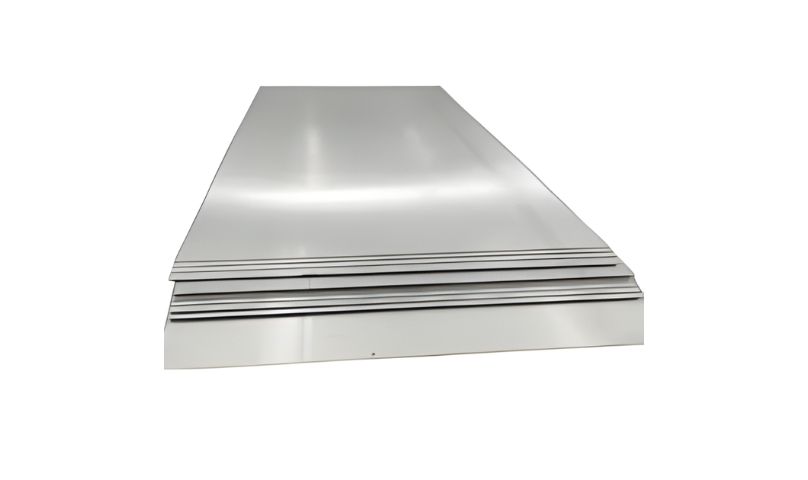
Searching for a valid source on Stainless Steel 409 sheets, Everything you require, including the Stainless Steel 409 Sheet Weight Chart, and dimensional information, as well as chemical composition, mechanical properties and ASTM A240 tolerances, are included in this guide. It is created to assist engineers, fabricators, and industrial purchasers to be able to make accurate material, cost, and logistics computations.
SS 409 are commonly utilised in automotive exhaust, heat exchanger and fabrication in industries because they have an excellent oxidation resistance, weldability and offer cost-effective performance. The sheet weight can be calculated easily and projects planned with the detailed weight chart in kg and mm.
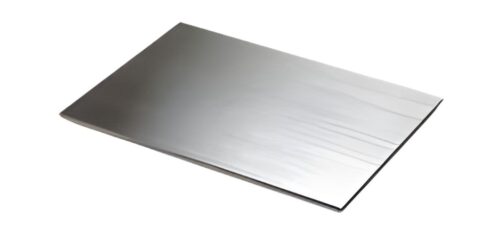
What is a Stainless Steel 409 Sheet Weight Chart?
A Stainless Steel 409 Sheet Weight Chart in Kg and mm is a reference table that is used to calculate the theoretical weight of sheets as per:
- Thickness (mm)
- Width (mm)
- Length (mm)
- Density of SS 409 (approximately 7.7 g/cm³)
Fabricators, procurement teams, and engineers use this chart to estimate shipping weight, fabrication load, and project costing.
The general formula used for calculation is:
Weight (kg)=Length (m)×Width (m)×Thickness (mm)×7.7
Weight (kg)=Length (m)×Width (m)×Thickness (mm)×7.7
A large number of purchasers also demand the Stainless Steel 409 Sheet weight chart in PDF format so that they can easily refer to it during the procurement and site planning.
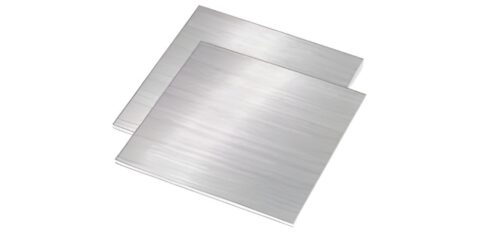
Stainless Steel 409 Sheets Specifications
Before reviewing the dimensional and weight data, it is important to understand the technical standards governing SS 409 sheets.
Grade Specifications for Stainless Steel 409 Sheets
SS 409 sheets conform to key international standards that ensure quality, consistency, and performance across global supply chains.
| Standard | Specification / Details |
| ASTM | ASTM A240 – Plate, sheet, and strip for general applications |
| ASME | SA 240 – Boiler and pressure vessel grade equivalent |
| UNS | S40900 – Unified Numbering System designation |
| EN | 1.4512 – European Norm equivalent grade |
| DIN | X1CrTi12 – German standard ferritic stainless steel |
| Type | Ferritic Stainless Steel – magnetic, oxidation resistant, and weldable |
| Material Form | Sheets and plates, typically 0.5 mm – 5.0 mm thickness |
| Typical Width | 1000 mm – 1500 mm |
| Typical Length | 2000 mm – 3000 mm |
| Chemical Focus | Chromium 10.5–11.75%, Carbon ≤0.08%, Iron balance |
| Mechanical Focus | Tensile Strength ≥450 MPa, Yield Strength ≥205 MPa, Elongation ≥22% |
| Common Applications | Automotive exhausts, heat exchangers, industrial fabrication |
These standards define manufacturing requirements, chemical limits, mechanical performance, and tolerances.
Chemical Properties of SS 409 Sheets
Chemical properties of SS 409 sheets are largely determined by the quantity of chromium that comprises the material (10.5-11.75%), which gives the material oxidation and resistance to corrosion particularly in high temperature conditions. Being low-carbon (0.08% maximum), controlled manganese and silicon, and iron (iron is the balance) SS 409 is well weldable, has good structural stability and is cost effective. This is the ideal choice in automotive exhaust systems and other industrial purposes, which are sensitive to heat.
The chemical structure of SS 409 assures the corrosion resistance and the stability of the structure.
| Element | Composition (%) |
| Chromium (Cr) | 10.5 – 11.75 |
| Carbon (C) | 0.08 max |
| Manganese (Mn) | 1.00 max |
| Silicon (Si) | 1.00 max |
| Phosphorus (P) | 0.045 max |
| Sulfur (S) | 0.03 max |
| Iron (Fe) | Balance |
Chromium provides corrosion resistance while maintaining good weldability.
Mechanical Properties of SS 409 Sheets
The strength, durability and performance of SS 409 sheets under working conditions is determined by mechanical properties of the sheets of the material. Having a minimum tensile strength of 450 Mpa, yield strength of 205 Mpa and elongation of 22, SS 409 has high structural stability and good formability. Its highest hardness of 183 HB also contributes to moderate use of strength, so it can be used in automotive exhaust systems, heat exchanger, and other high-temperature settings where more balanced mechanical performance is needed.
Mechanical strength is important when selecting material thickness and estimating load-bearing capability.
| Property | Value |
| Tensile Strength | 450 MPa (min) |
| Yield Strength | 205 MPa (min) |
| Elongation | 22% (min) |
| Hardness | 183 HB (max) |
These properties make SS 409 suitable for moderate strength structural and high-temperature applications.
SS 409 Sheet Equivalent Grades
The SS 409 Sheet Equivalent Grades play a part in international sourcing and comparing other standards of materials. Although the main designation can differ depending on the area, the following grades are similar or identical material designations; UNS S40900, EN 1.4512, and DIN X1CrTi12. Such equivalents may be good in checking compatibility, compliance, and easy procurement when using international suppliers and project demands.
Although this page focuses on sheets, equivalent grades are often referenced during global procurement.
| Standard | Equivalent Grade |
| ASTM | A240 |
| ASME | SA 240 |
| UNS | S40900 |
| EN | 1.4512 |
| DIN | X1CrTi12 |
| JIS | SUS 409 |
| Material Type | Ferritic Stainless Steel |
Equivalent grades ensure compatibility in international projects.
Stainless Steel 409 Sheet Dimensional Chart
The Stainless Steel 409 Sheet Dimensional Chart provides the most commonly available thicknesses and their standard widths and lengths that are the best suited to the warehouse to handle, cut, and ship in the industry. The sizes are easily found among the manufacturers and suppliers, and they can be ordered with a mill or trimmed edge based on the volume of orders. Smaller gauges such as 0.5 mm can be used with lightweight components and heavier ones to 5.0 mm can be used in structural applications–observation is always made with your supplier on available stock or custom machining options to get the correct gauge to fit the project.
| Thickness (mm) | Standard Width (mm) | Standard Length (mm) |
| 0.5 | 1000 | 2000 |
| 0.8 | 1000 | 2000 |
| 1.0 | 1250 | 2500 |
| 1.5 | 1250 | 2500 |
| 2.0 | 1500 | 3000 |
| 3.0 | 1500 | 3000 |
| 4.0 | 1500 | 3000 |
| 5.0 | 1500 | 3000 |
Custom dimensions are available based on project requirements.
SS 409 Sheet Weight Chart (Kg)
The SS 409 Sheet Weight Chart (Kg) gives the calculated weight of a standard 1000 mm x 2000 mm sheet at various thickness and this way, estimating the material requirements can be estimated faster. The sheet weight increases accordingly with the increase of the thickness between 0.5 mm to 5.0 mm; the weight increases proportionally with the increase in thickness between 7.7 kg to 77.0 kg. This chart assists the engineers, fabricators and buyers to plan the cost of procurement, transportation and project costs efficiently and keep in mind that the actual weight might slightly deviate because of manufacturing tolerances.
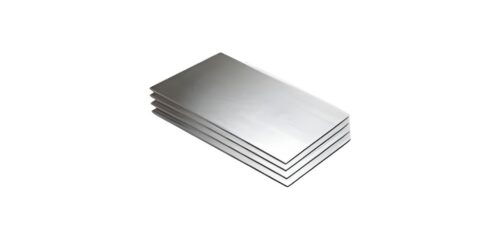
Below is the Stainless Steel 409 Sheet Weight Chart in Kg, calculated for a standard 1000 mm × 2000 mm sheet.
| Thickness (mm) | 1000 × 2000 mm (kg) | 1250 × 2500 mm (kg) | 1500 × 3000 mm (kg) |
| 0.5 | 7.7 | 12.0 | 17.3 |
| 0.8 | 12.3 | 19.3 | 27.7 |
| 1.0 | 15.4 | 24.0 | 34.5 |
| 1.5 | 23.1 | 36.0 | 51.7 |
| 2.0 | 30.8 | 48.0 | 69.0 |
| 3.0 | 46.2 | 72.0 | 103.5 |
| 4.0 | 61.6 | 96.0 | 138.0 |
| 5.0 | 77.0 | 120.0 | 172.5 |
Weight values are theoretical and may slightly vary depending on manufacturing tolerance.
ASTM A240 SS 409 Sheet Tolerances
According to ASTM A240, tolerances for stainless steel sheets depend on thickness and width. Typical thickness tolerance ranges:
- Up to 1.0 mm: ±0.10 mm
- 1.0 mm to 2.0 mm: ±0.15 mm
- Above 2.0 mm: ±0.25 mm
Flatness and width tolerances are also defined under ASTM A240 standards.
Stainless Steel 409 Sheet Weight Chart in PDF
Many engineers and procurement managers prefer downloading the Stainless Steel 409 Sheet weight chart in PDF for:
- On-site fabrication reference
- Cost estimation
- Shipping weight calculation
- Tender documentation
A printable PDF version typically includes:
- Dimensional chart
- Weight calculation formula
- ASTM A240 tolerances
- Chemical and mechanical properties
Conclusion
The Stainless Steel 409 Sheet Weight Chart is an elaborate and reliable guide to engineers, fabricators, contractors, and procurement experts in need of accuracy when planning and estimating their material and costs. The chart also reduces the complicated calculations by clearly stating the values of thickness, dimensions, density, and computed weight, which help in decision-making in the project implementation. Proper estimation of their weight can facilitate their budgeting and planning of the raw materials, not mentioning that their weight is also crucial in the transportation planning, load management, and maintaining inventory, which keeps the project efficient and cost-effective throughout the project life cycle.
Besides weight information, the technical background of SS 409 sheets, such as the chemical composition, mechanical properties, and dimensional standards, will provide assurance to make sure that the chosen material satisfies the requirements of the structure and performance level. Produced as per worldwide acknowledged standards like ASTM International (ASTM A240) and ASME (SA 240), SS 409 sheets deliver uniformity, dependability and conformity throughout every supply chain worldwide. They have a good oxidation resistance, weldability and cost-effective performance, which make them particularly applicable to automotive exhaust systems, heat exchangers, and intermediate structural applications where both durability and value are equally considered.