
Stainless Steel 409 Sheet Weight Chart, Specifications & Dimensional Guide
February 25, 2026
Industrial Guide to Inconel Pipes with Comprehensive Weight Chart, Size Standards and Engineering Specifications
February 26, 2026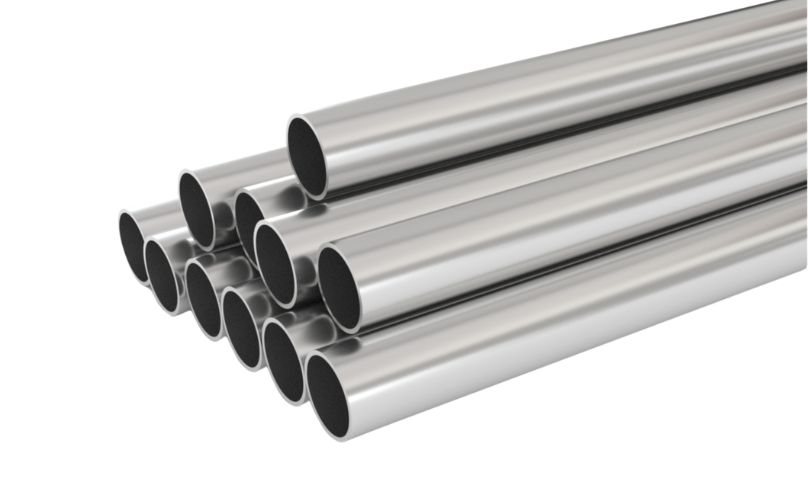
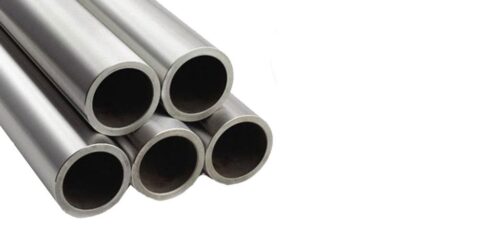
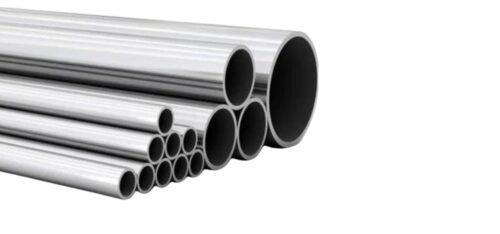
Piping systems have become important in the modern system of industrial infrastructure, to sustain operational safety, efficiency, and durability. Stainless Steel Seamless Pipes are very popular among the other available options, since they are made without a welded line along the length of the pipe, thus they have consistent strength along the length of the pipe. This continuous construction increases the pressure resistance, minimizes the leakage chances and advances long-term stability in harsh conditions.
The pipes come in many applications and are widely used in refineries, petrochemical plants, marine systems, power stations, heat exchangers and structures. They are resistant to corrosion, oxidation and extreme variations in temperature hence they can serve in high pressure as well as high temperature services.
Weight is one of the most important technical parameters that should be chosen when purchasing pipes in any industrial project. Pipe weight has a direct impact on the structural load, transportation planning, installation process and project budget, as a whole. To ease this task, engineers and procurement departments use a standardized Stainless Steel Seamless Pipes Weight Chart that is a ready reference list of values depending on the size and thickness of the wall.
Why Accurate Pipe Weight Matters in Industrial Projects
Weight of pipes is not simply a numerical designation as it influences the engineering design and cost estimation. Failure of the support structures may occur in case of underestimation of the weight. Project costs grow in an unjustifiable manner in case of overestimation. Hence, it is important to know what constitutes normal weights.
The weight of a pipe depends on:
- Outer Diameter (OD), which determines the overall pipe size and surface area.
- Wall Thickness (WT), which directly affects pressure resistance and durability.
- Material Density, which defines the mass per unit volume.
The commonly used formula for theoretical weight calculation is:
Weight (kg/m) = (OD – WT) × WT × 0.02491
However, instead of calculating each size manually, industries prefer standardized charts that provide pre-calculated values for different schedules.
Stainless Steel Seamless Pipes Weight Chart – Schedule 10
Schedule 10 pipes are commonly used in low to medium pressure applications where moderate wall thickness is sufficient.
| NPS (Inch) | OD (mm) | Wall Thickness (mm) | Weight (kg/m) |
| 1/2″ | 21.34 | 2.11 | 1.05 |
| 3/4″ | 26.67 | 2.11 | 1.33 |
| 1″ | 33.40 | 2.77 | 2.11 |
| 1 1/4″ | 42.16 | 2.77 | 2.73 |
| 1 1/2″ | 48.26 | 2.77 | 3.15 |
| 2″ | 60.33 | 2.77 | 3.97 |
| 2 1/2″ | 73.03 | 3.05 | 5.26 |
| 3″ | 88.90 | 3.05 | 6.43 |
| 4″ | 114.30 | 3.05 | 8.31 |
| 6″ | 168.28 | 3.40 | 13.52 |
| 8″ | 219.08 | 3.76 | 20.97 |
| 10″ | 273.05 | 4.19 | 28.25 |
| 12″ | 323.85 | 4.57 | 36.59 |
Key Considerations Before Selecting Pipe Schedule
Since the selection of schedules influences the performance of systems and the entire project, one should be aware of the impact of schedule selection on schedules to thicker before proceeding with the schedule:
- Pressure Handling Capability: The thicker the walls the better the pipe becomes in its capability of resisting internal pressure. When it comes to the high-pressure steam lines or chemical transfer systems, the proper choice of the schedule helps to avoid ruptures and operational risks.
- Structural Load and Support Planning: Pipes of greater weight need to have heavier supporting structures, anchors and brackets. The engineers should make sure they compute cumulative system weight particularly when using elevated or suspended piping networks in order to prevent structural imbalance.
- Corrosion Allowance and Service Life: In severe conditions like offshore platforms or chemical plants extra wall thickness is used as a corrosion allowance to increase service life and decrease the number of maintenance operations.
- Efficiency of transportation and handling Efficiency: Bigger and heavier pipes have a higher shipping weight and complexity of installation. Weight estimation Proper estimation of weight makes certain that there is safety in lifting and maximum planning of logistics.
- Cost Optimization: The pipes are thicker, which make them more durable, but they will also result in higher costs of raw materials. The performance needs and the budget needs must be reconciled in order to have efficient procurement.
Stainless Steel Seamless Pipes Weight Chart – Schedule 40
Schedule 40 is one of the most widely used thickness standards in industrial piping systems due to its balanced strength and cost efficiency.
| NPS (Inch) | OD (mm) | Wall Thickness (mm) | Weight (kg/m) |
| 1/2″ | 21.34 | 2.77 | 1.27 |
| 3/4″ | 26.67 | 2.87 | 1.68 |
| 1″ | 33.40 | 3.38 | 2.50 |
| 1 1/4″ | 42.16 | 3.56 | 3.38 |
| 1 1/2″ | 48.26 | 3.68 | 4.05 |
| 2″ | 60.33 | 3.91 | 5.44 |
| 2 1/2″ | 73.03 | 5.16 | 8.63 |
| 3″ | 88.90 | 5.49 | 11.29 |
| 4″ | 114.30 | 6.02 | 16.07 |
| 6″ | 168.28 | 7.11 | 28.26 |
| 8″ | 219.08 | 8.18 | 42.55 |
| 10″ | 273.05 | 9.27 | 60.32 |
| 12″ | 323.85 | 10.31 | 79.69 |
Stainless Steel Seamless Pipes Weight Chart – Schedule 80
Schedule 80 pipes are designed for higher pressure systems and heavy-duty industrial applications.
| NPS (Inch) | OD (mm) | Wall Thickness (mm) | Weight (kg/m) |
| 1/2″ | 21.34 | 3.73 | 1.62 |
| 3/4″ | 26.67 | 3.91 | 2.20 |
| 1″ | 33.40 | 4.55 | 3.24 |
| 1 1/4″ | 42.16 | 4.85 | 4.47 |
| 1 1/2″ | 48.26 | 5.08 | 5.41 |
| 2″ | 60.33 | 5.54 | 7.47 |
| 2 1/2″ | 73.03 | 7.01 | 11.41 |
| 3″ | 88.90 | 7.62 | 15.27 |
| 4″ | 114.30 | 8.56 | 22.32 |
| 6″ | 168.28 | 10.97 | 42.56 |
| 8″ | 219.08 | 12.70 | 66.61 |
| 10″ | 273.05 | 15.09 | 101.05 |
| 12″ | 323.85 | 17.48 | 137.50 |
How to Use a Stainless Steel Seamless Pipes Supplier Effectively
Selecting the right Stainless Steel Seamless Pipes Supplier is equally important as selecting the correct schedule. A reliable supplier ensures:
- Proper dimensional tolerances, that are adherent to international standards like ASTM and ASME and which lead to compatibility problems when installed.
- Quality certification Proper material certification in terms of mill test certification (MTC), chemical analysis of composition and verification of mechanical properties to comply with quality.
- Stock on demand in varying schedules and sizes that allow delivery of projects on time without holding up procurements.
- Technical assistance in choosing the right grade and thickness in terms of pressure, temperature, and corrosion needs.
- Effective logistics alignment to receive bulk orders, export documentation and ensure safe transportation.
Conclusion
One of the parameters in the industrial piping design is pipe weight. With low-pressure applications of Schedule 10 to high-pressure systems that require Schedule 80, successful reference tables are easy to compute and plan procurement. Proper Pipe weight charts will remove conjecture, increase budget accuracy and safety in operations.
Knowing schedules, differences in wall thickness, and implications of the loads will enable the engineers and buyers to make good decisions. In case of refinery growth, chemical processing facilities or even generation power plant development, a reference to standardized weight charts is a sure way of long term and effective performance of the system.