
Stainless Steel 409L Sheet Weight Chart, Specifications & Dimensional Guide
February 27, 2026
Stainless Steel X2CrNi12 Plate Weight Chart, Specifications & Dimensional Guide
February 28, 2026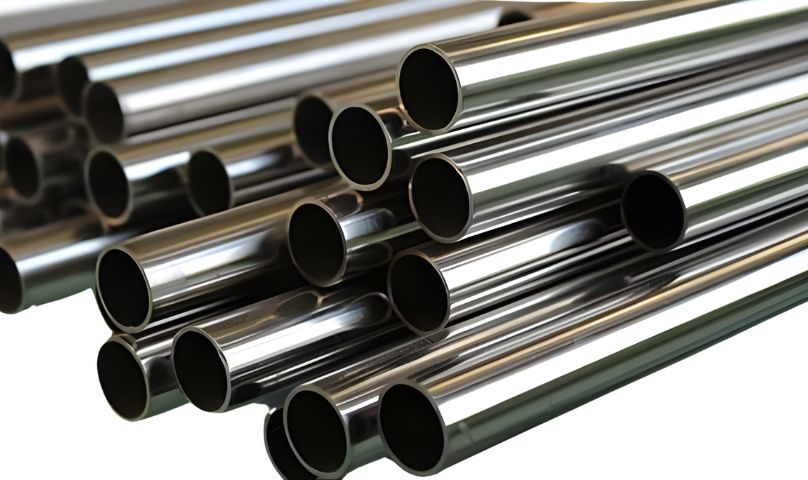
The stainless steel tubing has been an important element in the industries that require cleanliness, resistance to corrosion, and consistent mechanical strength as a requirement to last long. Stainless Steel 304 Electropolished Seamless Tubes are produced with a non-seamless process which avoids the welded joints, this makes the structure uniform and more strong to withstand higher pressure. The grade 304 stainless steel which is used as the base material is a material that has chromium and nickel which give it good resistance against oxidation and corrosion in chemical, atmospheric and moisture saturated conditions. In intermittent service these tubes can resist temperatures up to about 870°C and in continuous service about 925°C and they can also be used at sub-zero operating temperatures.
The electropolishing process also improves the tube surface by eliminating imperfections on the surface at the microscopic level, particles embedded on the tube surface and also the stresses on the surface. This is an electrochemical finishing technique which forms a thin, brilliant, passive coating of chromium that enhances the corrosion resistance and cleanability to a large degree. Due to such characteristics, the material finds extensive applications in pharmaceutical production lines, food processing devices, semiconductor installations, high-purity gas pipelines, and heat exchanger systems where the ability to keep water levels at extents of contamination and flow efficiency is of paramount importance.
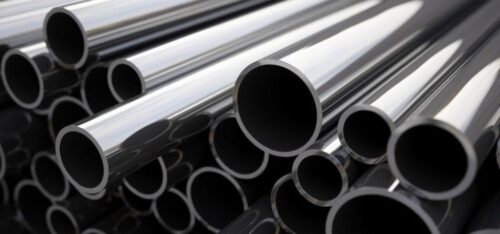
Material Characteristics and Industrial Importance
Grade 304 stainless steel provides a compromise between tensile strength, ductility and ability to fabricate. The tubes have a minimum tensile strength of 515 MPa and a yield strength of 205 Mpa meaning that it can be used in moderate to high-pressure systems. One of the important factors when calculating theoretical weight per meter is the density which is 8.0 g/cm³ which is important in structural design and load calculations.
Surface finish in hygienic industries is not merely a question of look, but it has a direct influence on the working safety. The electropolished inside bore will minimize the adherence of the products, enhance the drainage, and decrease the chances of bacterial infestation. It is due to this reason that the companies which source such materials usually collaborate with a trusted Stainless Steel 304 Electropolished Seamless Tubes Supplier in order to guarantee the dimensional accuracy and adherence to the international requirements.
Weight Considerations for Engineering and Procurement
Knowledge of tube weight is vital in transportation planning, structural support design as well as cost estimation in the project. The weight/ meter is dependent on the outside diameter (OD) and wall thickness. Higher diameters and heavier walls add a lot of mass and have an impact on the mode of installation and the spacing of support.
The following is a Stainless steel 304 Electropolished Seamless Tubes Weigh chart that encompasses the small diameter ranges that are typically utilized in instrumentation and in hygienic purposes.
Weight Chart – Small Diameter Range (OD 6 mm to 38 mm)
Approximate weight in kg per meter
| Outside Diameter (mm) | 1.0 mm | 1.5 mm | 2.0 mm | 2.5 mm | 3.0 mm |
| 6 | 0.13 | 0.18 | 0.22 | 0.26 | 0.29 |
| 8 | 0.18 | 0.26 | 0.34 | 0.41 | 0.49 |
| 10 | 0.23 | 0.35 | 0.46 | 0.57 | 0.69 |
| 12 | 0.29 | 0.44 | 0.58 | 0.73 | 0.88 |
| 16 | 0.39 | 0.61 | 0.82 | 1.02 | 1.22 |
| 20 | 0.50 | 0.79 | 1.06 | 1.33 | 1.59 |
| 25 | 0.64 | 1.02 | 1.38 | 1.73 | 2.07 |
| 32 | 0.83 | 1.31 | 1.73 | 2.15 | 2.56 |
| 38 | 1.00 | 1.56 | 2.07 | 2.57 | 3.07 |
Small diameter tubes are widely selected for:
- Instrumentation lines where accurate flow control is required and lighter weight reduces system load.
- Medical and laboratory gas distribution systems that demand smooth internal surfaces to prevent contamination.
- Compact heat exchangers where tight installation spaces require thinner wall configurations.
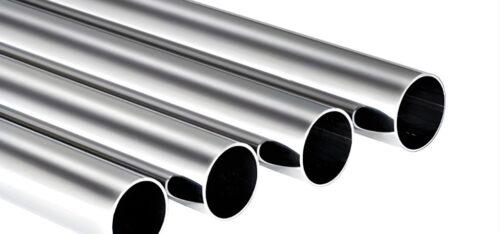
Performance Impact of Medium Diameter Tubes
The medium diameter tubes are common in processing plants, fluid transfer pipelines and the moderate-pressure systems. With increase in diameter, requirements of supports and clamps also vary. The engineers should take into account not only the operating pressure but the fluid and tube weight load together.
The next tabular is about medium diameter tubes that are commonly utilized in food processing facilities, chemical handling and water treatment plants.
Weight Chart – Medium Diameter Range (OD 42 mm to 89 mm)
Approximate weight in kg per meter
| Outside Diameter (mm) | 1.5 mm | 2.0 mm | 3.0 mm | 4.0 mm | 5.0 mm |
| 42 | 1.72 | 2.29 | 3.40 | 4.49 | 5.56 |
| 48 | 1.97 | 2.63 | 3.91 | 5.16 | 6.39 |
| 60 | 2.48 | 3.31 | 4.92 | 6.49 | 8.03 |
| 76 | 3.20 | 4.28 | 6.36 | 8.39 | 10.39 |
| 89 | 3.77 | 5.02 | 7.46 | 9.86 | 12.22 |
Medium diameter tubes are important because:
- They balance mechanical strength with manageable installation weight, making them suitable for overhead pipeline systems.
- Increased wall thickness enhances pressure tolerance, particularly in chemical processing units handling reactive substances.
- Their smooth electropolished surface improves flow consistency and reduces maintenance frequency.
Structural and Heavy-Duty Applications
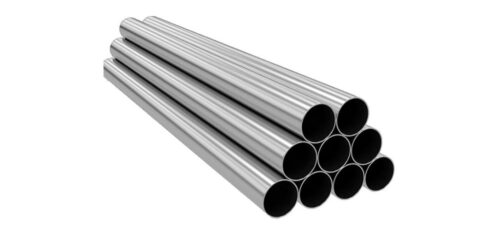
Big diameter seamless tubes are laid in high volume industrial systems and structural structures that are subject to corrosive or high temperature environments. The seamless construction and the electropolished finish make it durable even with tough operation cycles.
Weight values of large diameter configurations are given in the table below.
Weight Chart – Large Diameter Range (OD 101 mm to 168 mm)
Approximate weight in kg per meter
| Outside Diameter (mm) | 2.0 mm | 3.0 mm | 4.0 mm | 5.0 mm | 6.0 mm |
| 101 | 5.71 | 8.49 | 11.22 | 13.90 | 16.53 |
| 114 | 6.45 | 9.59 | 12.68 | 15.71 | 18.69 |
| 139 | 7.86 | 11.70 | 15.49 | 19.22 | 22.90 |
| 168 | 9.52 | 14.18 | 18.79 | 23.35 | 27.86 |
Large diameter tubes are commonly used for:
- High-capacity fluid transfer systems where structural integrity and corrosion resistance are essential for long service life.
- Industrial frameworks exposed to temperature variations and external environmental stress.
- Heavy-duty processing plants where durability and low maintenance contribute to operational efficiency.
Conclusion
The choice of tube dimensions is subject to the type of application, pressure rating, temperature exposure and structural load. Since small lines of instrumentation up to heavy industry have to be used, correct weight calculation is the key to safe installation and control of costs. Accurate reference tables and knowledge of the mechanical properties make Stainless Steel 304 Electropolished Seamless Tubes reliable in solving the problem of industries that require strength, cleanliness, and corrosion resistance in the long run.