
Lag Bolts Weight Chart: Ultimate Guide to Sizes & Weights
April 9, 2026
Ultimate Power Guide to Hex Flange Nuts Weight Chart for Precision Fastening
April 10, 2026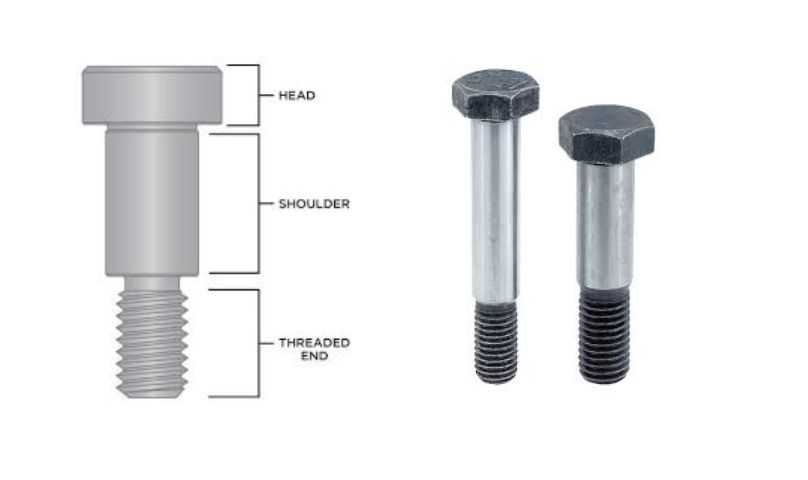
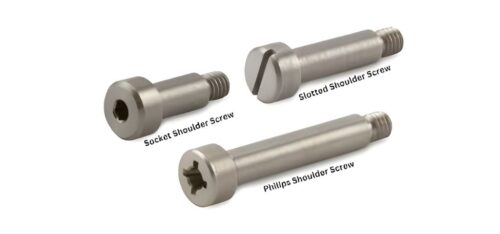
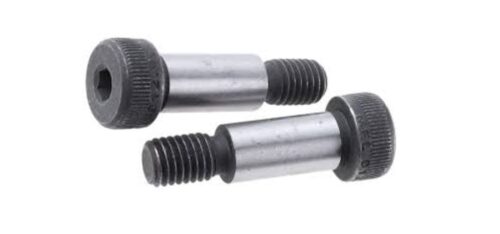
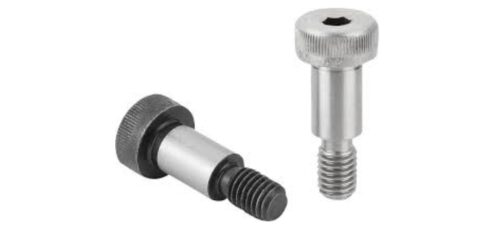
Shoulder bolts, also known as shoulder screws or stripper bolts, are specialized fasteners designed with a smooth, unthreaded shoulder between the head and the threaded portion. This unique design makes them ideal for applications requiring precise alignment, rotation, or sliding motion. Along with dimensions and tolerances, weight is an important factor, especially in mechanical and industrial applications. A bolt weight chart helps engineers and technicians estimate loads and plan effectively.
What Is a Shoulder Bolt Weight Chart?
A shoulder bolt weight chart lists the approximate weight of bolts based on their shoulder diameter, shoulder length, thread size, and material. These charts are useful in industries like automotive, machinery manufacturing, and robotics, where precision and load management are critical.
Shoulder Bolt – Chemical Composition (%)
| Element | Composition (%) |
| Carbon (C) | 0.38 – 0.43 |
| Manganese (Mn) | 0.75 – 1.00 |
| Silicon (Si) | 0.20 – 0.35 |
| Chromium (Cr) | 0.80 – 1.10 |
| Molybdenum (Mo) | 0.15 – 0.25 |
| Phosphorus (P) | ≤ 0.035 |
| Sulfur (S) | ≤ 0.040 |
Shoulder Bolt – Mechanical Properties
| Property | Value |
| Tensile Strength | 850 – 1000 MPa |
| Yield Strength | 650 – 800 MPa |
| Hardness | 28 – 34 HRC |
| Elongation | ≥ 12% |
| Reduction of Area | ≥ 45% |
| Impact Strength | Good toughness |
Factors Influencing Shoulder Bolt Weight
- Shoulder Diameter
The diameter of the smooth shoulder is a major factor affecting weight. Larger diameters increase mass significantly. - Shoulder Length
A longer shoulder adds more material, increasing the bolt’s overall weight. - Thread Size and Length
The threaded portion contributes less than the shoulder but still impacts total weight. - Material Composition
Common materials include alloy steel, stainless steel, and hardened steel. Heavier materials like alloy steel increase overall weight. - Head Design
Most bolts have a socket head, which can slightly influence weight.
Shoulder Bolt – Standard Weight Chart
| Nominal Size (mm) | Shoulder Diameter (mm) | Length (mm) | Approx. Weight (Kg/100 Nos) |
| M6 | 8 | 20 | 2.5 |
| M8 | 10 | 25 | 4.8 |
| M10 | 12 | 30 | 7.5 |
| M12 | 16 | 40 | 12.0 |
| M16 | 20 | 50 | 22.5 |
| M20 | 25 | 60 | 36.0 |
| M24 | 30 | 70 | 55.0 |
| M30 | 36 | 80 | 85.0 |
These values are estimates and may vary based on exact specifications and manufacturing tolerances.
Weight of Shoulder Bolt.
- Precision Engineering Applications
Shoulder bolts weight can affect the performance and the balance in machines where the part is rotating or sliding.
- Load-Bearing Calculations
Proper weight assists in the estimation of the amount of stress that the bolt and other components to which it is attached can support.
- Shipping and Handling
Shoulder bolts in large numbers may be too heavy to carry, and weight calculation is significant to the logistics.
Cost Estimation
Weight of the materials has a direct impact on pricing particularly where high grade/special purpose materials are employed.
Using a Shoulder Bolt Weight Chart.
Calculate the required shoulder diameter, shoulder length and thread size first. Find the weight in the chart and multiply it by the amount of bolts required.
As an example, given an average weight of 0.120 kg per 100 M10 shoulder bolts (60 mm length), the weight would be 12 kg. This helps in planning transportation and structural requirements.
Importance of Shoulder Bolt Weight
- Precision Engineering Applications
In machinery where parts rotate or slide, the weight of bolts can influence balance and performance. - Load-Bearing Calculations
Accurate weight helps in determining how much stress the bolt and connected components can handle. - Shipping and Handling
Bulk quantities of bolts can become quite heavy, making weight estimation important for logistics. - Cost Estimation
Material weight directly affects pricing, especially when using high-grade or specialty materials.
How to Use a Shoulder Bolt Weight Chart
First, determine the exact shoulder diameter, length, and thread size required. Locate the corresponding weight in the chart and multiply by the number of bolts needed.
For example, if 100 M10 shoulder bolts (60 mm length) weigh 0.120 kg each, the total weight would be 12 kg. This helps in planning transportation and structural requirements.
Conclusion
A shoulder bolt weight chart is an important guide to the engineers, manufacturers and technicians. Knowledge of dimensions and materials and how they influence weight ensures that the user is able to optimize performance, provide safety and effectively manage costs. In critical applications, it is always important to consult manufacturer specifications to obtain accurate weight data.