
Best B2B platforms for finding verified metal buyers 2026
January 1, 2026
5 Reasons Why 2026 is the Best Year to Start a Metal Export Business
January 2, 2026
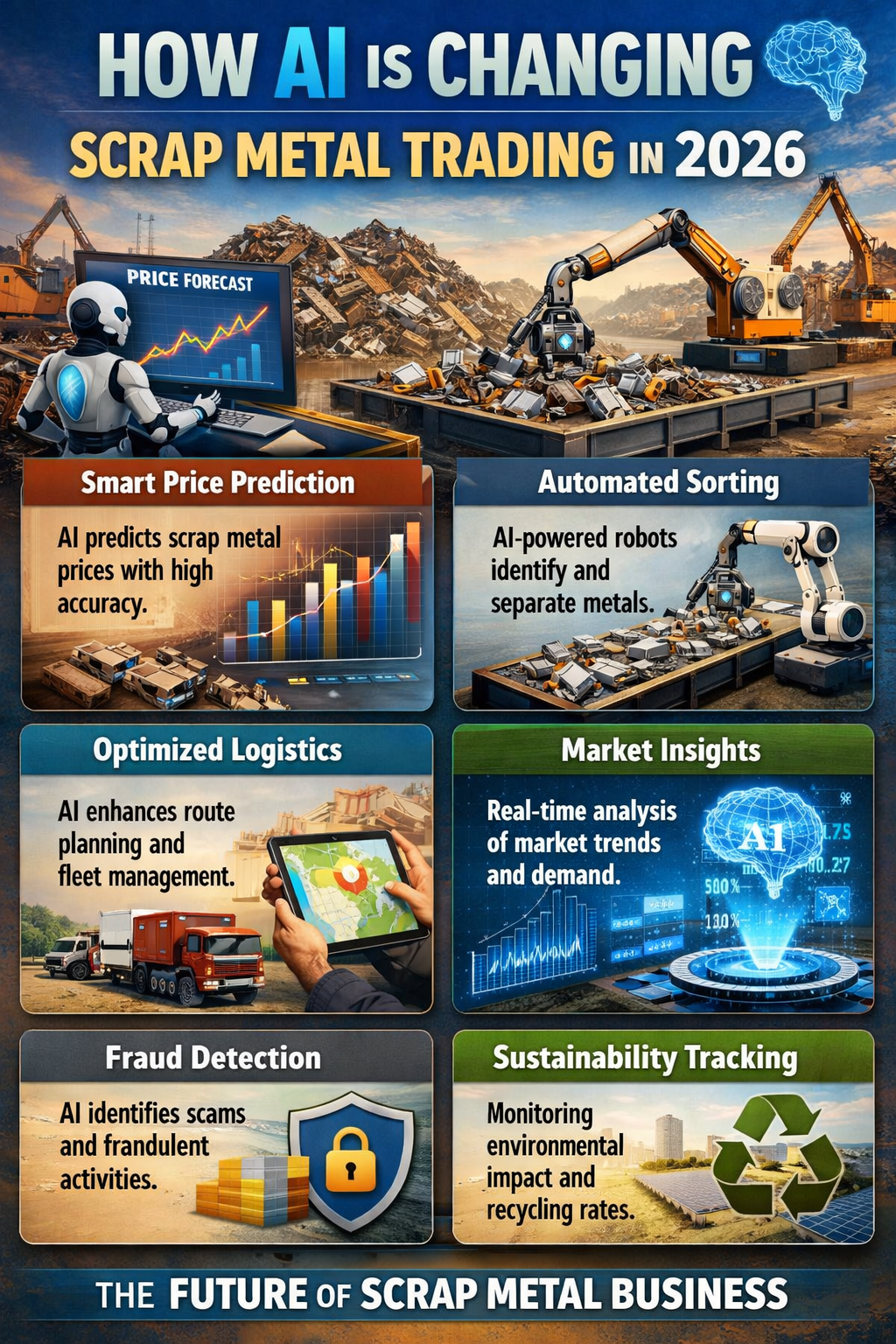
The trading of scrap metals has been a difficult industry, which is influenced by volatile prices, disjointed information and the use of personal connections. That scenery will appear much different in 2026. The Artificial Intelligence (AI) is slowly but fundamentally altering the way scrap metal is valued, traded, and transported to the international markets. Instead of being used to substitute human skills, AI is augmenting them - adding structure, clarity, and speed to an industry that is traditionally complex.
Smarter Insights, Not Just More Data
The most significant impact of AI on the scrap metal trade is that AI can transform raw data into information. Traders no longer have to rely on slow reports or word-of-mouth updates about the market, but access systems that are able to analyze demand patterns, historical trading, logistic expenditure, and the consumption patterns in a region in real time.
This enables the businesses that deal with the materials provided by finished and semi-finished products i.e. fasteners, plates, bars, valves and more to know more about the location of demand developing and the rate of change in the market environment. The outcome is that there is more informed decision making and less reactive trades.
Better Pricing Confidence
Pricing has been a very delicate factor of scrap trading. The AI-based pricing solutions are also designed to eliminate the element of uncertainty by simultaneously considering a number of factors such as the global production changes, freight availability, and the outcomes of the previous deals.
Instead of applying average numbers, traders will be able to evaluate the consistency of current offers with the market reality. This translates to negotiating in a more balanced manner and fewer failed deals particularly in the fluctuating market environments.
Better Buyer-Seller Fitting.
Locating the appropriate buyer has always been a time and a matter of trust. AI is automating this by examining behavioral patterns, as opposed to the mere listings or profiles. It is now possible to understand which buyers make consistent purchases and deal within the shortest time possible and buy a certain kind of material.
To traders, it is a reduced number of irrelevant questions and increased chances of talking to buyers who have a definite purpose. With deals, there is an initial meeting of expectations that save time on both sides and high chances of trading relationships in the long term.
Efficiency Throughout the Trade Lifecycle.
The working aspect of scrap metal trading is also being transformed by AI. Inquiry management, documentation verifications and shipment coordination are routine tasks that are more automated. This not only lowers the chances of human error but also expedites the transaction process especially to the exporters who have to work on more than a single shipment at a time.
This is because through reducing administrative friction, the traders are able to concentrate more on sourcing material, negotiating terms, and relationship management which still requires human judgment.
Promoting Quality Management and Openness.
Quality tussles have been a problem in scrap selling. The more convenient tools provided with the help of AI contribute to the enhancement of consistency through the enhancement of classification, document overview, and data verification. Although physical examination is still essential, these electronic checks give an additional assurance to both the customers and the sellers.
With time this enhances transparency and confidence particularly in cross-border dealings where miscommunication can be quite expensive.
Compliance and Sustainability Benefits.
With environmental laws becoming more stringent across the globe, traceability and compliance have become the key focus with scrap metal trading. AI assists to trace the movement of the materials and detect the inefficiencies throughout the supply chain, assisting in more responsible recycling.
Optimization of logistics and the elimination of redundant handling AI helps to reduce emissions and resource consumption, which are gaining more and more value among industrial buyers and regulators.
Looking Ahead
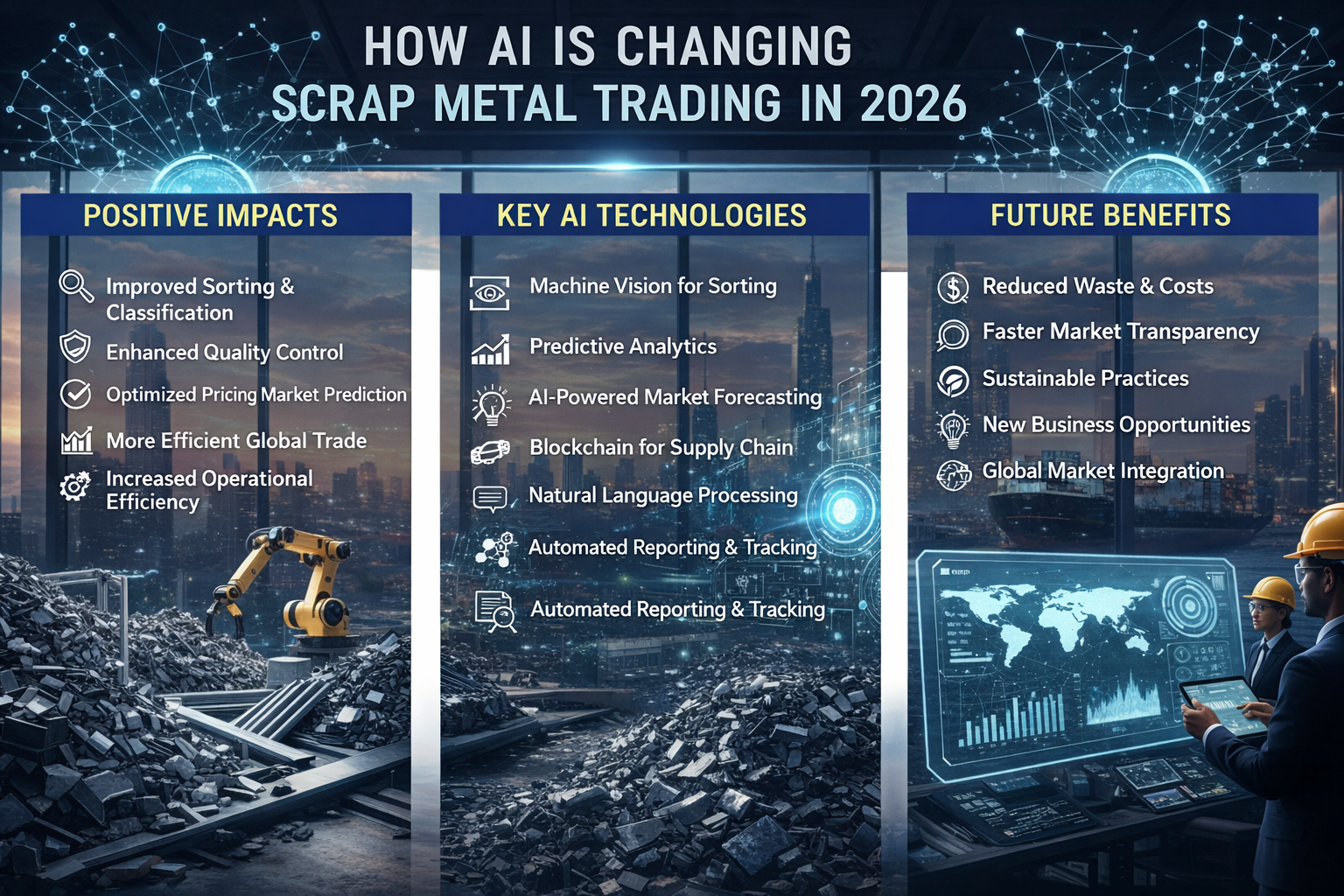
By 2026, AI is not a new development in scrap metal trade anymore, it is becoming the norm. Those traders that adopt AI-driven tools have a better enterprise view, and a more confident pricing and easier execution.
This balancing between experience and intelligence is the future of scrap metal trading where technology can aid in making improved decisions without compromising on relationships that still characterize the industry.