
Hex Coupling Nuts Weight Chart: Smart Guide for Better Planning
April 10, 2026
2 Way Lock Nuts Weight Chart: Expert Guide for Industrial and Mechanical Use
April 11, 2026
In modern fastening systems and precision mechanical assemblies, accurate weight estimation plays a critical role in ensuring proper load distribution, efficient material planning, optimized packaging, and effective cost control. Square Thin Nuts Weight Chart is a valuable reference guide that can be used by engineers, manufacturers and procurement team to identify accurate weight value of nuts on the basis of nut size, its thickness and type of material.
The chart is highly used in industries where miniaturised and lightweight fastening systems are needed without having to lower the strength and effectiveness. Through the established Square Thin Nuts Weight Chart, professionals will be able to simplify design calculations, minimise errors, and increase the efficiency of the project in general.
What Is a Square Thin Nut?
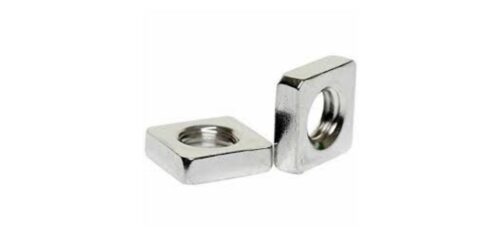
A Square Thin Nut is a special four-sided nut, the thickness of which is reduced relative to standard nuts. The special square geometry gives it a superior grip and contact with the surface, which makes it very effective in the fields where stability and the anti-rotation is needed. The nuts are normally used where there are restrictions in space application or where they are combined with standard nuts to lock them. Square Thin Nuts are the nuts of choice because their small size allows them to fit in mechanical systems, electrical fittings and structural management that require durability and compact size at the same time.
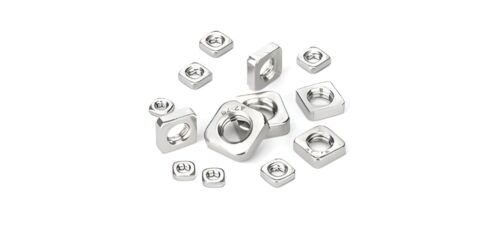
Key Features
- Square shape in order to have better grip and stability.
- Thin profile to use where space is required.
- Lightweight and compact design
- Proper to lock and adjust.
- Can be found in various materials and sizes.
Why Is the Square Thin Nuts Weight Chart Important?
The Square Thin Nuts Weight Chart in kg mm offers correct and standardised weight value such that professionals can undertake accurate calculations in many different areas of industry. This is especially significant in projects where weight is a major factor in structural integrity, assembly balance, and even transportation. The Square Thin Nuts Weight Chart PDF is used by many industries to document, validate procurement and submit projects.
Through a good, reliable Square Thin Nuts Weight Chart, organisations can reduce the number of mistakes made during calculation and achieve efficiency in the running of operations and consistency of material use in compact systems in terms of planning during assembly, estimation of procurement, handling of transportation costs, control of costs and optimisation of design in the compact systems.
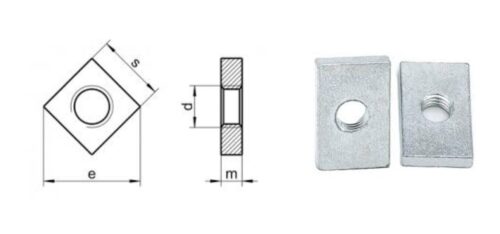
Master Weight Table (All Sizes & Material Comparison Combined)
| Size (M) | Thickness (mm) | Carbon Steel (kg/1000 pcs) | Stainless Steel (kg/1000 pcs) | Alloy Steel (kg/1000 pcs) |
| M6 | 3 | 2.50 | 2.60 | 2.70 |
| M8 | 4 | 5.00 | 5.20 | 5.40 |
| M10 | 5 | 9.00 | 9.30 | 9.60 |
| M12 | 6 | 14.00 | 14.50 | 15.00 |
| M16 | 8 | 28.00 | 29.00 | 30.00 |
| M20 | 10 | 45.00 | 47.00 | 49.00 |
| M24 | 12 | 70.00 | 73.00 | 76.00 |
| M30 | 15 | 120.00 | 125.00 | 130.00 |
Additional Weight Chart (Per Piece & Bulk Estimation)
| Size (M) | Approx Weight per Piece (kg) | Approx Weight per 100 pcs (kg) |
| M6 | 0.0025 | 0.25 |
| M8 | 0.0050 | 0.50 |
| M10 | 0.0090 | 0.90 |
| M12 | 0.0140 | 1.40 |
| M16 | 0.0280 | 2.80 |
| M20 | 0.0450 | 4.50 |
| M24 | 0.0700 | 7.00 |
| M30 | 0.1200 | 12.00 |
Additional Chart (Size vs Thickness & Weight Trend)
| Size (M) | Thickness (mm) | Approx Weight (kg/1000 pcs) |
| M8 | 4 | 5.00 |
| M10 | 5 | 9.00 |
| M12 | 6 | 14.00 |
| M16 | 8 | 28.00 |
| M20 | 10 | 45.00 |
| M24 | 12 | 70.00 |
Square Thin Nuts – Complete Technical Overview
Square Thin Nuts are produced in line with the international standards of DIN, ISO and ASTM with a uniform quality, dimensional satisfactoriness and stability. Their square shape and thin profile allow them to work well in functions where traditional nuts might not be applicable due to space. These nuts come in different material grades (carbon steel, stainless steel, and alloy steel), which have distinct benefits, such as corrosion resistance, strength, and durability. Square Thin Nuts are also used in the applications of the engineering industry, which increases the efficiency of assembling and ensures structural integrity.
Chemical Composition (Typical % by Weight)
| Element | Composition (%) | Function |
| Carbon (C) | ≤ 0.45 | Strength & hardness |
| Manganese (Mn) | 0.50 – 1.50 | Improves toughness |
| Silicon (Si) | ≤ 0.35 | Strength enhancement |
| Chromium (Cr) | 0.80 – 1.10 | Corrosion resistance |
| Nickel (Ni) | ≤ 0.50 | Improves ductility |
| Phosphorus (P) | ≤ 0.040 | Controlled impurity |
| Sulfur (S) | ≤ 0.040 | Improves machinability |
| Iron (Fe) | Balance | Base metal |
Standard Dimensions
| Size Range | Type | Size |
| Small Nuts | M6 – M10 | |
| Medium Nuts | M12 – M20 | |
| Large Nuts | M24 – M36 |
Standard Thickness Range
| Category | Thickness |
| Thin | 3 mm – 6 mm |
| Medium Thin | 6 mm – 10 mm |
| Heavy Thin | 10 mm – 15 mm |
Custom sizes are available as per industrial requirements.
Applications of Square Thin Nuts
Square Thin Nuts have a diverse application in various industries where they are necessary due to compactness in fastening. These nuts are frequently used in machine assemblies, electrical fittings, automotive parts, construction fittings and machinery. Their narrow shape enables them to be mounted in low or narrow areas, while their square form offers better gripping power and can withstand loosening. Due to its design benefits, Square Thin Nuts are especially beneficial in locking mechanisms or additional fastening support applications, wherein the product ensures stability and enduring performance under harsh conditions.
How to Use the Weight Chart Correctly
When using the Square Thin Nuts Weight Chart, it is advisable to determine the correct size of nut (M) and the thickness of these nuts. Once these parameters have been identified, the right type of material, like carbon steel, stainless steel, or alloy steel must be chosen depending on the need of the material. Using the appropriate values in the Square Thin Nuts Weight Chart, professionals could compute the total weight of bulk quantities, check the procurement specification, and make sure that there are adequate planning of transportation and installation. Further accuracy improvement with cross-checking with manufacturer data is also beneficial to minimize wastage of materials and minimize calculation errors.
Conclusion
The Square Thin Nuts Weight Chart is an important instrument to engineers, designers and procurement specialists who deal with fastening and assembling tasks. It offers precise and effective weight information that complements effective material planning, cost estimation and efficient design processes. Industries can enhance the productive use of a standardized Square Thin Nuts Weight Chart to reduce errors and secure the long-term performance and reliability of fastening applications.