

Standard weight tolerances for shipments
January 28, 2026
Palletizing vs. bulk loading for small part exports
January 29, 2026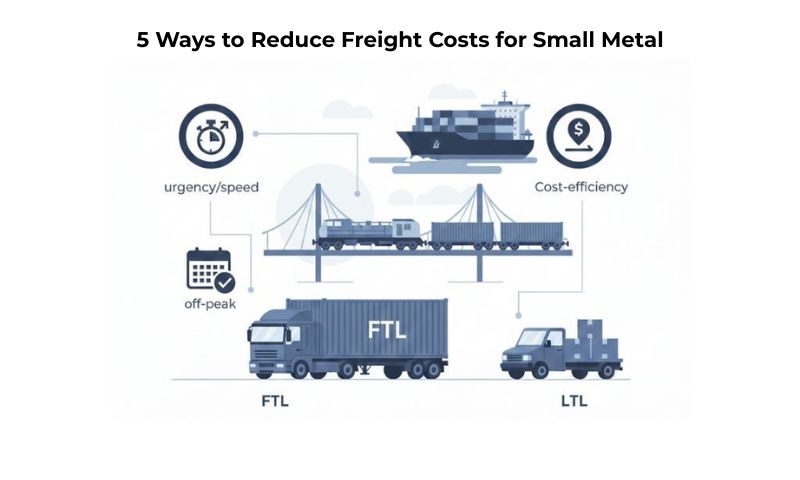
Reduce Freight Costs for Small Metal is becoming increasingly expensive. Small and medium-sized enterprises (SMEs) are experiencing the pressure of rising fuel prices, lack of drivers, and unpredictable freight rates. These costs can easily build up and hinder profit margins, especially when dealing with companies that have small metal loads frequently. The following is the good news, that there are effective measures to cut down the freight expenditure without interfering with the delivery reliability. This article gives a list of five effective strategies that can enable businesses to streamline their shipping processes and save on costs.

1. Consolidate Shipments for Better Efficiency
The easiest way of reducing shipping costs is by combining several small orders into one. Minor loads of metals tend to be under capacity, implying that companies are paying a higher amount of money than they should. Shipment consolidation lowers per-unit costs besides lowering the environmental impact of transport.
During consolidation, it is always a good idea to group together consignments that are destined to one region or organize various departments to pool orders. The optimal loading in the digital context can be used to allocate the maximum space per truck and plan each shipment to the utmost. Even minor changes in scheduling and routes may lead to significant savings.
2. Choose the Right Freight Options
Selecting the right freight type is critical for managing costs. Although full truckload (FTL) shipping can be used in large shipments with lower costs, less-than-truckload (LTL) shipping can be cheaper with smaller loads. A hybrid strategy that incorporates the use of road or rail or even sea can reduce costs without reducing delivery time depending on urgency, distance and size of shipment.
It is also possible to reduce shipping costs when planning shipments during low seasons, since carriers can provide customers with discounts when shipments can be made flexibly. Knowing the trade-offs between speed and cost, businesses will be able to make smarter choices in making their shipping selections, which will enhance their overall cost effectiveness.

3. Negotiate Flexible Carrier Contracts
Long-term relationships with carriers can have a significant impact on freight costs. SMEs often overlook opportunities to negotiate contracts that reflect predictable shipment volumes.
Flexible contracts can include clauses such as:
- Volume-based rates with scaling options
- Periodic adjustments to account for fuel price changes
- Performance-based incentives and penalties
Building trust with carriers and negotiating fair, flexible agreements ensures that shipments remain affordable while maintaining reliable service.
4. Optimize Packaging and Handling
Shipment structure has a direct impact on shipping expenses since it determines how metal shipments will be packaged. Packages of inefficient size or oversized can add to dimensional weight charge and damaged or poorly taped items may result in extra charges.
The companies can save on small, durable pallets or crates and to make sure that everything is secured. Reusable packaging in companies that are shipping regularly can save some money in the long run and further help in saving the environment. The correct packaging also reduces the chances of delays due to the claim of damages, thus making operations easier and more predictable.
5. Leverage Technology for Smarter Shipping
Modern freight management has become a necessity of technology. Freight management systems and online marketplaces enable companies to compare prices of carriers, optimize the routes, and trace the shipments on the fly.
The benefits of using technology include:
- Determining less expensive transport services and backhaul deals.
- Reducing hidden costs like waiting times or missed pickups
- Understanding shipment data to make more advantageous contracts.
With the use of digital tools, businesses can implement data-driven decision-making, resulting in a consistent reduction of costs and an increase in delivery reliability.
Conclusion
It is possible to reduce the cost of freighting small metal packages in Reduce Freight Costs for Small Metal through proper planning and strategic implementation. Through consolidating shipments, selecting optimal freight, negotiating flexible contracts, efficient packaging, and the use of technology, SMEs can help save money without sacrificing reliable service. The strategies will assist businesses to remain competitive, minimize the risk of operations, and enhance profitability.
For updates and additional information, follow on social media platforms.
Social Media: LinkedIn, Instagram, Facebook, Pinterest.