
Stainless Steel Companion Flanges Weight Chart in KG & MM with PDF Download
February 18, 2026
Stainless Steel Sheet Weight Chart – Complete Guide for Accurate Calculation
February 19, 2026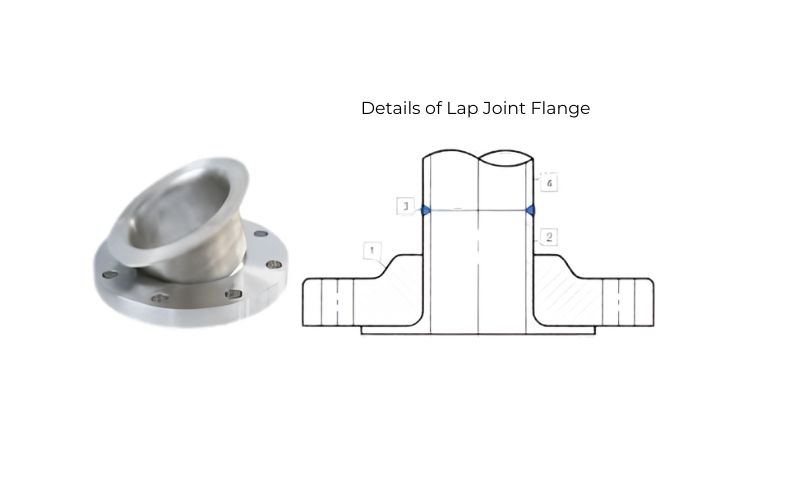
Stainless Steel Lap Joint Flanges are widely used in industrial piping systems where frequent dismantling, easy alignment, and corrosion resistance are essential. Unlike other flange types, lap joint flanges work in combination with a stub end, allowing the flange to rotate freely around the pipe. This makes them highly suitable for applications requiring regular inspection, cleaning, or replacement.
Understanding the weight chart, dimensions, and pressure ratings of stainless steel lap joint flanges is critical for accurate material planning, load calculation, and system design. This guide provides a clear overview, along with standard reference tables used in engineering and procurement.
What Is a Stainless Steel Lap Joint Flange?
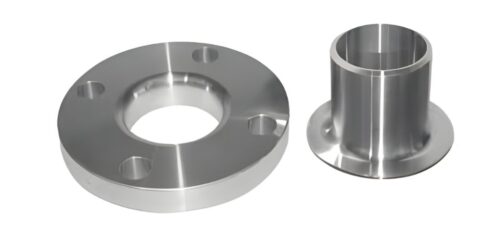
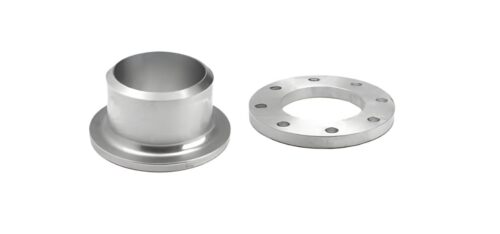
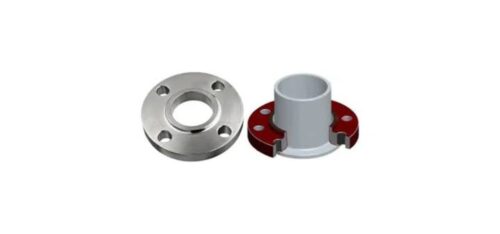
A Stainless Steel Lap Joint Flange consists of two components:
- A stub end welded to the pipe
- A loose backing flange that supports bolting and sealing
The flange itself does not come into contact with the process fluid, which allows the use of higher-grade stainless steel stub ends while keeping overall system cost under control. These flanges are commonly manufactured in ASTM A182 grades such as F304, F304L, F316, and F316L.
Extended Weight Chart
| Nominal Size (NB) | Outside Diameter (mm) | Thickness (mm) | Bolt Holes | Approx. Weight (Kg) |
| ½” (15 NB) | 90 | 9.6 | 4 | 0.8 |
| ¾” (20 NB) | 100 | 11.2 | 4 | 1.0 |
| 1” (25 NB) | 108 | 11.2 | 4 | 1.2 |
| 1½” (40 NB) | 127 | 12.7 | 4 | 1.9 |
| 2” (50 NB) | 152 | 14.3 | 4 | 2.8 |
| 2½” (65 NB) | 178 | 15.9 | 4 | 3.9 |
| 3” (80 NB) | 190 | 15.9 | 4 | 4.9 |
| 4” (100 NB) | 229 | 17.5 | 8 | 7.2 |
| 5” (125 NB) | 254 | 19.1 | 8 | 9.8 |
| 6” (150 NB) | 279 | 20.7 | 8 | 12.5 |
| 8” (200 NB) | 343 | 22.3 | 8 | 19.8 |
| 10” (250 NB) | 406 | 25.4 | 12 | 32.6 |
| 12” (300 NB) | 483 | 28.6 | 12 | 48.4 |
Dimensional Parameters Considered in Weight Calculation
Lap Joint Flange weight is derived from:
- Outside Diameter (OD)
- Bore Diameter
- Flange Thickness
- Raised Face Height (if applicable)
- Number and Size of Bolt Holes
- Material Density (~7.9 g/cm³ for stainless steel)
Higher pressure ratings demand increased thickness and bolt size, which directly impacts flange mass.
Why Accurate Weight Matters
- Structural support design
- Pipe rack loading calculation
- Crane and lifting capacity planning
- Transportation and freight estimation
- Cost control and procurement accuracy
Incorrect weight estimation can affect pipe stress calculations and installation safety.
Industry Applications
Stainless Steel Lap Joint Flanges with verified weight and pressure ratings are widely used in:
- Refinery piping systems
- Offshore platforms
- Chemical processing plants
- LNG terminals
- Power generation units
- Marine installations
Their rotating design simplifies alignment during erection, while precise dimensional and weight data ensure safe engineering practices.
Stainless Steel Lap Joint Flange – Standard Weight Chart
| Flange Size (NB) | Pressure Class | Approx. Weight per Flange (kg) | Total Weight (kg) – 100 Nos |
| ½” (15 NB) | Class 150 | 2.1 | 210 |
| ¾” (20 NB) | Class 150 | 2.8 | 280 |
| 1″ (25 NB) | Class 150 | 3.9 | 390 |
| 1½” (40 NB) | Class 150 | 6.5 | 650 |
| 2″ (50 NB) | Class 150 | 8.5 | 850 |
| 3″ (80 NB) | Class 150 | 15.0 | 1500 |
| 4″ (100 NB) | Class 150 | 23.5 | 2350 |
| 6″ (150 NB) | Class 150 | 42.0 | 4200 |
| 8″ (200 NB) | Class 150 | 66.0 | 6600 |
| 10″ (250 NB) | Class 150 | 95.0 | 9500 |
Extended Stainless Steel Lap Joint Flange Weight Chart
With Dimensions & Pressure Class Reference (ASME B16.5)
Accurate flange weight data is essential for piping layout design, stress analysis, structural load calculation, logistics planning, and cost estimation. Stainless Steel Lap Joint Flanges are generally lighter than weld neck flanges but still require precise weight consideration due to their use with stub ends in rotating and maintenance-intensive systems.
Below is an extended reference weight chart covering additional sizes and higher pressure ratings.
Stainless Steel Lap Joint Flanges are widely used in piping systems where frequent dismantling and alignment flexibility are required. Since these flanges are used with stub ends and are not directly welded to the pipe, accurate weight calculation becomes important for structural design, transportation planning, and installation safety. A detailed weight chart helps engineers and procurement teams determine the correct flange selection based on size, pressure class, and dimensional standards.
Importance of Weight Charts in Flange Selection
The weight of a stainless steel lap joint flange varies depending on:
- Nominal Pipe Size (NPS / NB)
- Pressure Class (150, 300, 600, etc.)
- Outside Diameter and Thickness
- Material Density (SS 304, SS 316, etc.)
- Bolt Circle Diameter and Number of Holes
Weight charts simplify project planning by providing approximate mass per piece, allowing accurate load calculations for pipe supports, racks, and lifting equipment.
Key Features
- Designed for use with stub ends for flexible installation
- Allows easy bolt alignment and rotation
- Suitable for frequent dismantling applications
- Excellent resistance to corrosion and chemical exposure
- Cost-effective solution for large diameter piping systems
Dimensions & Pressure Ratings
Stainless Steel Lap Joint Flanges manufacturer as per ASME B16.5 (up to 24”) and ASME B16.47 (for larger diameters). The pressure rating defines the maximum allowable working pressure at a given temperature.
Standard Pressure Classes
- Class 150
- Class 300
- Class 600
- Class 900
- Class 1500
- Class 2500
As the pressure class increases, the thickness, bolt size, and overall flange weight also increase accordingly.
Mechanical Properties of Stainless Steel Lap Joint Flanges
| Grade (ASTM A182) | Tensile Strength (MPa) Min | Yield Strength (MPa) Min | Elongation (%) Min | Hardness (HB) Max |
| F304 | 515 | 205 | 30 | 201 |
| F304L | 485 | 170 | 30 | 192 |
| F316 | 515 | 205 | 30 | 217 |
| F316L | 485 | 170 | 30 | 192 |
| F321 | 515 | 205 | 30 | 217 |
| F347 | 515 | 205 | 30 | 217 |
| F51 (Duplex) | 620 | 450 | 25 | 293 |
| F53 (Super Duplex) | 795 | 550 | 15 | 310 |
Stainless Steel Lap Joint Flange – Chemical Properties (ASTM A182 Forged Grades – by Weight)
| Element (%) | F304 | F304L | F316 | F316L | F321 | F347 |
| Carbon (C) | 0.08 Max | 0.03 Max | 0.08 Max | 0.03 Max | 0.08 Max | 0.08 Max |
| Manganese (Mn) | 2.00 Max | 2.00 Max | 2.00 Max | 2.00 Max | 2.00 Max | 2.00 Max |
| Silicon (Si) | 1.00 Max | 1.00 Max | 1.00 Max | 1.00 Max | 1.00 Max | 1.00 Max |
| Phosphorus (P) | 0.045 Max | 0.045 Max | 0.045 Max | 0.045 Max | 0.045 Max | 0.045 Max |
| Sulfur (S) | 0.030 Max | 0.030 Max | 0.030 Max | 0.030 Max | 0.030 Max | 0.030 Max |
| Chromium (Cr) | 18.0 – 20.0 | 18.0 – 20.0 | 16.0 – 18.0 | 16.0 – 18.0 | 17.0 – 19.0 | 17.0 – 19.0 |
| Nickel (Ni) | 8.0 – 11.0 | 8.0 – 12.0 | 10.0 – 14.0 | 10.0 – 14.0 | 9.0 – 12.0 | 9.0 – 13.0 |
| Molybdenum (Mo) | — | — | 2.0 – 3.0 | 2.0 – 3.0 | — | — |
| Titanium (Ti) | — | — | — | — | 5×C Min – 0.70 Max | — |
| Niobium (Nb + Ta) | — | — | — | — | — | 10×C Min – 1.0 Max |
| Iron (Fe) | Balance | Balance | Balance | Balance | Balance | Balance |
Stainless Steel Lap Joint Flange – Specification
| Parameter | Details |
| Product Type | Lap Joint Flange |
| Standards | ASME B16.5 / ASME B16.47 |
| Material Grades | ASTM A182 F304, F304L, F316, F316L |
| Size Range | ½” to 24″ (larger sizes on request) |
| Pressure Ratings | Class 150 to Class 2500 |
| Facing Type | Flat Face (FF) |
| Surface Finish | CNC Machined / Smooth Finish |
| Manufacturing Process | Forged / Machined |
| Application Areas | Chemical, Oil & Gas, Power, Water Treatment |
Applications of Stainless Steel Lap Joint Flanges
Due to their flexibility and corrosion resistance, these flanges are extensively used in:
- Chemical processing plants
- Oil & gas pipelines
- Pharmaceutical and food industries
- Water treatment systems
- Marine and offshore installations
They are particularly preferred where pipe alignment and frequent maintenance are important.
Conclusion
The Stainless Steel Lap Joint Flange weight chart with dimensions and pressure ratings is an essential reference for engineers, contractors, and procurement teams. Knowing the correct weight and pressure class ensures safe system design, accurate costing, and efficient installation. By combining corrosion-resistant stainless steel with a flexible flange design, lap joint flanges offer a reliable and cost-effective solution for modern industrial piping systems.