
Ultimate Stud Bolt Weight Chart: Powerful Guide for Accurate Selection & Better Performance
April 6, 2026
The Complete Elevator Bolts Weight Chart Guide: Sizes, Weights, and Applications
April 7, 2026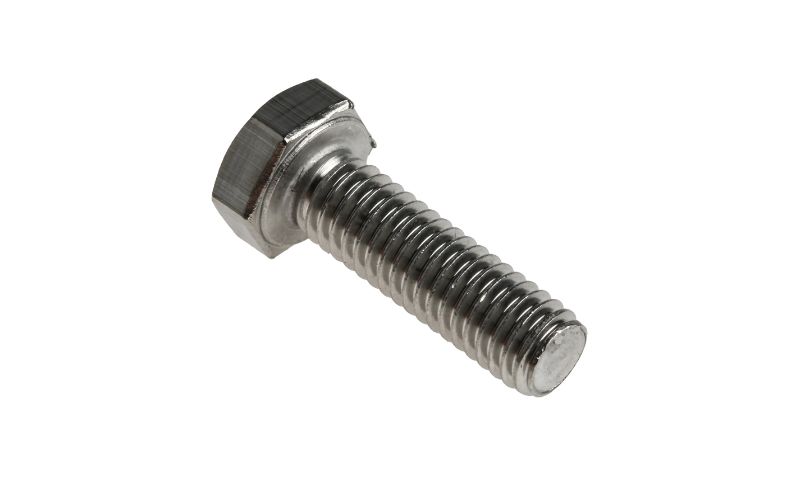
One of the most common fasteners commonly used in construction, machinery, automobile and home projects are hex bolts. The dimensions, weight, and specifications of hex bolts are important to know by the engineers, builders and DIY enthusiasts. In this exhaustive guide, we shall delve into the hex bolts weight charts, the measurements of penetration in mm, in kg and down-loadable references such as hex bolts weight chart PDF. City of Bolt: This guide has everything you need to know whether you want to choose the correct bolt to use in a project or to learn more about the physical properties they possess.
What Are Hex Bolts?
The hex bolts are also referred to as hex cap screws; they have a threaded body and a six sided head. They are made to high strength use and the most common are used with nuts or tapped holes. Their standardization enables engineers to be able to compute accurate loads and structural integrity.
Key benefits of hex bolts:
- Easy to tighten with wrenches or sockets
- High tensile strength for heavy-duty applications
- Standard sizes for seamless replacement
Their dimensions and weight are critical to know in planning the inventory, structural and load-bearing estimates.
Why Hex Bolts Weight Matters
Weight does not appear to be a major factor when selecting hex bolts but it is very important in:
- Shipping and logistics- Accurate weights help avoid underestimation of shipping costs.
- Load calculations- The weight has a direct impact on the structural engineering computation.
- Material efficiency – Material knowledge can reduce waste and material optimization.
That is why the engineers work with the detailed hex bolts weight charts in kg or lbs to plan and execute them.
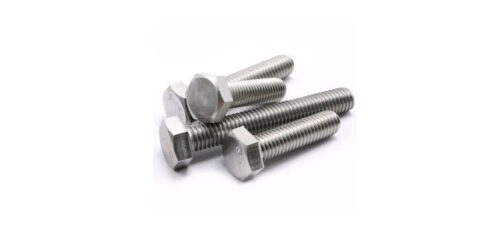
Hex Bolts Weight Chart in mm and kg
Below is a detailed table showing common hex bolt sizes, their dimensions in mm, and approximate weights in kg per piece. This data follows standard ISO and DIN specifications.
| Bolt size (mm) | Length (mm) | Approx weight per piece (kg) | Weight per 100 pcs (kg) | Notes (grade / material) |
| M6 | 20 | 0.010 | 1.0 | ISO 4014 / 4017, MS grade 4.6–8.8 |
| M6 | 30 | 0.015 | 1.5 | |
| M6 | 40 | 0.020 | 2.0 | |
| M6 | 50 | 0.025 | 2.5 | |
| M6 | 60 | 0.030 | 3.0 | |
| M6 | 80 | 0.040 | 4.0 | |
| M6 | 100 | 0.050 | 5.0 | |
| M8 | 30 | 0.025 | 2.5 | |
| M8 | 40 | 0.035 | 3.5 | |
| M8 | 50 | 0.040 | 4.0 | |
| M8 | 60 | 0.050 | 5.0 | |
| M8 | 80 | 0.065 | 6.5 | |
| M8 | 100 | 0.080 | 8.0 | |
| M10 | 50 | 0.070 | 7.0 | |
| M10 | 60 | 0.080 | 8.0 | |
| M10 | 80 | 0.110 | 11.0 | |
| M10 | 100 | 0.130 | 13.0 | |
| M10 | 120 | 0.160 | 16.0 | |
| M12 | 60 | 0.150 | 15.0 | |
| M12 | 80 | 0.190 | 19.0 | |
| M12 | 100 | 0.230 | 23.0 | |
| M12 | 120 | 0.270 | 27.0 | |
| M12 | 150 | 0.330 | 33.0 | |
| M16 | 80 | 0.450 | 45.0 | |
| M16 | 100 | 0.550 | 55.0 | |
| M16 | 120 | 0.670 | 67.0 | |
| M16 | 140 | 0.780 | 78.0 | |
| M16 | 160 | 0.900 | 90.0 | |
| M20 | 100 | 1.10 | 110.0 | |
| M20 | 120 | 1.30 | 130.0 | |
| M20 | 150 | 1.60 | 160.0 | |
| M20 | 180 | 1.90 | 190.0 | |
| M20 | 200 | 2.10 | 210.0 |
How weights are estimated
High tensile hex bolt table
These values assume full‑threaded carbon‑steel hex bolts (grade ~4.8–8.8) with standard ISO‑DIN‑type head dimensions.
For stainless‑steel (A2/A4) bolts, multiply the above weights roughly by 1.15–1.20 (since 304/316 is denser than plain MS).
For high‑tensile (10.9) or alloysteel, weights are very close to MS because the density is similar; use the same table and add 2–5% only if you need very tight tolerances.
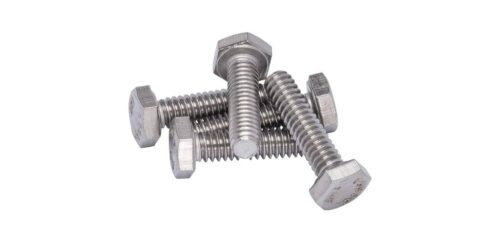
Hex Bolt Dimensions: Ensuring Proper Fit and Compatibility
When handling hex bolts, it is necessary to know the precise dimensions to maintain a perfect fit and compatibility between the bolt, nut, washer, and the components being attached. The incorrect head size used in a bolt, incorrect thread length, or mismatched shank length may cause problems in assembly, less strength, and even mechanical failure. The following table provides standard metric hex bolt sizes (M6 through M20) such as head width across flats, head height, and common thread length, allowing you to properly choose tools, clearances, and mating hardware.
| Bolt size (mm) | Head width across flats, S (mm) | Head width across corners, E (mm) | Head height, K (mm) | Basic thread length, B (mm) for L ≤ 125 mm | Approx overall length, L (mm) |
| M6 | 10 | 11.0–11.5 | 4.0–4.2 | 2d + 6 ≈ 18 | 20, 30, 40, 50, 60 |
| M8 | 13 | 14.0–14.5 | 5.3–5.5 | 2d + 6 ≈ 22 | 30, 40, 50, 60, 80, 100 |
| M10 | 17 | 18.5–19.0 | 6.4–6.8 | 2d + 6 ≈ 26 | 50, 60, 80, 100, 120 |
| M12 | 19 | 21.0–21.5 | 7.5–7.8 | 2d + 6 ≈ 30 | 60, 80, 100, 120, 150 |
| M16 | 24 | 26.5–27.0 | 10.0–10.5 | 2d + 6 ≈ 38 | 80, 100, 120, 140, 160 |
| M20 | 30 | 33.0–34.0 | 13.0–13.5 | 2d + 6 ≈ 46 | 100, 120, 150, 180, 200 |
Hex Bolt Thread Pitch Chart
The distance between two consecutive threads on a bolt is called thread pitch and defines the tightness of the engagement between the bolt and the nut or tapped hole and the mechanical advantage during tightening. Bolts with coarse pitch are simpler and quicker to assemble, whereas fine pitch bolts offer more precise adjustment and reduce vibration-induced loosening. The following table provides the usual metric hex bolt sizes and standard coarse and fine thread pitches in millimeters.
| Bolt size (mm) | Coarse pitch (mm) | Fine pitch (mm) | Short usage note |
| M6 | 1.0 | 0.75 | Use coarse pitch for general‑purpose fastening; fine pitch where vibration‑resistant or finer adjustment is needed. |
| M8 | 1.25 | 1.0 | Coarse for most structural/jig work; fine for equipment or mechanisms requiring precise preload. |
| M10 | 1.5 | 1.25 | Coarse for tanks, frames, and brackets; fine where repeated assembly or thin‑walled parts are used. |
| M12 | 1.75 | 1.5 | Coarse for heavy‑duty joints; fine where higher clamp‑force control is required. |
| M16 | 2.0 | 1.5 | Coarse for foundations and large structures; fine for precision machinery and flanged joints. |
| M20 | 2.5 | 2.0 | Coarse for heavy structural connections; fine when bolt acts as a preloaded tension rod. |
| M24 | 3.0 | 2.0 | Coarse for very heavy loads; fine for high‑stress or vibration‑critical applications. |
Explanation:
Coarse threads are generally stronger and easier to assemble, while fine threads are used where precise torque is needed.
M.S. Hex Full Thread Bolts (IS 1363/67)
M.S. Hex Full thread bolts (IS 1363/67) are typically metric mild steel bolts which are threaded entirely along their length and are of a non-nut type. These bolts are applicable in general-purpose fastening in structural, fabrication, and industrial use of bolts where consistent thread engagement and simple nut adjustment along the bolt is needed.
| Bolt size (mm) | Thread pitch (mm) | Length (mm) | Weight (kg/piece) |
| M6 | 1.0 | 20 | 0.010 |
| M8 | 1.25 | 50 | 0.040 |
| M10 | 1.5 | 80 | 0.110 |
| M12 | 1.75 | 100 | 0.250 |
| M16 | 2.0 | 120 | 0.670 |
| M20 | 2.5 | 150 | 1.60 |
Explanation:
Full thread bolts offer even strength during the entire length of the bolt since the thread is cut across its length. This causes them to be useful in areas that require the nut to be moved in various positions along the bolt like in adjustable fixtures, jigs, or equipment frames.
M.S. Hex Half Thread Bolts (Without Nuts – IS 1363/67)
M.S. Hex Half Thread Bolts (Without Nuts – IS 1363/67) are threaded metric mild steel bolts, which are partially threaded with only a part of the shank threaded and the remaining plain. These are commonly applied in structural and industrial applications where fine thread engagement is demanded and enhanced load distribution.
M.S. hex half thread bolts – weight and pitch
| Bolt size (mm) | Thread pitch (mm) | Length (mm) | Weight (kg/piece) |
| M6 | 1.0 | 25 | 0.012 |
| M8 | 1.25 | 60 | 0.045 |
| M10 | 1.5 | 90 | 0.120 |
| M12 | 1.75 | 110 | 0.280 |
| M16 | 2.0 | 130 | 0.700 |
| M20 | 2.5 | 160 | 1.70 |
Explanation:Half-thread bolts are utilized in situations where only a fraction of the bolt should be in the nut or tapped hole, providing the ability to clamp precisely and improved fatigue characteristics. The plain shank part assists in reducing stress concentration and material consumption and thus these bolts can be used in joints that have shear or shear-tension loads.
Hex Bolts Weight Chart PDF
To be convenient, a number of engineers and procurement departments would like a hex bolts weight chart PDF to be handy as a reference offline. PDFs provide:
- Easy sharing across teams
- Quick access without internet
- High accuracy for field engineers
These PDFs are included as technical catalogs of most manufacturers. I can also make a readymade hex bolts weight chart PDF with all the tables in this blog, in case you want.
How to Calculate Hex Bolt Weight
If you don’t have a chart handy, you can calculate the weight using this formula:
Weight (kg)=Volume (m³)×Material Density (kg/m³)\text{Weight (kg)} = \text{Volume (m³)} \times \text{Material Density (kg/m³)}Weight (kg)=Volume (m³)×Material Density (kg/m³)
Where:
- Volume = π × (radius²) × length for cylindrical threads
- Material Density (steel) ≈ 7850 kg/m³
Example: For an M10 bolt, 50 mm long:
- Radius = 5 mm = 0.005 m
- Length = 50 mm = 0.05 m
- Volume ≈ π × (0.005²) × 0.05 ≈ 3.93 × 10⁻⁶ m³
- Weight ≈ 3.93 × 10⁻⁶ × 7850 ≈ 0.031 kg
This aligns closely with the chart values.
Common Hex Bolt Sizes and Applications
Choosing the right hex bolt size ensures proper strength, fit, and service life for the intended application. The table below lists commonly used metric hex bolt sizes along with their typical industrial and structural uses.
| Bolt size (mm) | Typical application |
| M6 | Electronics, small appliances, light fixtures, and small‑scale assemblies. |
| M8 | Automotive components, brackets, light machinery, and furniture structures. |
| M10 | General construction, machinery frames, conveyors, and medium‑load equipment. |
| M12 | Heavy machinery, structural steel connections, and main beams in fabricated structures. |
| M16 | Steel structures, trusses, bridges, and high‑load mechanical joints. |
| M20 | Industrial applications, foundation bolts, and high‑load equipment such as presses and cranes. |
Guidelines on the use of Hex Bolts Weight Charts.
- Always check material – Stainless steel, alloy steel and carbon steel are different in weight.
- See thread type – Fine threads are a little lighter than coarse threads of the same size.
- Round up to safety – In computing the total load, estimate high to provide margins.
- Store PDF charts on hand – This is particularly handy with field engineers and procurement teams.
Conclusion
Hex bolts form the basic elements of construction, machinery, automotive, and numerous other industrial uses. Their dimensions, type of thread, and weights are important to understand in order to maintain structural integrity, fit correctly and bear a safe load.
This manual has presented detailed hex bolt weight charts in kilogram and millimeters, bolt dimensions, thread pitch, and full thread and half thread MS bolts explanation. With these charts, engineers, procurement staff, and DIY fans are able to:
Choose the right bolt size according to certain uses.
- Get the proper material requirements and shipping weights.
- Make sure to match with nuts, washers and mechanical assemblies.
- Enhance productivity and minimize mistakes in structural and industrial projects.
Moreover, one can have a PDF version of these charts, which can be easily accessed offline so that essential information is always available on-site.
It does not matter whether you are dealing with small M6 bolts in electronic or big M20 bolts in heavy industrial equipment, this guide will give you the knowledge to make an informed choice, optimize materials, and ensure safety and precision in all your projects.