

What the 2026 US Steel & Aluminum Tariffs Mean for Your Export Business
January 27, 2026
Standard weight tolerances for shipments
January 28, 2026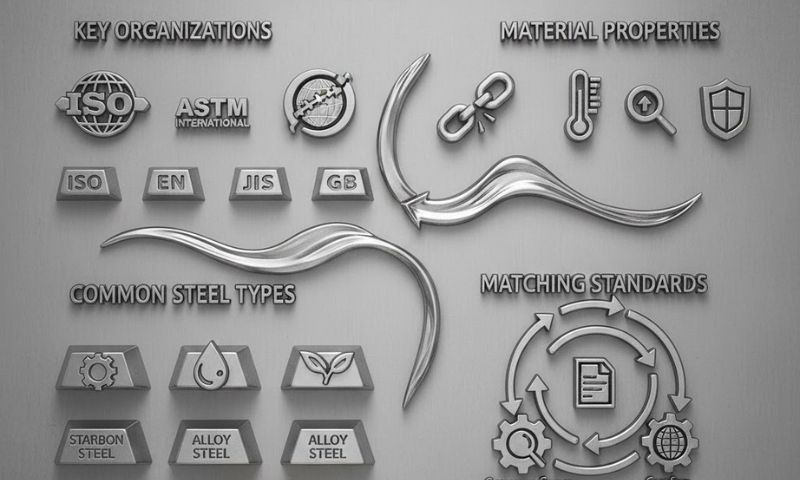
The knowledge of metal grades in the modern worldwide metal trade is not only a technical need, but it is also a business need. Those involved in the manufacturing and exportation of metals as well as in procurement departments should make sure that the grades of metals specified by suppliers are exactly the requirements and specifications of the buyers abroad. A single misalignment in grade, chemical composition or mechanical properties may result in rejection, delays or the expensive wrangling.
This blog describes the operation of metal grades, the reason why standards are not uniform in different locations, and how suppliers can make their specifications compatible with the needs of global buyers.
Why Metal Grades Matter in Global Trade
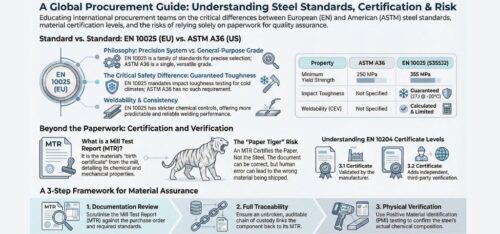
The chemical composition, mechanical strength, resistance to corrosion, and heat treatment of a material are determined by metal grades. These grades enable buyers to be certain about the performance, safety, and the industry regulations.
They are not mere numbers to international buyers but they are reliability and risk control. In cases where the suppliers cannot match grades effectively, the rereeds can be failed inspection or use of project codes, or short product life.
Common International Metal Standards Explained
Different regions follow different standardization systems, and understanding them is critical for global trade.
ASTM and ASME (USA)
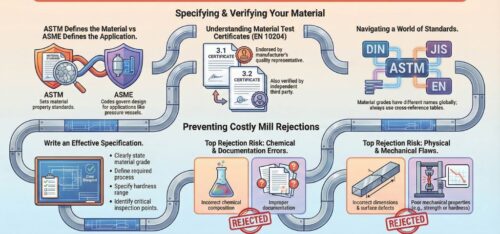
The ASTM and ASME standards are popular in the United States and other parts of the world to apply to pressure vessels, and piping, as well as structures. These standards are directed at the chemical limits, tensile strength and testing.
EN Standards (Europe)
The European standards (EN) stress on the traceability, impact testing, and quality assurance. EN grades are usually slightly different than ASTM equivalents although they may seem alike.
JIS (Japan) and DIN (Germany)
JIS standards are prevalent in Asian markets whilst the DIN standards are still used in portions of Europe and in engineering drawings. They have their respective logic in grading and testing priorities.
How Supplier Specifications Can Differ from Buyer Expectations
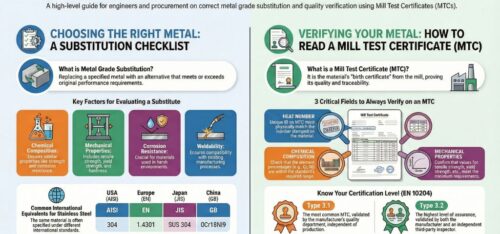
There are numerous problems related to the fact that both suppliers and buyers do not use the same grades, but similar grades. It can be thought that two grades are similar, but minor variations in carbon content, alloying elements, or heat treatment can be a difference in performance.
Key Areas Where Mismatches Occur
- Tolerances of chemical composition.
- Mechanical characteristics like yield strength.
- Heat treatment conditions
- Requirements of testing and inspection.
Without clear documentation, these differences can create confusion during third-party inspection or customs clearance.
How to Match Supplier Specs with International Buyer Standards
Aligning supplier specifications with buyer standards requires a systematic approach.
Use Grade Equivalency Charts Carefully
Equivalency charts are useful, but they should be treated as references not guarantees. Always confirm equivalency with material test certificates (MTCs) and technical data sheets.
Request Complete Mill Test Certificates
Mill Test Certificates should comply with EN 10204 (3.1 or 3.2) when required. These certificates provide verified chemical and mechanical data that buyers trust.
Communicate Buyer Standards Clearly
Suppliers should request detailed buyer specifications at the quotation stage. This includes standard numbers, revision years, testing norms, and inspection agencies.
Involve Third-Party Inspection Early
Engaging third-party inspectors before production helps avoid last-minute rejections and ensures compliance from the start.
Best Practices for Suppliers and Exporters
Suppliers aiming for international markets should adopt global best practices.
Standardize Internal Documentation
Maintain consistent internal grade references mapped to international standards to avoid errors during order processing.
Invest in Technical Knowledge
Sales and export teams should understand basic metallurgy and standards to communicate confidently with buyers.
Focus on Transparency and Traceability
Clear labeling, heat numbers, and traceable documentation build long-term buyer trust and reduce disputes.
Conclusion
Success in the global market requires knowledge of metal grades and the matching of supplier requirements to the international buyer requirements. Suppliers are able to mitigate risks, enhance rates of acceptance and establish better relationship with buyers across the globe by mastering international standards, ensuring documentation is better and ensuring that the communication remains transparent. Technical accuracy in a competitive metal industry is compliance and not an element of strategy.
For updates and additional information, follow on social media platforms.