

2025-2030 Global Steel Export Forecast: How Manufacturers Can Capitalise on Emerging Markets
January 10, 2026
Checklist for Pre-Shipment Inspection (PSIC) for Metal Exports
January 11, 2026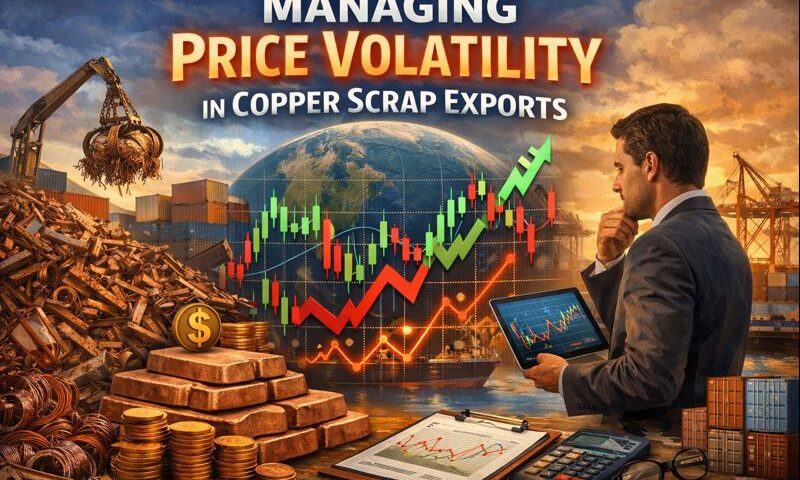
The copper scrap exports industry sits at the intersection of manufacturing demand, circular economy goals, and global commodity trading. Exporters supply the raw material that helps factories reduce dependence on newly mined copper, supporting sustainability and cost efficiency. However, one persistent challenge keeps exporters on their toes: price volatility.
Copper scrap prices often swing wildly, affecting profit margins, contract stability, and cash flow planning. Instead of treating volatility as an impossible hurdle, exporters can learn to navigate and manage uncertainty with strategy and precision.
Why Copper Scrap Exports Prices Swing So Much
Copper scrap exports pricing is influenced by a network of forces outside any single company’s control. Among the most important drivers are:
1. Demand from the Energy & Tech Boom
The global push toward clean energy, electric vehicles, solar grids, and digital infrastructure has made copper a strategic metal. When these sectors accelerate, copper consumption rises, pushing scrap prices up. A slowdown, however, can cause an immediate deflation in value.
2. Environmental & Regulatory Shifts
Governments regularly update import restrictions, quality standards, and scrap processing policies. A single regulatory announcement-especially from markets like China, India, or Turkey-can instantly change global price behavior.
3. Currency Exchange Dynamics
Because copper is priced largely in USD, exporters working in other currencies feel every fluctuation. A weaker local currency may boost exporter revenue, while simultaneously making procurement costlier.
4. Market Speculation & Sentiment
Activities on commodity exchanges and futures markets create pricing movements based not just on real supply, but also on speculation, analyst forecasts, and market psychology.
How Exporters Can Manage Volatility Instead of Fighting It
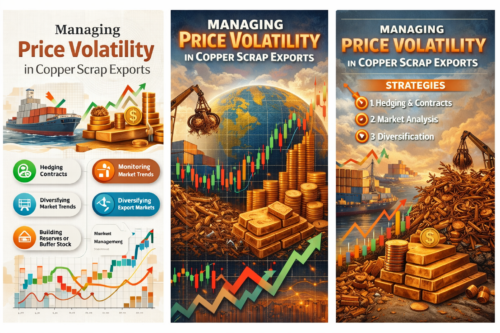
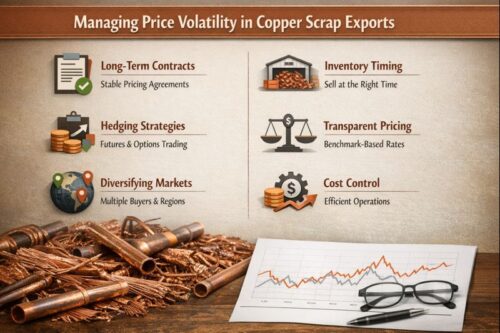
Forward-thinking exporters are embracing tools and systems to reduce risk and maintain stable returns. The most effective practices include:
A. Market-Linked Pricing Models
Instead of fixed-price deals, some exporters now use formulas tied to LME averages, monthly closing prices, or reference indexes, allowing both buyers and sellers to share risk fairly.
B. Multi-Region Buyer Portfolios
Depending on a single country is dangerous. Expanding buyer networks across Southeast Asia, Europe, and the Middle East helps exporters reduce exposure to sudden policy changes, import bans, or demand drops.
C. Hedging as a Risk Shield
Financial tools such as futures, options, and swap contracts allow companies to lock in minimum revenue levels. Hedging isn’t about beating the market-it’s about protecting against catastrophic dips.
D. Scrap Upgrading & Grade Optimization
Copper scrap spans multiple grades, and higher-grade material tends to be less volatile and more globally desired. Investments in sorting, stripping, and cleaning equipment can boost margins and smooth price fluctuations.
E. Strategic Inventory & Dispatch Timing
Exporters who monitor seasonal industrial cycles, Chinese buying patterns, and exchange behavior can choose to hold inventory during downturns and ship during price peaks, improving profitability without speculation.
Using Information as a Competitive Weapon
In volatile markets, real-time intelligence is often the difference between profit and loss. Monitoring commodity reports, freight costs, policy news, and currency updates gives exporters a clearer view of short-term and long-term signals.
Tools that are especially useful include:
- global commodity dashboards
- freight rate trackers
- exchange rate alerts
- scrap demand forecasts
Knowledge reduces uncertainty-and in volatile markets, uncertainty is expensive.

Conclusion: Turning Volatility into Opportunity
Copper scrap prices will remain volatile due to global energy transitions, geopolitical pressures, and supply chain restructuring. The exporters who succeed won’t be the ones waiting for stability; they’ll be the ones who treat volatility as a strategic landscape instead of a threat.
By adopting hedging, market-linked pricing, multi-market diversification, and grade optimization, exporters can transform volatility from a liability into a competitive edge-and secure long-term growth in a constantly changing global industry.
For updates and additional information, follow on social media platforms.